...
...
Next Story

Mango diplomacy: How the first crate of Pakistani mangoes impacted Mao’s China

In August 1968, a crate of mangoes was gifted to Mao by Pakistani foreign minister, Mian Arshad Hussain, who was also high commissioner to India earlier, in Beijing.

Updated on: Sep 20, 2019, 21:59:52 IST
Advertisement

Pakistani mangoes have a history in China and around the time the two countries were launching their ongoing diplomatic bromance in the 1960s, the pulpy fruit had sweetened bilateral ties and impacted Chinese history in unexpected ways.
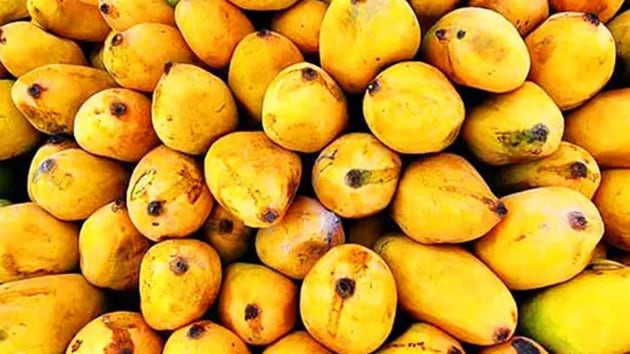
Earlier this week, the latest slice of “mango diplomacy” was organised at the Pakistani embassy in Beijing where new ambassador Naghmana Hashmi recollected, even if partly, when it all began. (HT image)

Earlier this week, the latest slice of “mango diplomacy” was organised at the Pakistani embassy in Beijing where new ambassador Naghmana Hashmi recollected, even if partly, when it all began.

The occasion was a “mango festival” and the screening of a documentary on the China-Pakistan Economic Corridor (CPEC) titled “Exploring CPEC”.

Introducing variants of Pakistani mangoes, Hashmi recollected how Chairman Mao Zedong had, for the first time, introduced Pakistani mangoes in 1968 – in the middle of the violence and chaos of the Cultural Revolution – to Communist Party of China (CPC) workers.

In August 1968, a crate of mangoes was gifted to Mao by Pakistani foreign minister, Mian Arshad Hussain, who was also high commissioner to India earlier, in Beijing.

The fruit then took on a life of its own.

The book “Mao’s Golden Mangoes and the Cultural Revolution” edited by historian and curator Alfreda Murck tells us what transpired next.

“The Pakistani mangoes, exotic and virtually unheard of in 1960s China, briefly played an important role in Cultural Revolution discourse, as the physical expression of Mao’s love and concern for his people at a time when the Mao cult was at its most frenzied,” the introduction of the book says.

“The mangoes were transported nationwide, despite their deterioration in the summer heat; they were replicated in wax and placed in glass vitrines for presentation and display; paintings and photographs of the fruit became objects of veneration; and they appeared as an auspicious motif on the ubiquitous Mao badges, on quilts, on household goods, and on floats at public ceremonies,” it added.

The events related to the mangoes were later termed as the “mango fever” or the “cult of the mango”

The frenzy over that first crate of Pakistani mangoes in China subsided just months later but Islamabad will agree that the aftertaste, at least in this case, continues to be sweet.

At this week’s embassy event, the Chinese audience was told about the unique qualities of Pakistani mangoes.

That first crate remains the most unique.

 
ABOUT THE AUTHOR
HT News Desk

Follow the latest breaking news, major developments and agenda-setting stories from India and around the world with the newsdesk at Hindustan Times. Operating round the clock, the desk brings together experienced editors, reporters and correspondents to deliver fast, accurate and contextual reporting across subjects that influence public policy, governance, business, society and international affairs. The HT News Desk covers politics, elections, government policies, the economy, business and markets, science and technology, the environment, law and order, infrastructure, education, climate issues and geopolitics, while closely tracking developments across states, institutions and global capitals. The team also leads coverage of major breaking news events, policy announcements, court proceedings, natural disasters, public emergencies and significant international developments. Reports published by the newsdesk are based on information gathered from reporters on the ground, official statements, government agencies, court records, regulatory filings, recognised institutions and other authoritative sources. Stories undergo editorial scrutiny and verification processes to ensure accuracy, fairness and relevance, and are updated as events evolve and additional information becomes available. Whether covering a key political decision in New Delhi, an economic policy shift affecting millions, a landmark court ruling or a major global event, the HT News Desk aims to provide readers with reliable, fact-based journalism that delivers not only the latest developments but also the context and analysis needed to understand their wider implications.

Get the latest World News, breaking headlines and global updates from the US, UK, Pakistan, Bangladesh, Russia and other countries. Follow major international events on Hindustan Times.
SHARE THIS ARTICLE ON
Notifications

Get breaking alerts directly from the newsroom

Notifications are on!You'll be notified when news breaks