Ice on a glacier near the summit of Mount Everest that took millennia to form has shrunk dramatically in the last three decades due to climate change, a new study has shown.
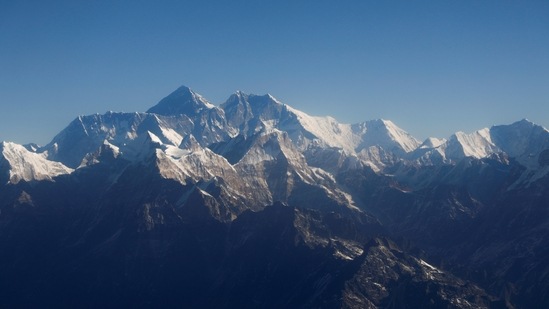
The South Col formation may already have lost around 55 metres (180 feet) of thickness in the last 25 years, according to research led by the University of Maine and published this week by Nature.
Carbon dating showed the top layer of ice was around 2,000 years old, suggesting that the glacier was thinning more than 80 times faster than the time it took to form, the study said.
At that rate, South Col was "probably going to disappear within very few decades", lead scientist Paul Mayewski told National Geographic.
"It's quite a remarkable transition," he added.
The South Col glacier is around 7,900 metres (26,000 feet) above sea level and a kilometre below the peak of the world's highest mountain.
Other researchers have shown that Himalayan glaciers are melting at an accelerating rate.
{{/usCountry}}Other researchers have shown that Himalayan glaciers are melting at an accelerating rate.
{{/usCountry}}As the glaciers shrink, hundreds of lakes have formed in the foothills of Himalayan mountains that could burst and unleash floods.
Nepali climber Kami Rita Sherpa, who has climbed Everest a record 25 times since 1994, told AFP Saturday he had witnessed changes on the mountain firsthand.
"We now see rock exposed in areas where there used to be snow before. Not just on Everest, other mountains are also losing their snow and ice. It is worrying," Sherpa told AFP.
Himalayan glaciers are a critical water source for nearly two billion people living around the mountains and river valleys below.
They feed 10 of the world's most important river systems and also help supply billions of people with food and energy.
The water-related impacts of climate change are already experienced daily by millions of people worldwide, according to UN climate scientists.