Dozens of baby squid from Hawaii are in space for study.
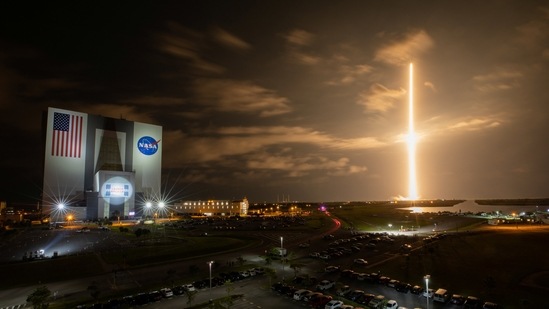
The baby Hawaiian bobtail squid were raised at the University of Hawaii's Kewalo Marine Laboratory and were blasted into space earlier this month on a SpaceX resupply mission to the International Space Station.
Researcher Jamie Foster, who completed her doctorate at the University of Hawaii, is studying how spaceflight affects the squid in hopes of bolstering human health during long space missions, the Honolulu Star-Advertiser reported Monday.
The squid have a symbiotic relationship with natural bacteria that help regulate their bioluminescence.
When astronauts are in low gravity their body's relationship with microbes changes, said University of Hawaii professor Margaret McFall-Ngai, who Foster studied under in the 1990s.
“We have found that the symbiosis of humans with their microbes is perturbed in microgravity, and Jamie has shown that is true in squid,” said McFall-Ngai. “And, because it’s a simple system, she can get to the bottom of what’s going wrong.”
Foster is now a Florida professor and principal investigator for a NASA program that researches how microgravity affects the interactions between animals and microbes.
“As astronauts spend more and more time in space, their immune systems become what’s called dysregulated. It doesn’t function as well," Foster said. “Their immune systems don’t recognize bacteria as easily. They sometimes get sick.”
{{/usCountry}}“As astronauts spend more and more time in space, their immune systems become what’s called dysregulated. It doesn’t function as well," Foster said. “Their immune systems don’t recognize bacteria as easily. They sometimes get sick.”
{{/usCountry}}Foster said understanding what happens to the squid in space could help solve health problems that astronauts face.
“There are aspects of the immune system that just don’t work properly under long-duration spaceflights," she said. "If humans want to spend time on the moon or Mars, we have to solve health problems to get them there safely.”
The Kewalo Marine Laboratory breeds the squid for research projects around the world. The tiny animals are plentiful in Hawaiian waters and are about 3 inches (7.6 centimeters) long as adults.
The squid will come back to Earth in July.