President Xi Jinping’s elaborate exercise to pick up a fight with everyone to divert attention from domestic troubles is reaching a point of diminishing returns with a global pushback against Beijing and rumblings within the Communist Party of China over his ‘wolf warrior diplomacy’, a weakening economy and the twin shock of coronavirus and floods.
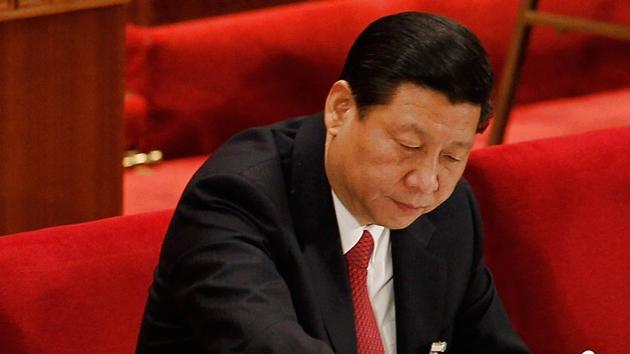
Cai Xia, the former professor at the Central Party School of Beijing that Xi headed till he became President in 2012, was expelled this week after an online recording of her criticism of President Xi’s policies leaked online. In this, she described President Xi as a “mafia boss” and accused him of provoking conflict with other countries such as India to divert the attention of the Chinese public from domestic economic and social tensions. In an interview with the Guardian, she went further, blaming President Xi for “killing a party and a country” and turning China into “an enemy” of the world.
There had been a handful of other vocal liberal voices too such as the law professor Xu Zhangrun and property developer Ren Zhiqiang, promptly axed after they criticised Xi or his handling of the coronavirus. Ren now also faces an investigation on corruption charges. Cai has suggested there were others in China’s communist party waiting for the tide to turn.
Xi’s party has also bolstered its counter-campaign, asking party cadres and the people to back the President. Xi has also had meetings with business leaders for a pep talk in the face of the pressure from major economies attempting to barricade Chinese firms.
{{/usCountry}}Xi’s party has also bolstered its counter-campaign, asking party cadres and the people to back the President. Xi has also had meetings with business leaders for a pep talk in the face of the pressure from major economies attempting to barricade Chinese firms.
{{/usCountry}}Like with India, China has attempted to nudge countries - even rivals - of going for a compartalised approach that would let businesses in China continue as usual even as President Xi ‘wolf warrior diplomacy’ approach tries to squeeze them. That approach hasn’t worked, with India or any other country.
India has blocked nearly 100 mobile apps linked to China, started the review of pacts with its universities, locked out Chinese companies from getting government contracts and cancelled bids where they stood a chance. Besides other steps, United States President Donald Trump has already signed off on an executive order to ban short video-sharing app TikTok and messenger app WeChat, citing India’s decision to purge the two applications. The US restriction on the transactions will kick in mid-September.
Soldiers of the People’s Liberation Army have been parked at India’s doorstep in the East Ladakh sector for over 100 days and Beijing has, despite more than a dozen rounds of discussions at military and diplomatic levels, shown no signs of stepping back. Weeks after the two sides stumbled into a bloody clash on 15 June, the two sides had agreed to completely disengage at the friction points and then de-escalate.
But the PLA, under orders from Beijing, has been reluctant to deliver on the agreement and has mobilised soldiers in the depth areas. President Xi’s expansionist approach in Ladakh and a similar one with its other neighbours in the South China Sea, imposition of draconian national security law in Hong Kong and attempts to bully Taiwan have pushed China in a corner. The US has been leading the front, bringing around countries such as Japan and Australia and Europe to counter China.
Back home, President Xi’s challenges within the party run much deeper than just crushing dissent and silencing critics in China. Xi, who has amended the party constitution to let him continue as China’s President indefinitely, has to contend with the rival faction of CPC leaders who took their baby steps in the party through its youth organisation, the Communist Youth League (CYL).
The CYL has traditionally been an important domain from where the CPC picks up its cadres, many of them rising to senior positions in the party.
President Xi, has ever since his elevation as President in 2012, put together his faction, often referred as the Zhejiang faction, a reference to the eastern, coastal province Xi was party secretary of for several years before he reached Beijing.
Hu Chunhua, currently a Vice Prime Minister part of the 25-member Politburo and Prime Minister Li Keqiang - are the face of the CYL faction that is battling President Xi.
Xi has been openly disparaging of CYL, which he views as an elitist group. “All they [cadres] can do is just repeat the same old bureaucratic, stereotypical talk,” President Xi once said, according to reports.
Another China watcher in New Delhi said the faction fight had been building up but may be some distance from an inflection point. “We still need to watch for the signs,” he said. For instance, he said, what happens to China’s Vice Prime Minister Hu Chunhua and PM Li Keqiang.
“In case he is netted in some corruption scandal - filing bribery charges has been Xi’s favourite tool to take down powerful rivals - means that the dog fight between Xi’s faction and CYL has begun,” he added. Another would be if Prime Minister Li suddenly “decides” to retire.