
 E-Paper



The Biggest Retailers Are Thriving in the Tariff Economy
Walmart, Amazon and T.J. Maxx are beating out rivals by offering deals to stressed-out consumers.


 Prefer HTon Google


In the tariff economy, retailers who cater to cautious consumers are winning.
Those who don’t are falling behind.
Walmart, Amazon and the owner of T.J. Maxx are scooping up market share from rivals by offering shoppers good deals and convenience.
In a bid to ease the burden on stressed-out consumers and undercut competitors, Walmart has kept price increases to a minimum by absorbing much of the tariff cost.
“We’re keeping our prices as low as we can for as long as we can,” Walmart Chief Executive Doug McMillon said Thursday.
TJX is seizing the moment by snapping up excess inventory that other retailers ordered ahead of tariffs—and now need to unload. Its CEO called the buying opportunities “outstanding.”
Amazon made improvements to its delivery network that helped get packages to customers faster and more cheaply. That helped propel a whopping 11% increase in online-store sales in the latest quarter, Amazon executives said. So far, tariffs haven’t made a big impact on its prices, the e-commerce giant said.
Walmart is beating out rivals like Target in part because of its low prices and in part because a large share of its sales are groceries—an essential purchase even for cash-strapped shoppers. Tariff-related price increases are prompting more middle- and low-income shoppers to focus on needs over wants, Walmart executives said Thursday. Because of tariffs, Walmart is raising prices on about 10% of the goods it imports to the U.S., absorbing the rest of the elevated cost.
Kimberly Mae Hansen, 48, has cut back her spending this year. Gone are her nice-to-haves: her drive-through coffees, her soda and her Downy laundry scent boosters.
“Luxury buys have tightened up for me for sure,” said Hansen, who lives in Montana and works as a business development manager for Resilient Stories, a motivational blog.
Now she compares prices at different stores, buying Coffee Mate sugar-free vanilla creamer at Target and Charmin toilet paper in bulk at Sam’s Club. (Toilet paper at Target, she says, is “ungodly expensive.”)
Like Hansen, many shoppers are spending more time researching before they make a purchase. In the first half of the year, online shoppers clicked 18% more often, yet spending grew just 0.4%, according to an analysis of 1,554 North American brands by Impact.com, a platform for brands to manage partnerships with affiliates and influencers.
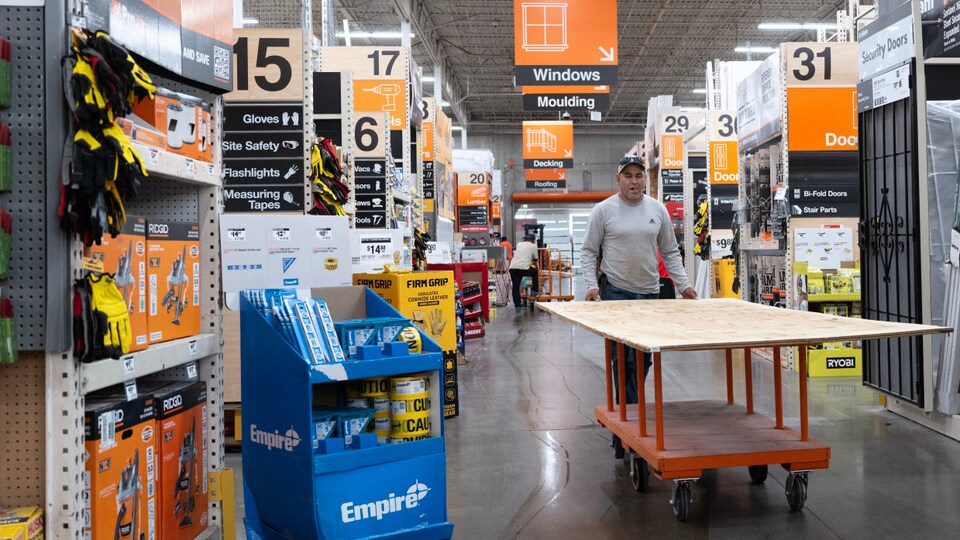
Consumers are holding off on larger home-improvement projects because of higher interest rates and economic uncertainty, though they are moving ahead with smaller projects that they can pay for with cash, Home Depot executives said this week. Home Depot and Lowe’s each reported comparable sales growth of around 1% in the latest quarter.
“Some relief on mortgage rates in particular could help” the business, Home Depot Chief Executive Ted Decker said on a call with analysts Tuesday.
Worries about price increases have soured consumers’ mood, according to the latest readout from the University of Michigan’s long-running survey. Inflation has slowed in recent months, but years of steep price increases have pinched Americans’ wallets and job growth has slowed.
While tariffs haven’t yet led to broad price increases at big retailers, retail executives said this week that more price hikes are coming.
One of Target’s challenges is the perception among consumers that its prices are higher than competitors. The retailer’s comparable sales fell 1.9% in the latest quarter, continuing a 2½-year stretch of flat or falling quarterly sales. Walmart said its U.S. comparable sales rose 4.6% in the latest quarter.
Target’s incoming CEO, Michael Fiddelke, said that steep inflation over the past few years have put pressure on consumers and led to a pullback in spending on discretionary items. Target is negotiating with suppliers and diversifying its supply chain across more countries to keep prices down, executives said. Raising prices is the last resort, they added.
TJX, which owns off-price retail chains T.J. Maxx, Marshalls and Home Goods, raised its outlook Wednesday after reporting better-than-expected financial results. Companywide same-store sales rose 4% in the latest quarter.
“Our buyers did a very good job taking advantage of the excess inventory in the market,” said TJX CEO Ernie Herrman.
Walmart said it was winning over shoppers with grocery discounts, fast shipping and in categories like more elevated fashion offerings.
To avoid some of the costs of rising tariffs, Walmart is placing early orders on items it thinks will sell well. At the same time, it is ordering fewer of some higher-priced items that shoppers are likely to pull back on, Walmart Chief Financial Officer John David Rainey said in an interview.
Walmart’s prices rose by an average of 1% in the most recent quarter, he said.
“We’re going to continue to try to navigate this on an item-by-item, category-by-category way to minimize the impact on the consumer,” Rainey said.
Write to Sarah Nassauer at Sarah.Nassauer@wsj.com and Natasha Khan at natasha.khan@wsj.com


