With the May 1 deadline for an expected United States (US) military withdrawal from Afghanistan a little less than a month away, multiple avenues of diplomacy have been launched as the administration of President Joe Biden in Washington DC navigates the future of the US involvement in the 20-year-long war in the country.
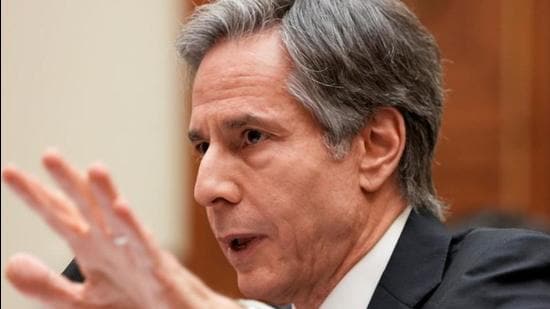
US Secretary of State Antony Blinken’s proposal made to Afghan president Ashraf Ghani, made public via a leaked letter, has only added more to the complexities. Blinken’s curtly written outreach to Kabul has suggested a regional approach, involving Russia, China, Pakistan, Iran, Turkey and India to help in bringing the Afghan crisis to some sort of conclusion. On the other hand, Moscow convened its own roundtable, attended by both the Afghan government and the Taliban, along with stakeholders such as Iran, China, Pakistan and the US. New Delhi, notably, was missing, having not been invited due to its self-designed diplomatic and political distance from the Taliban.
Also Read | Taliban threaten to re-target foreign troops if May 1 withdrawal deadline missed
As these events unravelled, India and Pakistan also announced their own ceasefire along the border regions. The ceasefire, which according to some reports was brokered by the United Arab Emirates, is also being seen from the lens of a broader regional architecture that the Biden administration is promoting to attain a viable US exit from the conflict, hedging its own risks at the 11th hour by magnifying some of the regional issues that have also played a latent yet significant role in exacerbating the turmoil in Afghanistan. And this includes the India-Pakistan rivalry, where Islamabad fears an over-reaching Indian hand in Kabul will deny it “strategic depth”, as highlighted by the former Pakistan Chief of Army Staff General Mirza Aslam Beg in the 1980s, fearing an Indian encirclement of Pakistan.
{{/usCountry}}As these events unravelled, India and Pakistan also announced their own ceasefire along the border regions. The ceasefire, which according to some reports was brokered by the United Arab Emirates, is also being seen from the lens of a broader regional architecture that the Biden administration is promoting to attain a viable US exit from the conflict, hedging its own risks at the 11th hour by magnifying some of the regional issues that have also played a latent yet significant role in exacerbating the turmoil in Afghanistan. And this includes the India-Pakistan rivalry, where Islamabad fears an over-reaching Indian hand in Kabul will deny it “strategic depth”, as highlighted by the former Pakistan Chief of Army Staff General Mirza Aslam Beg in the 1980s, fearing an Indian encirclement of Pakistan.
{{/usCountry}}The US bringing in Turkey also adds another actor directly into the Afghan negotiations. The Biden administration inherited a fractured relationship with its North Atlantic Treaty Organization ally in Ankara. Now, suggesting that Turkey host talks in April where the likes of India, Iran, Pakistan, China and Russia are to sit across the table from the Afghan government along with the Taliban to look for a viable solution, may well have more to do with a potential rapprochement between Biden and Turkish president Recep Tayyip Erdogan.
From a distance, the Afghan negotiations now look like a multi-layered conclave, where the US is attempting to encapsulate its exit via the various intermediaries that have been involved around the Afghan peace process over the years but have limited to no agency on US troop deployments in the war. Turkey’s close relations with Pakistan also get factored in here, with both the Taliban and the Ghani government seemingly having a level of parallel comfort with Ankara’s involvement despite others, such as India and arguably Iran, potentially viewing Turkey’s role somewhat differently.
Also Read | In Kabul, be ready for political uncertainty
To add to the complexity, the US has sanctions in place against Iran, China and Russia, while also looking for their assistance to bring closure for itself in the conflict. While Tehran, Moscow and Beijing may have overlapping concerns with the US over the security situation in Afghanistan, beyond a point, all of them have significantly larger crisis points with the US. While discovering strange bedfellows is nothing new in geopolitics, short-term goals to find empty bylanes to speedily drift into an Afghan exit is only going to leave behind chaos.
The US, while hedging its risks around an Afghan exit, should take into account the fact that the bedrock of any bilateral or multilateral talks around the Afghanistan question, irrespective of regional or international actors in play, will still be based around the February 2020 deal between the US and Taliban signed in Doha. A question still hangs over the future of the Doha process, and why Moscow and Ankara have become more prominent plays over the past few weeks.
How the Taliban will react to the Biden administration possibly rescinding and keeping a residual force in Afghanistan remains to be seen; however, the insurgency has the Doha deal to refer to for the US to uphold its commitment over a May 1 withdrawal, irrespective of which presidency signed on the dotted line.
Others, whether it be India or Russia, could play an important role to rudder Afghanistan after a political settlement is achieved, specifically financially considering a post-war long-term economic agenda is currently non-existent. But the US is not in a position to see other multilateral forums and “peace tables” as alternatives to the Doha process.
American analysts have highlighted that the Taliban today is arguably in its strongest position compared to any point since 2001. This eventuality requires a robust and clear US-owned response, even within the framework of an exit.
Kabir Taneja is fellow, Strategic Studies Programme, Observer Research Foundation, and the author of The ISIS Peril: The World’s Most Feared Terror Group and its Shadow on South Asia.
The views expressed are personal.