
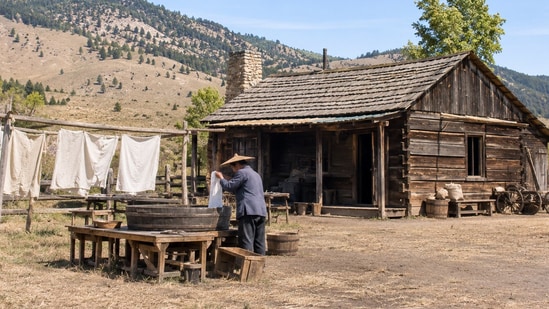
A passageway near a building in Lander, Wyoming, hides a rare artifact from the American West’s immigrant history. The shed, which sat unnoticed behind a building on Main Street for more than 50 years, was once owned and operated by Sam Sing as a Chinese laundry and bathhouse. Sing was one of the first Chinese residents of the town and helped develop the frontier settlement. Now the historic log cabin has been relocated to Pioneer Village at the Fremont County Pioneer Museum in Lander.
The move ends an eight-year chapter that began when owner Tony McRae recognized the building's value and decided to donate it to the museum. Not only will the old building be preserved, but the project will illuminate experiences of Chinese immigrants in a small Wyoming town during the late 1800s. According to a report by Cowboy State Daily published on September 21, 2026, the museum accepted the donated structure and has since worked to secure funding for its maintenance and relocation.
From a Chinese geologist to Wyoming laundry owner
Suggested For You
Sam Sing, also known as Sing Yee Wind, was born in Canton Province, China, in 1859. He was trained as a geologist, traveling to the U.S. at a time when gold was attracting prospectors from around the globe to the West. He mined the gold fields of California before heading to South Pass City, Wyoming, which was undergoing a gold rush. When the rush subsided, Sing moved to Lander, working as a cook at the Lander Hotel. He used his geological training to identify sites where he believed oil and gas deposits might exist. He purchased several lucrative claims, laying the groundwork.
Eventually, Sing opened a laundry and bathhouse in a tiny log cabin. In a time when washing machines and indoor plumbing were limited, the laundry met an important need. Washing clothes meant fetching water, chopping wood, heating huge coppers, and scrubbing clothes. The business also provided bathing facilities, with an early advertisement stating that you could have a bath in 1903 for 25 cents, which later increased to 40 cents.
An overlooked building gets a second chance
{{/usCountry}}Eventually, Sing opened a laundry and bathhouse in a tiny log cabin. In a time when washing machines and indoor plumbing were limited, the laundry met an important need. Washing clothes meant fetching water, chopping wood, heating huge coppers, and scrubbing clothes. The business also provided bathing facilities, with an early advertisement stating that you could have a bath in 1903 for 25 cents, which later increased to 40 cents.
An overlooked building gets a second chance
{{/usCountry}}Initially, the laundry was built on Lander's Main Street, on the site that would eventually become the back lot of McRae Pharmacy. Its early history was lost, and over the years it served as a storage shed. Its hidden location probably helped keep it from being razed. Owner Tony McRae, who owned McRae Pharmacy, saw its value and asked the Fremont County Pioneer Museum about donating it. The museum gladly accepted, but moving the building, which was a fragile log structure, required some planning and additional funding.
The move was carried out by the Fremont County Pioneer Association, and Lander ambassadors raised slightly more than $20,000 to help offset costs of the move and to prepare a concrete foundation at Pioneer Village. The building has been installed at its new site and can now be preserved and used as a display of public history. The move also highlights the broader context of Chinese laundry workers in the United States. Research published in the Journal of American Ethnic History examines how Chinese immigrants established themselves in the laundry industry between 1850 and 1950, often working in occupations shaped by racial and economic restrictions.
Restoration will preserve a forgotten chapter
Moving the building is just the first step of preservation work. The cabin will require extensive restoration before it opens to museum visitors. Some of the logs along the bottom of the building are damaged and will need to be replaced, and there are areas that need new chinking to better seal the building from the elements. The roof will be examined to determine if repairs are needed. A part of the building that is likely to change is the bay doors that were added when the building was used as a storage shed.
The museum is planning to remove those doors which were added later and restore the opening to be just a single entrance with a window on either side. The restoration may be difficult, as no photographs of the laundry have been found from when it was used for that purpose. Some original artifacts related to Sing's business exist at the museum, including old machinery such as a working water pump, which could be used to show how the laundry was run.
Sing died on July 4, 1926. His headstone at Mount Hope Cemetery bears Chinese characters, and he had no wife or children. His brother came from Canton to Lander, Wyoming, to bury him and then returned to China. The museum anticipates it will take about a year to restore the building, which will require further fundraising. When finished, the building will be the first exhibit at Pioneer Village to tell the story of Lander's first Chinese community.
Explore More
ABOUT THE AUTHOR
The Hindustan Times US Desk brings you the latest news and developments from across the United States. The team covers everything from breaking news and politics to sports, business, entertainment and stories that are trending across the country. Our coverage includes the White House, Congress, US elections, immigration and visa updates, H-1B, green cards, Social Security, education, jobs, layoffs, the economy, technology and major policy changes. We also closely follow stories that matter to Indian and South Asian communities in the US. The desk covers major US sports, including the NFL, NBA, MLB and NHL, along with player news, injuries, schedules, results and major events. Entertainment coverage includes Hollywood, celebrities, television, streaming, music and pop culture. We also report on breaking developments, major incidents, weather, public safety, court cases and other stories making headlines across the country. When a major policy or news development affects people's everyday lives, the team works to explain what happened, what it means and what readers need to know. Alongside breaking news, the US Desk produces explainers and practical stories on topics such as immigration, Social Security, taxes, education, employment and government programmes. The team also works on science, tech, business and AI stories analyzing the impact they may have on people. The team follows developments throughout the day, keeping an eye on official announcements, public records, reliable news sources and what people are talking about across the US.