US President Donald Trump is reportedly preparing to fire Federal Reserve Chair Jerome Powell. As per a New York Times report, Trump even waved around a draft termination letter during an Oval Office meeting. However, he later said it was ‘highly unlikely’ he'd fire the Fed chief, but didn't completely rule out the possibility.
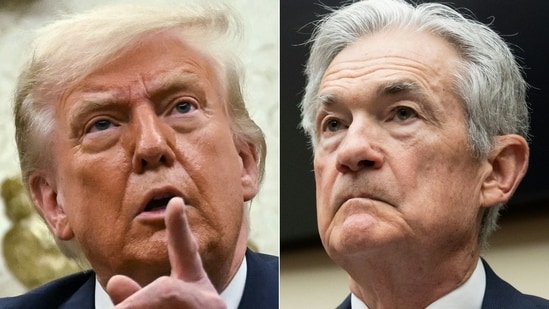
Trump would expect Powell's successor to follow orders on lower interest rates, which would raise questions about the central bank's long-established independence from political intervention.
Also Read | Who could replace Jerome Powell as Fed chair
Can Trump fire the Federal Reserve Chairman?
In a past press conference, Federal Reserve Chair Jerome Powell asserted that the President doesn’t have the legal authority to fire him without a valid reason and clarified that he would not resign.
However, legal experts, including Russel Morgan from The Morgan Legal Group, suggest that the rules around removing a Fed chair, even for the President, are vague.
According to the 1913 Federal Reserve Act, the Fed is meant to operate independently, shielded from any political pressure, including disagreements with the leaders over policy.
Also Read | Donald Trump considers '3 or 4' names to replace Federal Reserve Chair Jerome Powell
This independence of the Fed Chair's work was also supported by a 1930s US Supreme Court ruling stating that a Fed chair can only be removed for serious reasons, such as neglect of duty, misconduct, or inefficiency.
{{/usCountry}}This independence of the Fed Chair's work was also supported by a 1930s US Supreme Court ruling stating that a Fed chair can only be removed for serious reasons, such as neglect of duty, misconduct, or inefficiency.
{{/usCountry}}Morgan told Barron’s that any attempt to fire Powell would likely trigger a long, complex legal battle for the Republican leader, possibly involving a Senate investigation to prove there are legitimate grounds for dismissal.
When does Fed chair Jerome Powell's term end?
Jerome H. Powell first took office as Chair of the Board of Governors of the Federal Reserve System on February 5, 2018, for a four-year term. He was reappointed to the office and sworn in for a second four-year term on May 23, 2022.
His current term as Chair of the central bank ends in May 2026, though he will remain a Governor until February 2028.