Hawaii once planted a tree to protect its hillsides. Today, that same tree is associated with damaged homes and costly power repairs. The Big Island Invasive Species Committee, a group based on Hawaii Island, says foresters brought albizia to Hawaii because they wanted trees that grew quickly on eroding slopes. But the plan backfired over time, and the tree became a major problem for people and for forests.
A fix for eroding slopes
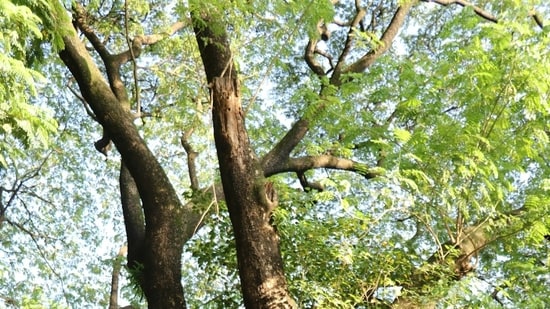
Albizia, or Falcataria moluccana, is native to the Moluccan Islands in Indonesia. It arrived in Hawaii in 1917. At the time, territorial foresters were concerned about the erosion of slopes caused by cattle ranching and logging. They wanted trees that grew quickly, and albizia did grow quickly. Decades later, as the sugar industry declined and plantations closed, albizia moved into the abandoned cane fields. From there it spread even further throughout the islands, the committee says. A plan for saving hillsides eventually turned into a problem far larger than hillsides.
Why branches break
But fast growth is only part of the story. The committee said large branches of the albizia tree are likely to break off during heavy rain and wind. Limbs have reportedly been breaking and falling in gusts as low as 35 mph. The tree is also prone to sudden limb drop, when limbs snap off and fall without warning. Albizia grows easily along roadsides and can become a public hazard within a few years. As debris builds up, downed trees and branches can dam streams and cause flooding.
The storm and the bill
Tropical Storm Iselle in 2014 showed those risks in practice. The committee says dozens were trapped for hours after the storm, with several homes crushed by falling albizia. HELCO, the electric utility, said it spent an estimated $13 million to repair damage from Iselle. It has also spent millions more repairing lines and poles damaged in high-wind events over the years. The committee calls this a high economic cost to residents and utilities. The storm caused many kinds of damage, and albizia was one factor in the repair bill, not the only one.
Damage to native forests
{{/usCountry}}Tropical Storm Iselle in 2014 showed those risks in practice. The committee says dozens were trapped for hours after the storm, with several homes crushed by falling albizia. HELCO, the electric utility, said it spent an estimated $13 million to repair damage from Iselle. It has also spent millions more repairing lines and poles damaged in high-wind events over the years. The committee calls this a high economic cost to residents and utilities. The storm caused many kinds of damage, and albizia was one factor in the repair bill, not the only one.
Damage to native forests
{{/usCountry}}The damage is not limited to storms. A study published in Ecological Applications in 2005 by R. Flint Hughes and Julie S. Denslow explored how albizia changes native forests. The researchers worked in some of the last remaining patches of native wet lowland forest, on Kilauea lava flows on the Big Island of Hawaii. They compared native-dominated areas with those invaded by albizia. Invasion altered the function and structure of these forests, they found. Nonnative species, particularly strawberry guava, increased, while native species, particularly ohia, decreased. The authors suggest that the future of these forests depends mostly on the extent to which albizia spreads. The committee also notes that albizia’s shade can prevent many native species from growing.
What people can do
The committee recommends several practical steps. Seedlings can be pulled easily by hand while they are small. Larger trees that are far from homes, roads, and power lines can be managed by girdling or ring-barking, that is, stripping bark from around the trunk. Because girdled trees die and can eventually shed limbs, this method is not suitable for trees that could hit people or property. Herbicide can also be applied through cuts made in the tree.
The committee also provides a list of certified arborists who remove albizia and instructions for reporting hazardous trees on neighboring property. Large trees or trees near structures, roads, or power lines should be evaluated and removed by a certified arborist. Planting a fast-growing tree is easy, but living with the results for more than a hundred years is much harder.