Every big city gets its water from somewhere, and those choices can reshape distant places. Mono Lake in eastern California is a good example. For decades, the city of Los Angeles took water from the streams that fed it. In 1994, the state stepped in. That year, it adopted Decision 1631, setting streamflow requirements, water export limits, and other conditions to protect the lake’s public trust resources, according to the California State Water Resources Control Board.
How the lake lost water
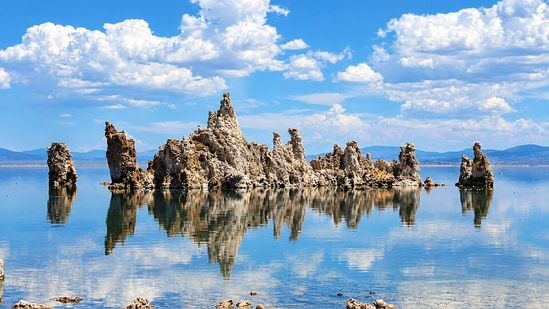
The board explains that it had granted permits to Los Angeles and its Department of Water and Power to divert water from streams that flow into Mono Lake. The diversions caused the lake level to drop 45 feet between 1941 and 1982. This ended up causing significant harm to the lake’s environment and public trust resources. In 1994, the board amended the department’s water rights licenses to include streamflow requirements, limits on exports, and conditions to protect those resources.
What the rules call for now
The 1994 decision set a long-term goal for the lake of 6,392 feet above sea level. The board predicted the lake would reach that level by 2014. Since recovery takes time, the decision created two sets of diversion limits. The first applies as the lake rises to 6,391 feet, and these transition limits are still followed by the department today. When the lake is below 6,377 feet, no diversions are allowed. The cap is 4,500 acre-feet a year between 6,377 and 6,380 feet. It’s 16,000 acre-feet a year from 6,380 to 6,391 feet. An acre-foot is the amount of water needed to cover an acre of land one foot deep.
Deep Dive
What did California’s 1994 Decision 1631 require Los Angeles to do at Mono Lake?
How much water can Los Angeles divert from Mono Lake’s tributary streams under the current limits?
Why has Mono Lake not reached its recovery goal?
Why Mono Lake’s recovery has been slow
Drought, climate change, and ongoing diversions have limited its recovery, and the lake remains below the long-term level, the board says. A 2025 review in the journal BioScience, written by a team of U.S. Geological Survey scientists, found that Mono Lake has never met its management goal since 1994 and remains well below the target level. Its authors add that, with few exceptions, the present condition of the Great Basin’s terminal lakes is the result of a long history of policy choices that did not consider the effects on the lakes themselves.
Why birds and scientists care
{{/usCountry}}Drought, climate change, and ongoing diversions have limited its recovery, and the lake remains below the long-term level, the board says. A 2025 review in the journal BioScience, written by a team of U.S. Geological Survey scientists, found that Mono Lake has never met its management goal since 1994 and remains well below the target level. Its authors add that, with few exceptions, the present condition of the Great Basin’s terminal lakes is the result of a long history of policy choices that did not consider the effects on the lakes themselves.
Why birds and scientists care
{{/usCountry}}Mono Lake is a terminal lake, which means it has no outlet to any other body of water. Terminal lakes in the Great Basin support millions of waterbirds annually, the review notes. More than 99 percent of North America’s eared grebes depend on the brine shrimp and alkali flies those lakes produce in the fall, it adds. Mono Lake was the second most-studied lake in the review, with 21% of the publications, after Great Salt Lake at 39%. The authors link that long history of research to the legal water rules for Mono Lake.
What comes next
In October 2021, the board issued an order with new requirements to restore about 20 miles of creek and fish habitat in streams that flow into the lake. Board staff held public workshops in June 2026 to gather information on the condition of the lake and to discuss management options. The board also hired UCLA’s Center for Climate Science to develop a water budget model to study how climate change and diversions affect lake levels. The rules created a clear path for the lake in 1994, but recovery has taken longer than the board expected.