Kimberly Guilfoyle reportedly told White House officials that messages appearing to show her asking a Republican donor for $100,000 were created using artificial intelligence (AI).
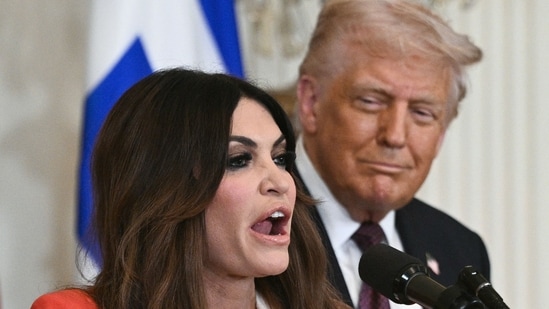
According to The Wall Street Journal, she made the claim while trying to keep her job as US ambassador to Greece. Officials reportedly did not accept her explanation, and the newspaper said its reporters had verified the messages.
Guilfoyle resigned on Tuesday, October 13, after White House Press Secretary Katie Zacharia announced that the administration had asked her to step down.
The reports about her messages to donor Eric Deters, along with other questions about her conduct, had put her under growing pressure.
Kimberly Guilfoyle's $100,000 donor texts
The controversy began after The Wall Street Journal reported that it had reviewed Signal messages between Guilfoyle and Deters. In the messages, Guilfoyle allegedly asked the donor to put $100,000 into her American Express account.
One message quoted in the report read: "It won't show up anywhere if you wire money to American Express," she wrote to Deters. "Please."
{{/usCountry}}One message quoted in the report read: "It won't show up anywhere if you wire money to American Express," she wrote to Deters. "Please."
{{/usCountry}}According to the newspaper, the two had been in contact for months while Deters sought help from the Trump administration with tax and legal issues. Deters had reportedly offered Guilfoyle as much as $1 million if she could use her connections to President Donald Trump to help him.
The report also said Guilfoyle shared messages she had sent to the Internal Revenue Service (IRS) on Deters' behalf. She reportedly told him that she was also lobbying the Department of Justice for him.
Also Read: Kimberly Guilfoyle reportedly threatening to expose Trump family secrets: ‘It would be a nightmare’
Guilfoyle reportedly blamed AI
In a report published on Tuesday, the newspaper detailed Guilfoyle's reported efforts to hold on to her ambassador position after the allegations became public.
"When the Journal published a second investigation revealing text messages that showed she had solicited $100,000 from a Trump donor in the run-up to her confirmation hearing last year, Guilfoyle reached out to White House officials to say the text messages were AI generated," the latest report stated.
"The officials didn't believe her claims, the people said. Journal reporters verified the authenticity of the donor's text messages."
The account suggests that Guilfoyle's explanation did not persuade White House officials. However, the report attributes the details of those conversations to people familiar with the matter.
Private jet travel under scrutiny
The messages were not the only subject of the newspaper's investigations. In a separate report published on Saturday, The Wall Street Journal examined Guilfoyle's travel on private jets owned by Greek businessmen.
The newspaper also reported that she promoted a Greek construction company while working closely with the firm's chief lobbyist. These reports raised further questions about her conduct while serving as ambassador to Greece.
Guilfoyle's reported efforts to stop negative coverage
The newspaper also reported that Guilfoyle tried to identify who had leaked information about her messages. She reportedly accused embassy staff and members of her security team of being behind the leaks.
She also contacted Matthew Boyle of Breitbart, reportedly seeking the publication's help in persuading the administration to support her.
Another dispute involved a Daily Mail article published this month. The article claimed Guilfoyle had failed to pay a $1,768 bill for two cases of champagne and dinner.
According to The Wall Street Journal, Guilfoyle asked the State Department whether it could get the article removed. When officials asked her to provide a receipt showing that she had paid the bill, she did not provide one, the newspaper reported.
Her resignation followed the reports and the administration's request that she leave the ambassador's post.