A high-risk search and rescue mission is underway after a US fighter jet crashed inside Iran, leaving one crew member still missing. The pilot has been rescued, while efforts continue to locate the second airman, according to reports cited by TIME, Axios and CBS News.
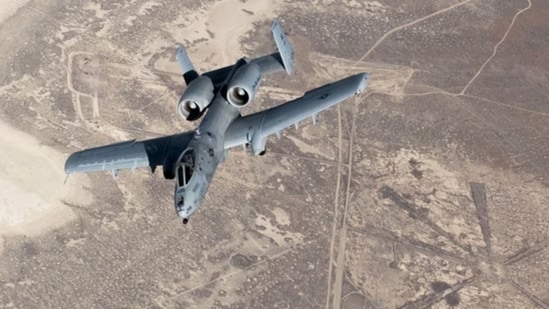
While details of the crash are still emerging, the situation points to how the US military conducts one of its most complex operations: recovering personnel from hostile territory.
The first priority: finding the crew
Rescue missions begin with a race against time to locate the downed aircrew. Often, an aircraft ejection triggers a distress signal, alerting military teams. However, pinpointing the exact location remains a major challenge.
“It is a very complex effort,” Brigadier General Houston Cantwell told TIME. “The most important piece of information is what is the location of the air crew… and that piece of information is so hard to get.”
He added that enemy forces may attempt to “spoof” signals or spread false information, further complicating search efforts.
Training for survival behind enemy lines
{{/usCountry}}He added that enemy forces may attempt to “spoof” signals or spread false information, further complicating search efforts.
Training for survival behind enemy lines
{{/usCountry}}US aircrew are trained extensively for such scenarios under the Survival, Evasion, Resistance, and Escape (SERE) program. The training equips them to avoid capture and survive in hostile conditions until help arrives.
“It might have been years [since] they’ve had the training, but I guarantee you that it kicks in right away,” said Major General Thomas Kunkel, adding that refresher sessions are conducted before missions.
Also Read: Two US warplanes down, 2 choppers hit by Iran in 24 hours despite Trump's warnings: 5 things to know
Pilots also carry survival kits, which typically include communication devices that can help rescuers establish contact.
Building a ‘rescue package’
Once a probable location is identified, the military assembles a coordinated response known as a “rescue package.” This involves multiple aircraft and a specialized team.
Kunkel estimates that around 10 to 20 personnel may be deployed for such missions.
HH-60W helicopters are commonly used to extract personnel, while HC-130J aircraft provide mid-air refueling to extend their operational range.
Additional support may include electronic warfare aircraft to jam enemy systems and A-10 attack planes to provide cover. “If there’s any enemy forces that need to be suppressed… the A-10 will provide that suppressing fire,” Cantwell said.
Timing, terrain, and mobility
Several factors influence how and when a rescue can be attempted. Daytime missions can expose both the survivor and rescuers, turning the operation into a “race” with enemy forces, Kunkel noted. Night operations offer more concealment but come with their own risks.
The condition of the missing crew member is also critical. “Whether or not the stranded crew member is mobile” is a key factor, Cantwell said, as it determines the range of possible extraction points.
Environmental challenges, such as desert terrain or dense vegetation, can also affect operations. In cases where helicopters cannot land, crews may use specialized equipment like a force penetrator to lift the individual to safety.
Also Read: ‘We're in a war’: Trump says Iran downing US fighter jets won't hit negotiations
The biggest risks: capture and survival
For missions in hostile territory like Iran, the risk of capture is a major concern. “I am certain that the Iranians would want nothing more than to get their hands on one of our aviators,” Cantwell said.
If the missing crew member avoids capture, survival becomes the next challenge, especially in harsh desert conditions where water and cover are limited.
Despite the dangers, officials stress that such missions are a core priority. As Kunkel put it, “We want them to know that there will be every effort made to come rescue them.”