
 E-Paper



Why did Israel attack Syria? Who are the Druze minority? | Details
Israel stepped in as the Syrian forces were not acting to prevent the strikes on Druze and were part of the problem, an Israeli official said.

 Prefer HTon Google


Israel on Wednesday launched massive strikes on Syria, attacking major parts of the country and vowing to destroy the government forces attacking the Druze minority in southern Syria.
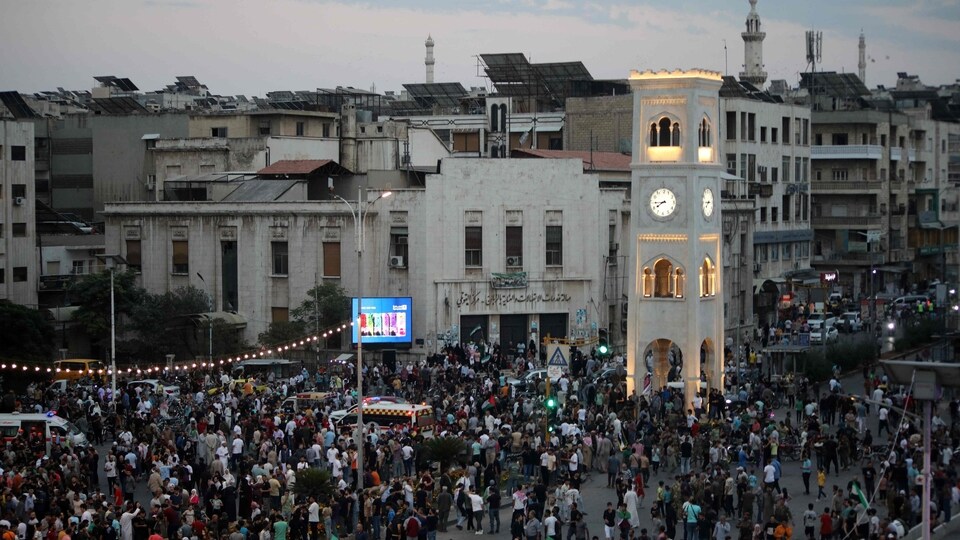
Israel described Syria's new administration, led by interim President Ahmed al-Sharaa, as barely disguised jihadists and said it won't let them move their forces into southern Syria.
Israel has vowed to shield southern Syria's Druze community from attack, with the Israeli Druze minority encouraging their safety.
Scores of people have been killed this week in violence in and around the Druze majority city of Sweida, where the Syrian military entered on Monday.
The escalation prompted Israel to launch fresh strikes against the Syrian government's forces moving towards Sweida, and vowing to continue the attacks to protect the Druze community.
Why did Israel attack Syria?
The major reason behind Israel's move to strike Syria is to protect the Druze minority in the country and to prevent Syrian forces from moving into or near shared border areas.
An Israeli military official said that their strikes hit the entrance to the Damascus military headquarters and a target near the presidential palace.
Israel stepped in as the Syrian forces were not acting to prevent the strikes on Druze and were part of the problem, the official added.
Israeli defence minister Israel Katz said that their military would "continue to operate vigorously in Sweida to destroy the forces that attacked the Druze until they withdraw completely".
Israeli Prime Minister Benjamin Netanyahu said on Tuesday that his country is "committed to preventing harm to Syria's Druze due to the deep brotherly alliance with our Druze citizens in Israel, and their familial and historical ties to the Druze in Syria".
Netanyahu also said that his military was working towards saving the Druze and urged the Israeli Druze citizens not to cross borders.
Syrian government forces had entered Sweida earlier in the week to deal with the clashes between the Druze and Bedouin armed men. But they ended up fighting with the Druze militias.
While a ceasefire between Syria and the Druze minority was reached on Tuesday, it later collapsed.
A statement from the Syrian government on Wednesday said that those responsible for the lawlessness and violence in Sweida would be held accountable. It assured that the government was committed to protecting the rights of the people in Sweida.
A fresh ceasefire between the Syrian government and the Druze minority was announced on Wednesday. However, a key Druze leader, Sheikh Hikmat Al-Hijri, disavowed the new agreement entered into by other Druze officials.
The escalating violence seemed like the most serious threat to the new Syrian rule's ability, since the ouster of Bashar Assad in December last year.
The primarily Sunni Muslim authorities have faced issues of suspicion from religious as well as ethnic minorities, especially since the fighting between pro-Assad groups and government forces spiralled into sectarian revenge attacks in March, resulting in the deaths of hundreds of civilians from the Alawite minority, to which Assad belongs.
Who is Druze community?
Druze are followers of a religion that is a 10th-century offshoot of Ismailism, a branch of Shiite Islam.
Over half of the roughly 1 million Druze worldwide are living in Syria. Most of the other Druze live in Israel and Lebanon, including in the occupied Golan Heights.
In Syria, the Druze minority is concentrated in the Sweida region, which borders Jordan, in areas adjoining the Israeli-occupied Golan, and in Damascus' Jaramana suburb.
French colonial authorities had established a new state called Jabal al-Druze in the middle of Sweida until 1936.
The Druze community protested against Bashar al-Assad after the civil war erupted in 2011. Now and then the Druze faced attacks from other groups, including from Sharaa's Hayat Tahrir al-Sham (HTS) and other Sunni Islamist militants who consider their sect as heretical.
The Druze reportedly maintain some level of secrecy when it comes to the practice of their faith that emerged in the 11th century and includes elements from Islam, as well as other philosophies, pressing on monotheism, reincarnation and pursuit of truth.
Tensions between Druze and Syria's new administration broke out several times this year, especially in Sweida and Jaramana.
US intervention
Meanwhile, the US State Department said that Washington was asking Syrian government forces to pull out of the flashpoint area. "We are calling on the Syrian government to, in fact, withdraw their military in order to enable all sides to de-escalate and find a path forward," spokesperson Tammy Bruce told reporters.
US Secretary of State Marco Rubio said Washington hoped to ease tensions in Syria within hours. "In the next few hours, we hope to see some real progress to end what you've been seeing over the last couple of hours," he told reporters in the Oval Office as President Donald Trump nodded.
He blamed the "historic longtime rivalries" for the clashes in Sweida. "It led to an unfortunate situation and a misunderstanding, it looks like, between the Israeli side and the Syrian side," Rubio said.
He said that the US has been engaged with Syria and Israel morning and night, and expressed hope that "we are on our way towards a real de-escalation and then hopefully get back on track and helping Syria build the country, and arriving a situation in the Middle East that is far more stable".
(with inputs from agencies)


