
 E-Paper



Startup Saturday: Connecting the dots to map out the solution
Abhimanyu and Mukund saw a gap in the way path labs and hospitals worked. Data was fragmented and there was no meaningful communication with patients. They set out to change the way health reports are delivered and stored. Namita Shibad takes the Live Health tour


A problem becomes an opportunity
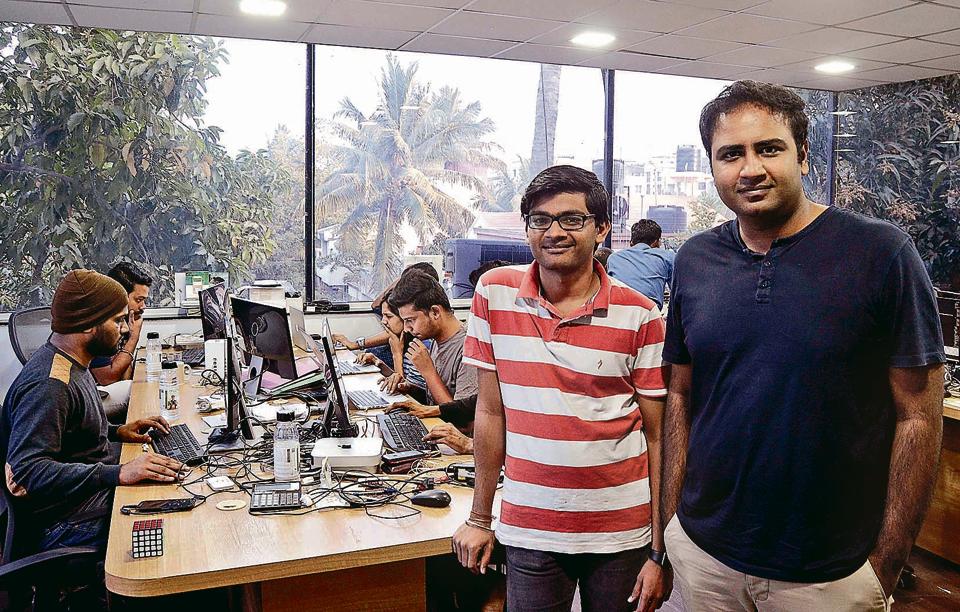

Abhimanyu Bhosale and Mukund Malani were still in college working part time in a healthcare startup when they saw a problem. “We noticed that almost all healthcare providers, hospitals, path labs, were not coalesced on a single platform, which was very important for the business. Despite the availability of digitisation and automation they were operating in a completely fragmented way. Say a patient went to a hospital on Sassoon road and then visited the same hospital’s branch at Wanowrie, the hospital would not recognise him as the same person. Because of this fragmentation it is easy to miss, say, an outbreak of malaria in the city because reports are not on one platform and trends cannot be studied. ”
Live Health is born in November 2013
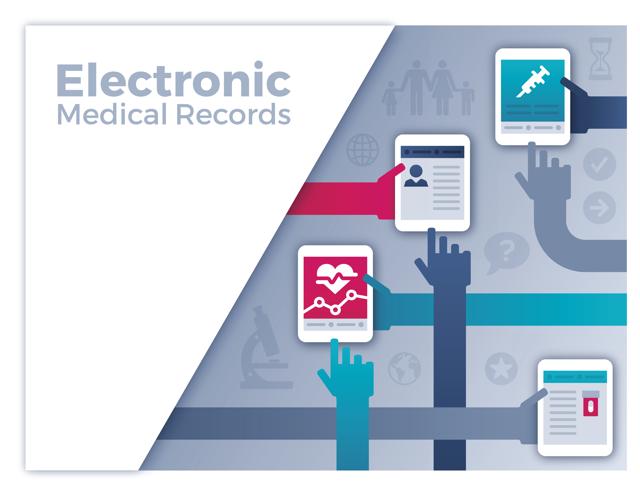
The duo decided that it was important to digitise health records and communication between hospitals and patients. This would lead to better healthcare delivery. Says Abhimanyu, “Let’s say you go to a lab in a hospital to do your regular diabetes check. Many labs now email you the report. But, if this communication were to be more meaningful, it should be able to put all your past records along with your latest HbA1c together on say an excel sheet so you and your doctor know what exactly your status is.”
The two friends started working on various parameters that would help digitise medical records and communication. This meant many things.
Says Abhimanyu, “We had to work on automating the entire process at a path lab. It meant we had to build an entire lab management system and a diagnostic management system. With this, patients became a by-product of the system.”
Proof of concept gets the doctor’s orders

Doing this meant that a lab would benefit three ways. “By creating a platform to manage the day-to-day business of a lab we could manage your finances. Then we created an instrument interfacing communication with lab analyses. When you give your blood sample to a lab, there are many steps that go into it before you get a report. You have to tag the sample with the ID of the patient and then it has to be loaded on to a machine. The machine is then told which test is to be performed. The result generated is sent to the doctor who will verify the report after which it is sent to the patient. All the top labs in the country do their tests in this way. But the rest, and those are 80 per cent of the labs, are unorganised and do not follow such systems. “
“Thirdly because of automation one can run their labs without any worries. It would manage several aspects regarding finances, statistics, tests, etc. The benefits of Live Health to patients are that the entire communication between a lab and a patient is digitised and fast. One does not have to travel to the lab to collect reports. Then you can pay your bills online. Says you pay half the amount of your MRI bill. The balance can be paid online without having to go to the lab. And lastly Live Health helps you track your health. You have all your records stored and tabulated for you to check anytime. We give a URL where patients can share health records with any doctor anywhere in the world.”
Once the solutions were ready they had to have it tested in the real world. Says Abhimanyu, “When our prototype was ready we had to get it tested. We approached two labs Vivura and G9 Diagnostics who agreed to test our product. This helped us see areas that we need to improve on. In fact, even now, after we have launched it we are working on improvements.”
The product worked successfully at these two labs. The task before them now was to market their solution. Says Abhimanyu, “Even with the places where we did our beta testing we had to work very hard to get them on board. We had eight to nine meetings to convince them of the benefits. Both Mukul and I had agreed that we would not take a customer for free. S/he had to pay for our services, because if a customer does not pay then the feedback s/he gives will not be honest, and our growth would get impacted. So in June 2014 we had our first two customers, Vivura and G9 Diagnostics.”
Scale and grow to move into a global marketplace
The company needs to scale up to grow and that presented several challenges. “Even today this is a challenge. The infrastructure for a cloud-based solution depends heavily on the internet which in many places is very poor. A lab cannot stop processing its samples because of the internet. So we worked again where we can do almost 80 per cent of the work offline.”
With a good match of pricing and validity and the two clients they had, the duo went out to seek funds. Says Abhimanyu, “We pitched to several VCs and angel funds but it was Mplier Healthcare ventures that saw our value proposition. Both the founders of Mplier are doctors so it was easy for them to see what we were doing. In October 2015 were got Rs 1.8 crore from them.
This money they spent on further developing the product and getting the right engineers. “We also worked on reaching out to customers all across India. Today, we have over 600 clients right from Kanyakumari to Kashmir, from Guwahati to Mumbai.”
In the near future Live Health aims to digitise MRIs and CT scans, but their aim is to get onto the global platform. “We have a few clients in the Middle East and Malaysia, but we want to expand and offer our services all over the world. In the West they do not have connectivity issues. Over there the problems are regulatory. The insurance companies have too many strictures on how a lab or a hospital will communicate with its patients.”
Given their persistence, it is not impossible that Live Health will find its way to the global market.


