
 E-Paper



ISRO launch ‘unsuccessful’: What is heat shield and why was IRNSS-1H satellite not released?
The ISRO chairman described the mission as a “mishap” after announcing that the IRNSS-1H satellite was not released by the rocket.

 Prefer HTon Google


India’s mission to place a navigation satellite into space failed on Thursday after the spacecraft carrying it suffered a technical fault on the final leg after a perfect launch.
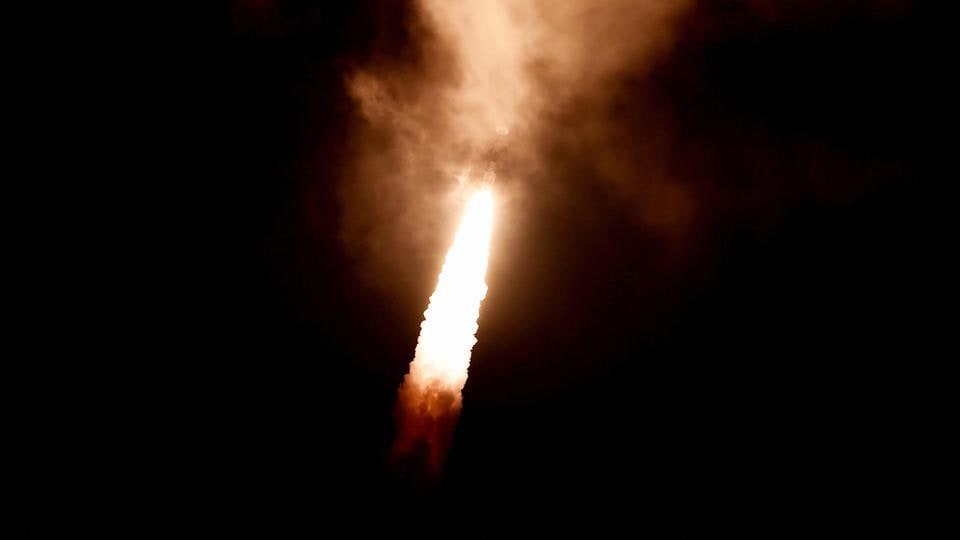
Indian Space Research Agency (ISRO) chairman Kiran Kumar described the mission as a “mishap” shortly after announcing that the IRNSS-1H satellite was not released by the PSLV-39 rocket as the heat shield didn’t separate from the spacecraft.
Thursday’s setback is considered a rare failure in India’s space mission involving the PSLV, dubbed as ISRO’s ‘workhorse’, which has had a time-tested record of 39 consecutive successful launches. Before this, its maiden flight failed 24 years ago.
What is a heat shield?
A heat shield is an encasement which protects the satellite in the rocket from ultra-high temperatures, acoustic pressures that the spacecraft experiences while travelling in the Earth’s atmosphere, an article in the Indian Express said.
In space shuttles, the heat shield must protect the crew capsule and its precious astronaut crew from temperatures that can melt metal. These ultra-high temperatures result from friction between the air and the speeding spacecraft, according to Nasa.
Heat shield separation and satellite
Pressures decrease once the spacecraft is outside Earth’s atmosphere, allowing the heat shield to separate in the fourth phase of the launch.
After the heat shield failed to separate, the IRNSS-1H satellite could not be released into the orbit.
The eighth satellite was a replacement for IRNSS-1A, one of the seven satellites in India’s navigation satellite constellation, as its three rubidium atomic clocks on board had stopped functioning. It was also the first time the private sector was actively involved in assembling and testing of a satellite.
ISRO said it will probe why the shield didn’t peel off.
What next?
ISRO has planned a ninth navigation satellite for the IRNSS system. Another satellite may be launched to make up for the loss of IRNSS-1H, said Indian Express.
(With agency inputs)


