
 E-Paper



How Russia ‘changed’ its stance on military drill with Pakistan
Shortly before 11 am on Friday, Pakistan’s chief military spokesman Lt Gen Asim Bajwa tweeted that a contingent of Russian troops had arrived in Rawalpindi for the first military exercise between the two Cold War rivals.

 Prefer HTon Google


Shortly before 11 am on Friday, Pakistan’s chief military spokesman Lt Gen Asim Bajwa tweeted that a contingent of Russian troops had arrived in Rawalpindi for the first military exercise between the two Cold War rivals.
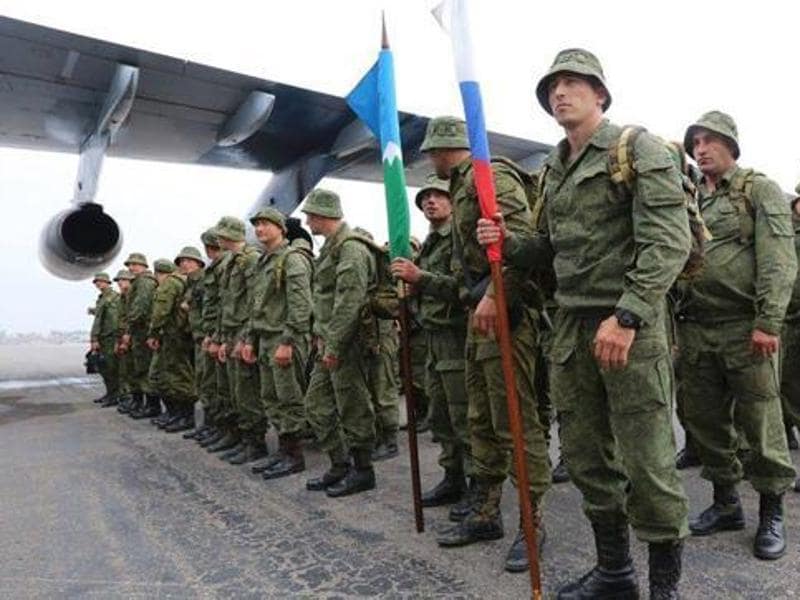
This was good news for Pakistan, coming as it did days after several Indian TV news channels had reported that New Delhi had prevailed on Moscow to call off the two-week-long “Druzhba 2016” (Friendship 2016) drill in the aftermath of the terror attack on an Indian Army camp at Uri that killed 18 soldiers.
Hours after the Russian troops flew into a military airbase in Rawalpindi, Russia’s state-run Tass news agency quoted a statement issued by the Russian Southern Military Command’s press service that said: “The opening ceremony of the Friendship 2016 drills will take place on September 24 at Pakistan Army’s High Altitude School in Rattu, Gilgit-Baltistan.”
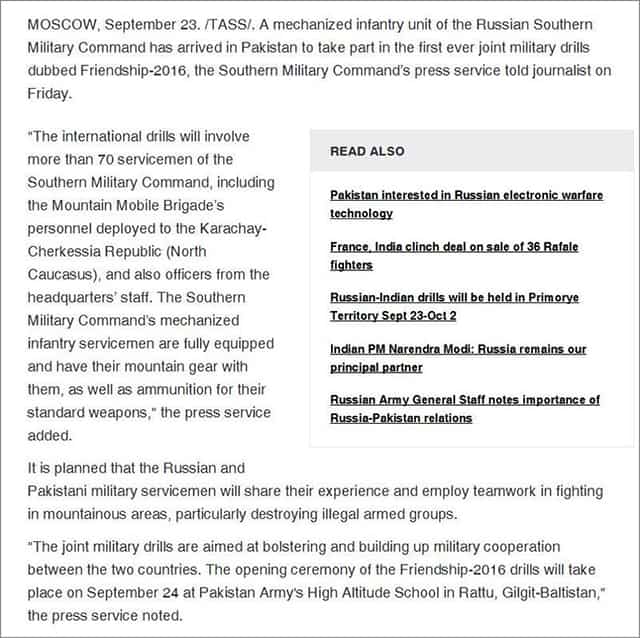
This wasn’t good news for India because Gilgit-Baltistan was part of the erstwhile Jammu and Kashmir state and territory claimed by India. For Pakistan to conduct a major military exercise with foreign troops in the territory could be perceived as a big diplomatic win.
Since the Friendship 2016 drill was first announced by Russia on January 22 this year, reports in the Russian and Pakistani media had said that it would be conducted at the High Altitude School in Gilgit-Baltistan and a special forces training centre at Cherat in Khyber-Pakhtunkhwa province.
India repeatedly brought up its concerns about the venue of the exercise with Russia. External affairs ministry spokesman Vikas Swarup told a news briefing on Thurdsday that Gilgit-Baltistan was “part of Indian territory” and India’s “well known sensitivities” had been conveyed to Russia, including at a meeting of the Inter-Governmental Commission in New Delhi on September 13.
Read| Pakistan cancels flights to Gilgit-Baltistan amid tensions with India
Such sleight of hand by Pakistan as far as territories in the erstwhile state of Jammu and Kashmir is concerned is not unknown. After all, the military standoff on Siachen, which began in 1984, was triggered by Pakistan giving permission to foreign expeditions to access the glacier as part of a strategy to claim the territory.
As the media reported the launch of the Pakistan-Russia drill, New Delhi would have reiterated its concerns to Moscow. This resulted in two things.
At around 9.30 pm on Friday, the Russian embassy in New Delhi issued a statement that said the drill wouldn’t be held in any “sensitive or problematic areas” such as Gilgit-Baltistan.
The original Tass news report on the exercise was edited to remove all references to Gilgit-Baltistan.
In 2015, the Russian embassy had denied all reports of Russia’s plans to sell gunship helicopters to Pakistan till the deal for four Mi-35s was announced by Moscow.
Though Russian President Vladimir Putin had said during a visit to New Delhi in March 2010 that “unlike many other countries, Russia does not have any military cooperation with Pakistan because we bear in mind the concerns of our Indian friends”, defence cooperation has increased between Islamabad and Moscow since then.
In the past 15 months, Pakistan’s army, navy, and air force chiefs have visited Russia and reports have said the two sides are negotiating the supply of more military hardware, including Su-35 combat jets.
The United States displaced Russia as India’s top supplier of armaments only in 2013 but Moscow remains a key supplier of aircraft, tanks, warships, spares and associated equipment.
According to the think tank SIPRI, India’s military spending was $51.3 billion and as Russia believes it is being squeezed out of the Indian market by new suppliers such as the US and Israel, it could make more moves to enhance military ties with Pakistan.



