E-Paper



One year on, permanent homes still a dream for Nepal’s quake victims
Hundreds of thousands of people who lost their homes in two devastating earthquakes in Nepal last year are still waiting to move into permanent houses.

 Prefer HTon Google


Hundreds of thousands of people who lost their homes in two devastating earthquakes in Nepal last year are still waiting to move into permanent houses.
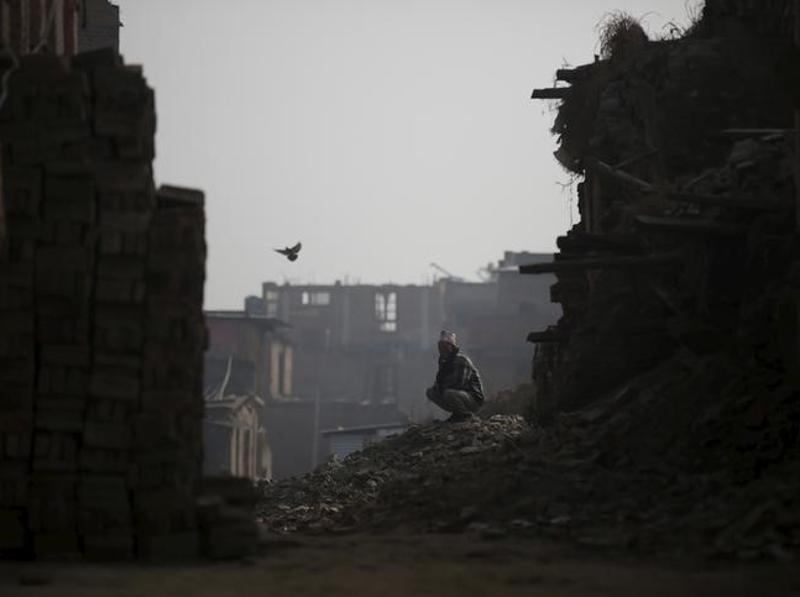
The temblors in April and May 2015 claimed nearly 9,000 lives, injured more than 22,000, destroyed close to 600,000 houses and damaged nearly 300,000 more.
Political bickering and bureaucratic lethargy has resulted in not a single permanent structure being rebuilt with government grants, despite the world community pledging $4.1 billion in aid in June last year.
Some 200,000 people still live in temporary shelters made of tarpaulin, tin, bamboo and wood at locations in the worst affected sites.
It took nine months for a National Reconstruction Authority (NRA), entrusted with the task of rebuilding, to take shape. But it is yet to launch reconstruction works.
Rebuilding and reconstruction was also hit by a five-month blockade of the border with India, which was imposed by Madhesi parties based in the southern plains who were upset with the new Constitution adopted in September.
The NRA plans to start full-fledged distribution of NRs 200,000 (nearly $1,900) earmarked for each person whose home was destroyed from Sunday, a day ahead of the first anniversary of the April 25 quake.
A partial distribution of the grants began last month and about 600 families have received the first instalment of NRs 50,000 in nine of the 11 worst affected districts.
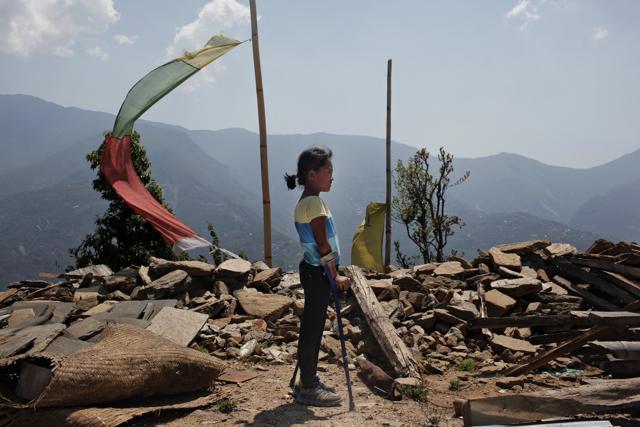
The delay is due to verification of citizenship, land ownership and other documents of the victims. More than 1,600 engineers are conducting surveys to ensure that “no one eligible for support is missed, and no one is double-dipping”, officials said.
“The NRA’s plan is to complete the surveys and begin distributing housing grants before the monsoon season,” said a periodic progress report released by the authority this month.
The grant of NRs 200,000 will be given in three instalments but there is still no clarity on the guidelines the NRA expects the victims to follow while rebuilding their homes.
The NRA is still finalising guidelines for training and capacity-building of masons who will reconstruct destroyed houses in an earthquake-resistant manner.
Besides houses, the quakes destroyed more than 35,000 classrooms, damaged more than 6,000 government buildings and nearly 1,000 hospitals and clinics. UNESCO says 691 heritage structures were damaged and 131 destroyed.