There are times when the dictionary is the only place left for a word to have meaning. Autonomy is one such word. It once conveyed the message that institutions dealing with ideas should maintain a distance from the State. This message was crucial for institutions teaching the young how to think. By guaranteeing their autonomy, the State could expect a constant supply of new ideas and individuals who knew what they meant and how they might prove useful under different circumstances.
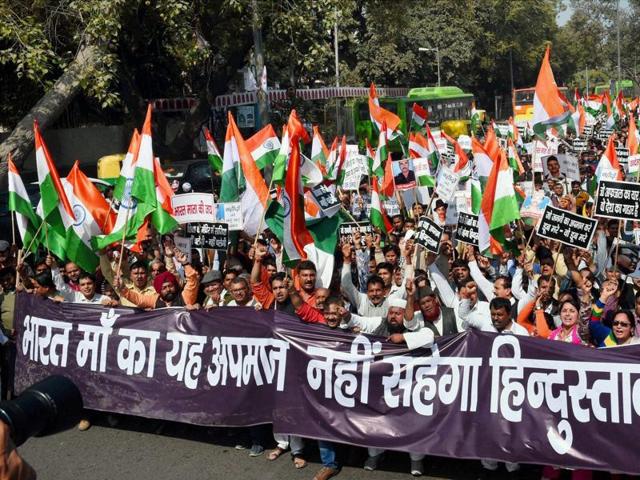
Discussing autonomy barely a week after the invasion of Jawaharlal Nehru University (JNU) is a bit frivolous. It is one of our best venues of higher learning, known for its unusual efforts to create and nurture an inclusive ethos. Its influence on India’s intellectual life is undisputable. No matter which field of civic life you look at — from police to politics — you will meet people who have been touched by JNU. It has played an enabling role for numerous other institutions. If some people hate it, they will hopefully find time to introspect. The political vortex in which JNU finds itself has its origins in Hyderabad Central University. There is no ostensible link between the crises these two prestigious universities have run into, but the nature of the crisis in each case is similar.
The circumstances that pushed Rohith Vemula to take his own life were administratively sculpted. The letter he wrote to the vice-chancellor a month before committing suicide expresses his awareness that the institution he had joined in search of education was a sleepy hollow where screaming in distress was pointless. JNU, on the other hand, adroitly abandoned a leader elected according to the university’s own norms and procedures. (The Lyngdoh Committee, appointed by the Supreme Court a few years ago to recommend reforms in student union elections, appreciated JNU norms.) Neither Hyderabad nor JNU chose to exercise their autonomy with a sense of responsibility, let alone grace. One chose to be dictated to by the State, the other chose to be walked over by brute force.
{{/usCountry}}The circumstances that pushed Rohith Vemula to take his own life were administratively sculpted. The letter he wrote to the vice-chancellor a month before committing suicide expresses his awareness that the institution he had joined in search of education was a sleepy hollow where screaming in distress was pointless. JNU, on the other hand, adroitly abandoned a leader elected according to the university’s own norms and procedures. (The Lyngdoh Committee, appointed by the Supreme Court a few years ago to recommend reforms in student union elections, appreciated JNU norms.) Neither Hyderabad nor JNU chose to exercise their autonomy with a sense of responsibility, let alone grace. One chose to be dictated to by the State, the other chose to be walked over by brute force.
{{/usCountry}}Read: JNU ‘sedition’ row: When media became part of the story
If these are among our best centres of higher learning, we can imagine how lesser universities cope with life. In their context, ‘autonomy’ is at best a memory or a pleasant myth. For some, it carries the memory of a distant past when politicians, their kin and friends had to exert themselves in order to influence a decision taken in a university. That era has fully passed.
These days when we complain about ‘political influence’ or ‘interference’, we mistakenly assume that politicians actively exercise their pressure. This may happen in a few cases; more often, influence gets exercised passively. Those in charge of running a university have internalised the ethic of cultivating political kinship. They actively look for ways to make political leaders happy. They don’t need instructions from above. Their everyday life is like poetry dedicated to the divine, signifying their own nothingness. Call it a cultural change or a sign of deep corruption, but it implies the disappearance of the distance between the academia and the state that even a moderate exercise of autonomy calls for.
One may ask: ‘Why are universities so vulnerable?’. The answer is that our institutions are not strong enough to withstand frequent patches of poor leadership. Once internal structures get compromised, institutional recovery becomes difficult. In any case, recovery takes considerable time, which is seldom available. Impending concerns take precedence and recovery plans get postponed. Once an institution loses its autonomy and dignity, its vulnerability to intrusion becomes endemic. This is what happened 50 years ago to our state universities, and hardly any of them have recovered their autonomy since.
Read: JNU to Kashmir: The anatomy of protests and right to freedom of speech
Let us remember that higher education in India is socially limited in its spread, and most of our universities have little to do with the social world that surrounds them. Like our highest institutes of technology and management, universities stay aloof from their surroundings. No wonder, the general public views higher education as a degree dispensing system. When a university decays, no one feels sorry. Delhi University (DU) launched an experimental 4-year undergraduate course with the government’s blessing. Lacking adequate consensus and preparation, the experiment backfired when the government changed and a rollback was ordered. The city expressed no discomfort over the procedure or the loss suffered by students.
One by one, our major central universities have sacrificed their administrative autonomy over the last three decades or so. If there are any symptoms of autonomy left in these institutions, it is because the young men and women studying in them raise their voice against absurd decisions and oppressive conditions. The prestigious Indian Institute of Technology (IIT), Chennai, withdrew its ban on a study circle devoted to the ideas of Periyar and Ambedkar, only after student protests. In Pune, the students of the Film and Television Institute of India (FTII) tried hard to protect its dignity and autonomy. They failed, but not without inspiring many others. Hyderabad and JNU indicate that we are witnessing a wave of youth protest. Any thoughtful, nimble government would have read the signs by now.
Read: JNU row: The fight to dominate the campus is on
The history of higher education offers many examples, around the world, showing that institutional reforms are often propelled by the anger of the young. Societies that ignore youthful anger or take it lightly suffer, either by turning into pools of stagnant power or by facing perversion of their own ideals. Over the last decade, many of our leaders in politics and industry have talked loudly about the emerging knowledge economy and the opportunities it presents for India. They don’t seem to recognise that progress in any domain of knowledge and education inevitably implies awkward questions that only the young can ask.
Read: Shehla Rashid, firebrand Kashmiri, leading JNU students’ fightback
(Krishna Kumar is professor of education at Delhi University and former director, NCERT. The views expressed are personal)