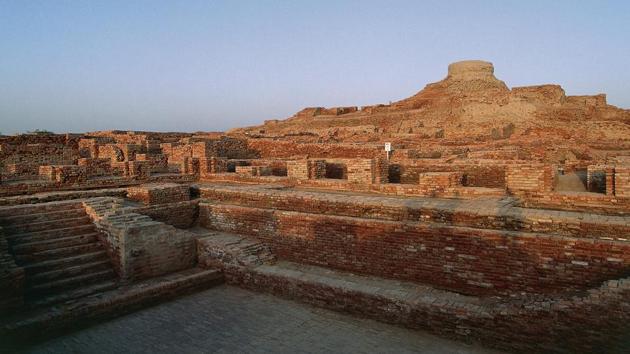
Ever since the excavation of the ancient site, Harappa, in the 1920s, the Indus Valley Civilisation (IVC) has intrigued archeologists and history lovers alike. As one of the three ancient civilisations (5,000 BCE-1,500 BCE) — others being the Mesopotamian (5,000-3,500 BC), and Egyptian (2,040 BC to 1,640 BC) — it was the largest human settlement of its time. “The civilisation is known for it technological and cultural advancement. For instance, various tools, such as a rock cut grain-grinder, and handmade ceramic toys, such as a
bullock cart, have been discovered at excavation sites. Seals and tablets featuring a native script, too, have been discovered,” says Dr Shonali Rathi. Rathi is set to conduct a workshop on the interesting facts about the IVC in the city this weekend.
DID YOU KNOW?
>> The IVC comprised of over 1,056 cities and villages. Ninety-six such settlements have been excavated so far, and are mostly located in present day India and Pakistan. Harappa and Ganweriwala (in current day Punjab, Pakistan), Mohenjo-Daro (Sindh, Pakistan), Dholavira (Gujarat, India), and Rakhigarhi (Haryana, India) were the major urban centres of trade and culture.
Read more: Oldest museum in Mumbai: Insider’s guide to Dr Bhau Daji Lad Museum
>> The planning of the cities was standardised across the civilisation. This may have been done to aid the reconstruction of the cities that relocated owing to destruction by floods. The floods were caused by the shift of the Indus river. Standardised design also suggests that the people adhered to an accepted form of governance.
{{/usCountry}}>> The planning of the cities was standardised across the civilisation. This may have been done to aid the reconstruction of the cities that relocated owing to destruction by floods. The floods were caused by the shift of the Indus river. Standardised design also suggests that the people adhered to an accepted form of governance.
{{/usCountry}}>> Water management is a unique feature of the IVC. The excavation site at Dholavira suggests that river water was stored in gigantic reservoirs around the city walls. Sixteen reservoirs have been discovered at Dholavira, seven of which are still intact and can be entered via brick stairs along the walls.
>> Dentistry was a practised profession. In 2006, British scientific journal Nature wrote that the first evidence of drilling of human teeth was found at the excavation in Mehrgarh, Pakistan. Eleven drilled molars were found in a graveyard dating back to 5,500 BC.
Read more: A new coffee table book traces the cultural impact of the typewriter
>> The people communicated with a created, and prevalent language. It wasn’t a mixture of Sanskrit and Hindi, as depicted in Ashutosh Gowariker’s 2015 film, Mohenjo Daro. As many as 600 distinct Indus symbols have been found on seals and ceramic pots, including on a signboard discovered at the inner citadel of the city of Dholavira.
- As told by Shonali Rathi, founder of Fun Science Club, a workshop space in Dadar. With inputs from news.nationalgeographic.com and britannica.com
Be there: Indus Valley Civilisation Workshop will take place on February 18, 11am to 2pm and February 19,1.30pm to 4.30pm.
Where: Fun Science Club, Dadar
To register: 98195 80259
Entry: Free