An open defecation free (ODF) environment, 100% literacy and sanitation, no caste discrimination, plantation and rain water harvesting at every house of a rural community – this is not an imaginary ideal village but a thriving one in Madhya Pradesh.
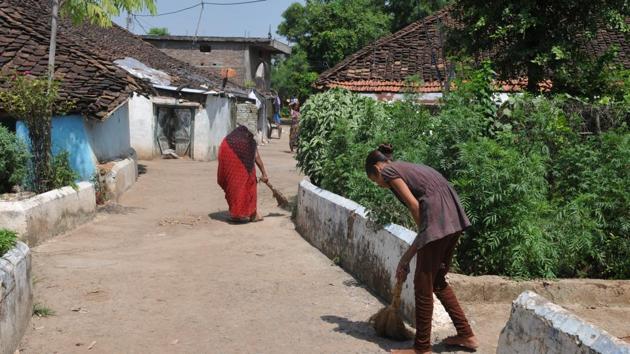
Villagers in Baghuvar in Narsinghpur district, about 250 kilometers east of Bhopal, imbibed Mahatma Gandhi’s ideas on sanitation and applied them in their lives to convert their village into one of the first open defecation free and cleanest villages of India.
The village which has a population of 2400 transformed itself with its own efforts at least seven years before Prime Minister Narendra Modi launched the Swachh Bharat campaign. The villagers claim Baghuvar became ODF in 2004.
When civil administration across the nation is adopting a carrot and stick policy to teach people to adopt proper sanitation, villagers in Baghuvar made it possible by fostering a feeling of responsibility among themselves while imparting education to them and creating an atmosphere of community participation. There is a strict ‘No’ to political parties’ and bureaucracy’s interference in the village affairs.
The village makes its own rules.
{{/usCountry}}The village makes its own rules.
{{/usCountry}}“Gandhiji had said that sanitation was more important than Independence. Similarly, without education it is hard to teach healthy habits. In the village, we run both cleanliness and literacy campaigns parallely to bring about a change villagers’ mindset,” said 75-year-old villager Radheshyam Prasad Naroliya.
To achieve the goal of 100% literacy, educated villagers have painted the walls as a book of healthy habits and general knowledge. “Colourful paintings motivate illiterate villagers to get educated and youngsters to learn general knowledge,” he said.
The then sarpanch, late Surendra Singh introduced sustainable development projects in the village in 2003 starting from the Harijan basti and economically weaker families’ houses to win the trust of population.
“This initiative brought about a bigger change in the village. When standard of living and cleanliness improved at Harijan basti other villagers too were inspired,” said Deepak Rajput.
After constructing toilets in every house and community toilets, underground sanitation, massive plantation on the roads and houses, development of parks, public buildings, villagers have now installed pipes for water conservation.
Read more: 4 arrested in MP for not constructing toilets
“The development work in the village never stopped due to fund crunch due to least dependence on government aid,” said Narendra Singh Chauhan sarpanch of the village.
“If we receive grant of Rs 1 lakh from government for any development project and we need Rs 3 lakh for quality work of the project, we ask villagers to contribute either in the form of money or labour. This is one of the reasons behind a faster development,” said Chauhan.
Villagers say that the cleanliness ensures that there are hardly any diseases in the village and despite a drought like condition, proper water conservation has brought prosperity to the residents who are depend only on farming. “Migration has also stopped from the village. Even, officers choose to live in the village after retirement,” said retired principal Narayan Prasad, 90.
Even, youngsters don’t want to leave the village. A professional photographer Abhishek Rajput said, “I learnt photography from Mumbai but I returned to my village because it has facilities like city and freshness of air and purity like a village. Now, I travel for my work but I stay here only.”
Now, the panchayat and rural development department of Madhya Pradesh has declared this village a model village and also set up a training centre at Baghuvar where people from across the nation come for training. The village has won many awards and in 2007 it won Nirmal Bharat Swachh Award.