
 E-Paper



Claudia de Rham: “The notion of time is not absolute”
The physicist and author of The Beauty of Falling on how our understanding of gravity impacts our lives, and how it guides most modern technology

 Prefer HTon Google


What motivated you to dedicate your life to gravity research?
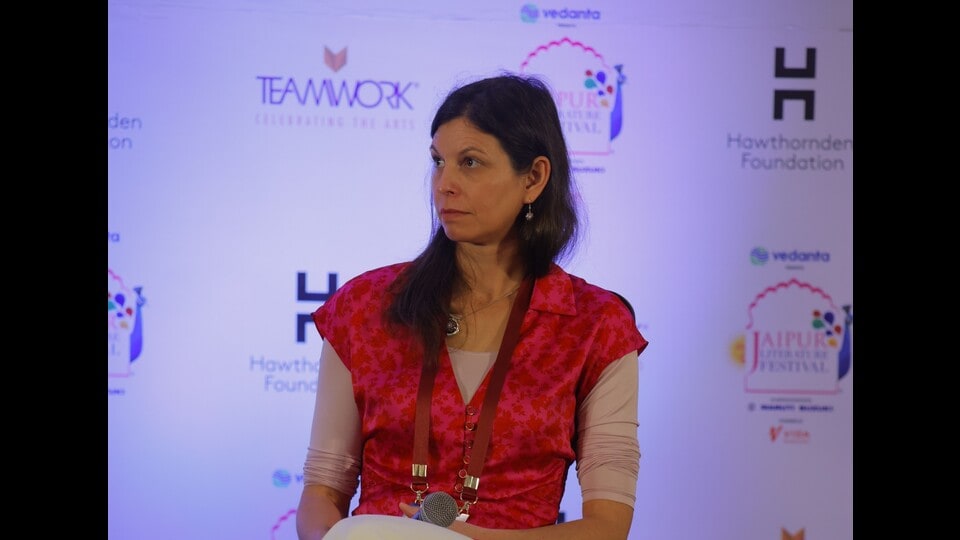
It was always clear in my mind. When I started writing the book, it became clear that there could never have been anything else. I think gravity is fun and almost teasing us, right? It’s always there all around us, and because we know it’s going to be something we can’t avoid, it pushes us to challenge it. We all like to play with it by dropping things and seeing if we can prevent them from falling.
From the point of view of theoretical physics, what I like about it is its beautiful symmetry. It’s universal and affects everyone in the same way, which is beautiful at a fundamental level.
What is the universality of gravity? In the book, you recall this through an interesting experiment done by Apollo 15 commander David Scott in 1971. When he went to the moon, he dropped a feather and a hammer, and both objects fell at the same rate...
That’s right. It’s counterintuitive, and it forces us to think about gravity differently. I love that it’s also part of teasing us. You realize there’s nothing more beautiful, symmetric and perfect when gravity is not affected by size, texture, or weight in different ways. Gravity affects our motion in spacetime because it changes spacetime. It gives it some curvature. And so, what makes it very interesting is when we evolve through this spacetime, we are accommodating for the presence of the mass.
What is very special about gravity is that it does that to everybody in the same way. So, if you imagine two cells of our body living in that spacetime, they live in the same spacetime and experience the same curvature and gravity. They are not going to be changed or affected differently.

And yet gravity cannot be felt. Why?
Think about how we hear something. Sound waves stretch in different directions in our eardrum in different ways, and that’s how they affect our body. That’s how we can hear each other.
If you push me, you will affect me by putting pressure on my cells. Different cells will respond differently. This distinction between the different cells enables me to hear or feel this feeling of other things, of pressure.
Yet, gravity is not going to do that differently for different cells. In a local body, the effect of gravity would be the same for everything, for everyone. It’s this beautiful symmetry behind gravity, which we call the universality of gravity, which means that, locally, you can’t distinguish between differences.
There will not be any cell in our body that experiences gravity, per se. To experience gravity at a fundamental level, like a force, you need to experience gravity through gravitational waves. But you can imagine it took us 100 years to feel instruments sensitive enough to feel the first gravitational waves. And those instruments are kilometres wide, so there’s not something present in our own body that will experience gravity, at least not anytime soon.
What is gravity?
Gravity is the manifestation of how different points in space and time are connected together. In sum, it is the curvature of spacetime. This definition allows us to make predictions verified with impeccable precision. The information about how we will be affected by gravity is very much encoded into how we are affected by our curved environment. If you imagine yourself in a curved environment, going in a straight line may look different compared to someone in a different environment. That’s how we are affected by gravity. We are affected by the curvature of spacetime in which we live.
How would you define ‘spacetime’?
Now, you are going into the notion of space and time. We don’t have an accurate definition of time. To return to some era of time, we must return to some notion of thermodynamics in some flow of the entropy. Entropy captures information about how things get disordered and the order in nature. We know that there is direction towards which things always become increasingly disorganised. And you can associate this with the notion of the flow of time -- the evolution of the entropy in the universe.
Deep down, the notion of time is a human way of appreciating things around us. What we know is that time is not universal. We feel an evolution of time, but this is us simplifying a more abstract concept. The notion of time is not absolute.
Is gravity an abstract concept even though it feels tangible?
Gravity is a force. When we explain science to the public, we sometimes emphasise what we don’t know because we want to make it exciting. But we do understand gravity very well. We also understand that gravity, like electromagnetism, electricity and magnetism, is a force deep down. However, gravity is not just the instantaneous force expressed by Newton. That representation works well in some limits, but it’s not very close to what is happening.
We experience gravity through what we call tidal forces. We have detected the force of gravity through the tidal forces of gravitational waves as they pass through our instruments. The first signal was in 2015, exactly when we observed the effect of gravitational waves, and since then, there have been hundreds of events where we’ve seen that effect coming in.
The thing about gravity is that it goes both ways. A mass has an effect on gravity by curving space and time around itself. And any mass does that. The fact that a mass, like the sun or the Earth, affects gravity by giving it a curvature means that if you take anything else like another mass, or even no mass, it will experience gravity. It will experience this curvature, and therefore, it will experience, through gravity, through the curvature, the presence of this mass. We feel the mass of the Earth because the Earth curves the spacetime around itself, and we’re living in that spacetime. And so that’s how we feel the gravitational attraction of the earth.
What breakthroughs are happening in gravity research, and how are they affecting our lives?
All the progress made in understanding gravity in the past 200 years, we are using it right now, like your phone. This understanding affects the technologies that your phone uses to communicate with satellites. It incorporates the small corrections in the curvature of spacetime perceived by the satellites in orbit above our heads and accommodates the difference between what we feel here on Earth. These are differences from our understanding of the curvature of spacetimes through Einstein’s laws of general relativity. We couldn’t use any device if we didn’t account for such a difference.
So, we already use this understanding in all technologies you use daily. Wherever you drive or the transport or telecommunication system you use, you’re using our understanding of gravity at a level beyond our imagination. Now, of course, trying to understand gravity at an even more fundamental level, you may ask, have we got what we wanted out of it? Do we need to go deeper? But really, who is to tell how much and how do we know? Because when Einstein came up with the theory of general relativity, he didn’t have in mind that people would be using it for mobile phones or satellites and all sorts of technologies; it came from understanding the laws of nature at a more fundamental level.
Nowadays, it’s very important to keep exploring the world around us, not just with the finality of us using it for a particular problem that we have today. We don’t know what problems we will have tomorrow, and we don’t even know how to address them. So, we must keep looking for different patterns in our understanding of nature. From that, we’ll be able to apply them to all of the problems that will come tomorrow, all of the problems of quantum technology and quantum computing that we are developing today.
Can you explain how your research is fundamental in understanding the Big Bang Theory?
Yes. For instance, when we’re trying to understand how to make sense of the laws of gravity in our quantum regime at the very centre of black holes, it challenges our understanding of space and time. We need to have a description that is beyond the notion of space and time in very, very curved environments where the curvature scale, the temperature, if you want, is very, very high.
And those kinds of environments at the very centre of black holes is very similar to what happens at the very beginning of the universe. At the Big Bang, the Universe was born. We believe it was an explosion of spacetime, where all of spacetime in all of space in all of its infinite infinity was created. Understanding how gravity behaves in those environments would allow us to understand how gravity behaves at the very beginning of the universe, what goes beyond the very notion of time, and being able to understand what is beyond our universe, and what is beyond the very origin of the universe.
That’s so mind-altering. As a woman scientist who is a leading theoretical physicists, what challenges have you faced?
The challenges are not necessarily when there are some outspoken biases; you can then deal with them, be upset, address them, and move on. I think it’s more the unspoken rules. I think it’s more of these constant, slight power games, which is very difficult to address because they’re not outspoken, are not out there, and are not tangible for everybody.
If you do something to a given level, be it as a man or a woman, it means the same. It doesn’t matter. But when whatever you do bears the flag of you being a woman doing it, then it becomes a challenge. I try to separate myself from it and do the best I can because I am a person doing science, not just a woman.
Kanika Sharma is an independent journalist.


