
 E-Paper



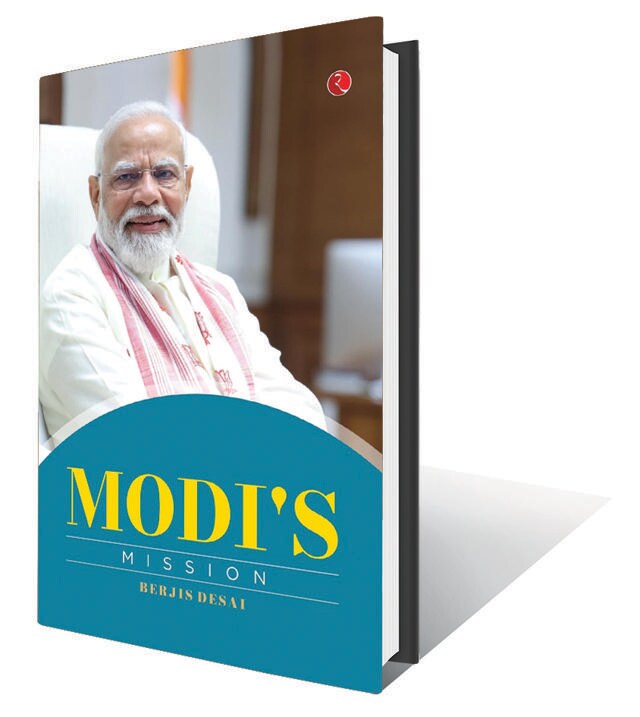
Excerpt: Modi’s Mission by Berjis Desai
This excerpt from Modi’s Mission by Berjis Desai examines why a section of India’s elite dislikes the PM

 Prefer HTon Google


A section of the intellectual elite in India has just not been able to decode Narendra Modi. Even after he became Chief Minister of Gujarat for a fourth time, they believed that his political fortunes were limited to being a strong regional leader... It was only when the momentum generated by him during the 2014 campaign looked unstoppable that the elite became distinctly nervous. Some declared that they would migrate if Narendra Modi became the Prime Minister. None did.
The 2014 victory of the NDA (BJP) was regarded by them as an aberration, a one-time mandate due to anger against the non-performance of the UPA during its second term. The elite were sceptical that the NDA was unlikely to win again. Hence, in 2019, they were rejuvenated by their belief that the BJP would lose. Instead, the BJP secured a record majority and required no coalition. In 2024, due to a setback to the BJP on results day, their hopes were enlivened momentarily, only to subside.
What the elite fails to appreciate is that Modi has triggered a structural change in the dynamics of the political landscape of India, which ensures that, in the medium term, the probability of dislodging a highly disciplined party promoting a nationalist agenda, is minimal. To use a rather insensitive analogy, Modi is like an atomic bomb that has fallen on the elite’s cherished notions... Ivory towers and cocoons rudely disturbed, they cannot digest that a tea vendor’s seemingly unsophisticated son, an RSS pracharak, from the backwaters of Gujarat, has become the Prime Minister of India for a third successive term. The elite, which claims to be dispassionate, actually bristles with prejudice against Modi. The reasons for the allergy are many.
However, prior to dissecting their mindset, let us first define what is meant by the expression, the Indian intellectual elite, in the present context. Political or religious propagandists of any hue, having an agenda, are obviously to be excluded. The elite, referred to here, comprises mostly highly accomplished individuals, usually with integrity and ethics in personal life, with no overt connections to any political party or organisation. It comprises academicians, historians, biographers, lawyers, and media persons. Of course, not all of them nurse such prejudice. A typical profile of a ‘Modi allergic’ is a person educated in the English medium (mostly in acclaimed boarding schools... or famed schools in the metropolis, with a foreign degree in the liberal arts) from an upper middle-class professional family, with centre-of-left liberal leanings and atheistic agnostic views on religion. Dry rationalists, whose ability to intuitively grasp issues is often blunted. They wear what they incorrectly term as secularism on their sleeve. Many of them are secretly condescending about those tutored in the vernacular medium who cannot speak King’s English. The elite have been brought up on a staple diet of historical narratives of post-Independence India, which skilfully gloss over all the acts of commission and omission of the so-called secular leaders while highlighting the sins of those they dub as Hindu communalists...
For long in a state of denial, when Narendra Modi finally did become a fait accompli, the elite was confident that New Delhi was no Gandhinagar, and Modi... would soon discover that governing India was altogether a different cup of tea... However, Bharat Bhagya Vidhata and Modi’s Jagat Janani apparently had other plans. Each apprehension proved incorrect. After the very first hundred days in office, the wind had gone out of the sails of the elite. In those hundred days, Modi reduced bureaucratic layers, enforced biometric attendance for government officers, and launched the Swachh Bharat Mission on Gandhi’s birth anniversary. He inaugurated the Jan Dhan Yojana with 15 million bank accounts opened on Day One, announced policy initiatives on industrial corridors, smart cities and broadband connectivity in villages, initiated measures to increase the flow of Foreign Direct Investment and operationalized an SIT for recovering black money in offshore accounts of resident Indians...
Upon completion of 12 months of his tenure, Narendra Modi had record approval ratings in surveys conducted by independent international service providers, showing that 87% of Indians held a favourable view of Modi, with 68% rating him ‘very favourable’, and 93% approving of his Government. In July 2025, according to the authoritative Morning Consult Survey, Narendra Modi enjoyed the highest approval rating among all democratically elected leaders globally, towering heads and shoulders over every- body, with an approval rating of 75%, after 11 years continuously in office... Modi won the TIME magazine online readers’ poll for ‘Person of the Year’, securing millions of votes, surpassing Obama and Trump...
Whatever may be their virtues and merits, the elite have consistently been allergic, not only to Narendra Modi, but also to the likes of Vallabhbhai Patel and Morarji Desai. The elite cannot digest a rustic son of the soil who knows the pulse of the people. Amongst the very short-lived prime ministers of India, VP Singh and IK Gujral were acceptable to the elite but not Charan Singh or Chandra Shekhar or Deve Gowda. A person who has not received a classic English education or who speaks with a vernacular accent is looked down upon. Not one of us, they think...
The elite simply cannot distinguish between Hindu cultural nationalism, on the one hand, and rabid communalism targeting a minority, on the other. The shadow of religion must fall nowhere near the State, believes the elite. Even if the 2002 riots had never happened, they would have still been antithetical to Narendra Modi. It is only now, after Modi’s third electoral success, that the elite has grudgingly realised that Bharat wants Modi. The elite has still not realised that even beyond Modi, India wants its Prime Minister to be a nationalist and that the emergence of the Hindu nation as a civilizational and cultural way of life is inevitable. They also do not realise that, ironically, the minorities feel most secure and safe under such a dispensation. This is reflected in the BJP’s increasing share of the Muslim vote in recent elections.
A nationalist leader who worships Lord Rama in a temple, meditates in Kanyakumari, and fasts during Navratri, embarrasses them. The truth is that this section of the elite is increasingly in a hopeless micro-minority in the thought space of the country.
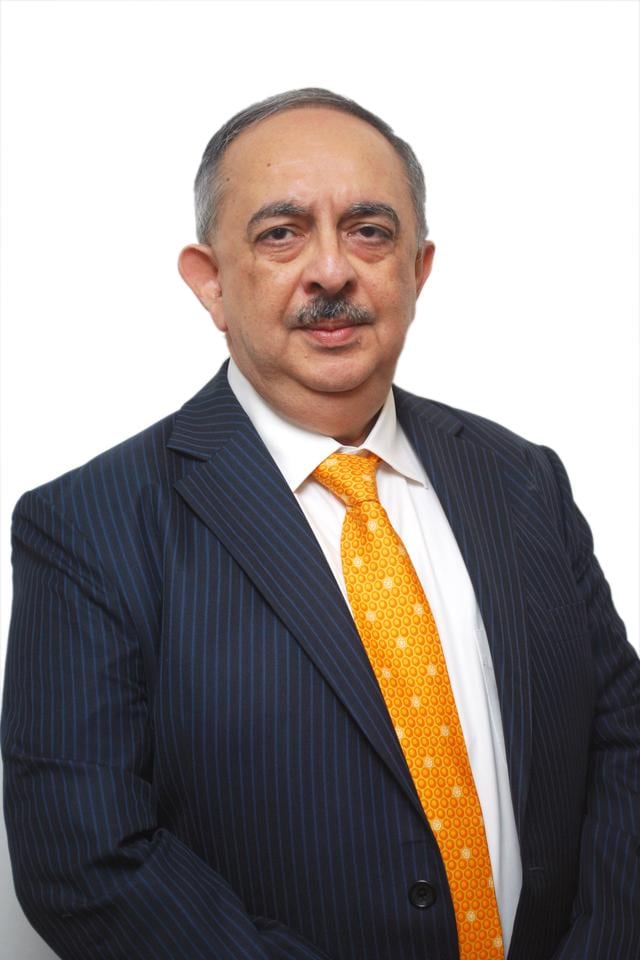
Berjis Desai is a senior partner in a Mumbai-based law
.


