
 E-Paper


HT Picks; New Reads
This week’s pick of interesting reads includes an anthology of travel writing that’s an invitation to discover the world from a Northeast perspective, a collection of essays that illuminate India’s deep past, and a book on the Indian census

 Prefer HTon Google


An anthology of Assamese travel writing
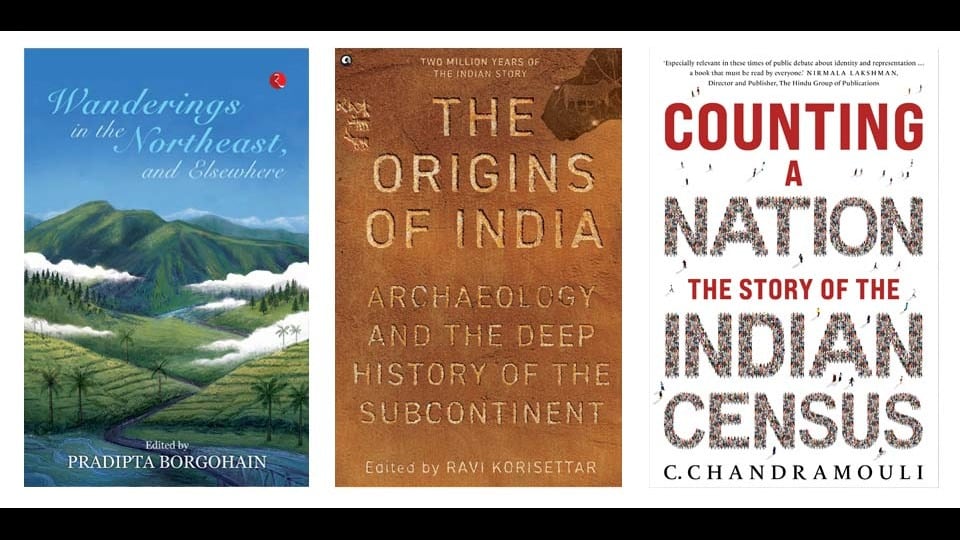
‘Travel in some sense is complete only after the experience is recounted,’ writes Pradipta Borgohain in his introduction to Wanderings in the Northeast, and Elsewhere. Edited and largely translated by Borgohain, the anthology spans more than a century of travels, across the hills and rivers of the Northeast, through the Indian subcontinent, and into distant parts of the world.
The journeys begin close to home… on the Brahmaputra, in the high passes of Arunachal Pradesh, in the Naga Hills, and the valleys of Meghalaya, before widening outward into Kashmir, Japan, Kenya, Paris, Birmingham and beyond. Yet, even when the writers travel far from the Northeast, the sensibility they carry remains deeply rooted in the region’s landscapes and histories.
The anthology features pilgrimages and solitary wanderings, journeys shaped by curiosity, scholarship, love, work and chance. Some essays are meditative, others humorous and sharply observant. Taken together, they capture how writers from the region have encountered the world, and how in travelling outward they have repeatedly returned to questions of home.
Wanderings in the Northeast, and Elsewhere is a remarkable anthology of travel writing that brings together 26 essays by some of Assam and the Northeast’s most distinguished literary voices. Edited by Pradipta Borgohain, the collection spans more than a century of journeys, from the river voyages of Lakshminath Bezbaroa and the travels of Bhupen Hazarika to contemporary accounts by Sanjoy Hazarika, Ankush Saikia, Mitra Phukan, and others.
Featuring both newly translated classics and original English works, this is the first major anthology to present the rich tradition of Assamese travel writing to a wider readership. Evocative and deeply rooted in place, Wanderings in the Northeast, and Elsewhere is an invitation to discover the world from a Northeast perspective.*
A complex and shifting past
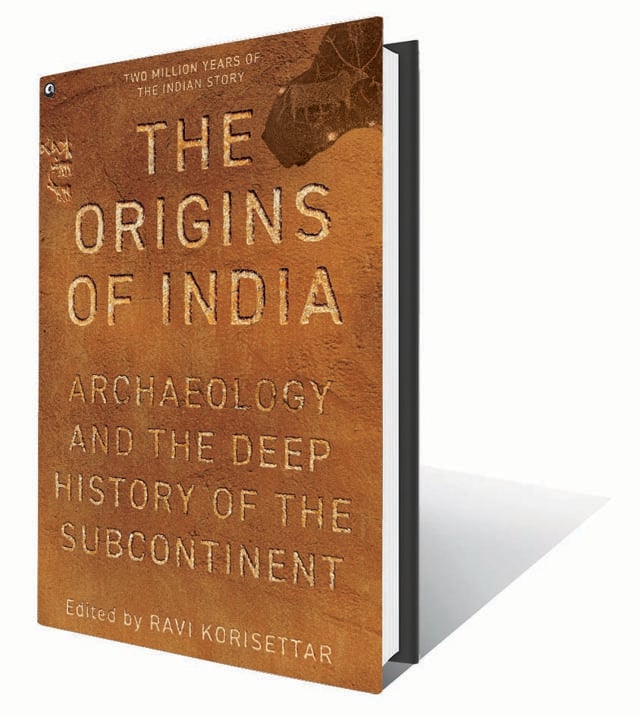
The Origins of India is a sweeping and deeply ambitious volume that reimagines the subcontinent’s past through the lens of archaeology. Collecting essays written by about 50 of the finest archaeologists working today, the book brings together cutting-edge research and fresh interpretations to illuminate India’s deep and complex past — from prehistoric man to the Indus Valley Civilisation and beyond.
The book is organised into four sections that together trace the current state of archaeological research in South Asia. Section I serves as an introduction, opening with a discussion on how new dating techniques are reshaping timelines and interpretations.
Section II focuses on current issues and debates in the world of Indian archaeology, with chapters ranging from Denisovan populations and early human history to stone tools, ancient technologies, prehistoric cultures, and archaeology of regions like Ladakh. It also covers early food production, ashmounds, rice domestication, and protohistoric agriculture, alongside discussions on megaliths, endangered archaeological sites, and the challenges of working with archival data.
Section III turns towards the Indus Valley Civilisation and its wider context, examining urban complexity, climate debates, trade networks, the Lothal dockyard, chariot burials at Sanauli, the question of the horse, Aryan origins, and mortuary practices. In Section IV, the book talks about transitions to early history, with chapters on chronology in Tamil Nadu, the Iron Age, early cities, urbanisation in the Ganga plains, literacy and the Mauryan period, and looks at sites such as Muziris, before concluding with a reflective afterword on contested timelines and contemporary debates.
The essays in this volume offer a layered and nuanced account of India’s past. They resist the facile sophistication of politicians and suspect historians who are trying to weaponise history and archaeology to serve their own agenda. Instead, the essays in this volume, taken together, show how the country’s deep past was complex, vibrant, often shifting, and not easily classifiable.*
More than counting heads
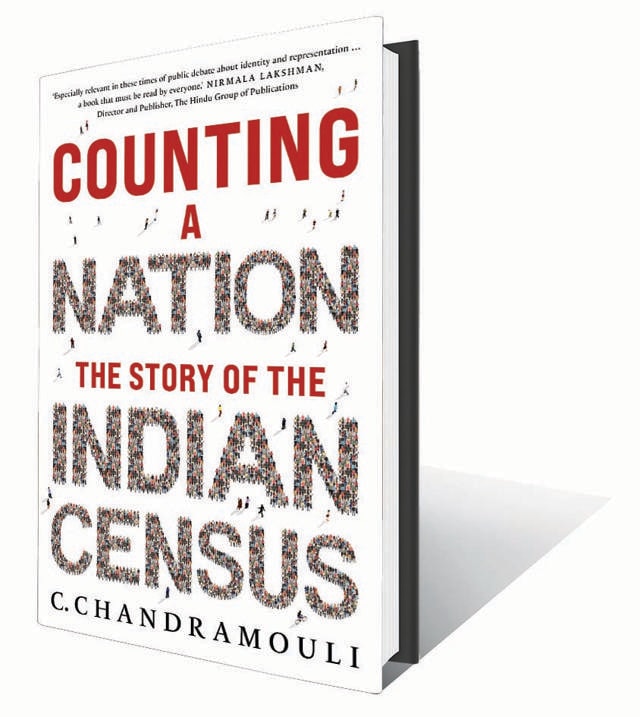
A magisterial account of how India’s categories of identity, belonging and citizenship have been forged.
The first Indian census was carried out in 1871 in the aftermath of the 1857 Uprising. Shaken by the revolt, the British Crown had resolved that it could not govern a land it could not measure. Early enumeration, therefore, was a colonial tool of classification and control. Following Independence, the census was transformed into a democratic declaration of sovereignty and the foundation of governance and planning. Alongside the Constitution and the first General Election, it gave every citizen visibility. Over subsequent decades, the census continuously adapted to reflect the nation’s shifting imperatives – from family planning in 1971 to economic liberalization in 1991 and digital identity in 2011.
Conducted every ten years through famines, epidemics, World Wars, Partition and political upheavals, the unbroken chain of counting was interrupted for the first time in 2021 due to the COVID-19 pandemic. This long silence created a demographic void that has undermined welfare delivery, distorted political representation and weakened India’s statistical infrastructure – making Census 2027 potentially transformative.
Combining insider expertise with rigorous scholarship, former Census Commissioner and Registrar General of India C Chandramouli demonstrates how the census is far more than a simple counting of heads: it is a profound act of translation. In every household visited, personal histories and complex loyalties are rendered into statistical facts with the power to shape policies, allocate rights and construct the very vocabulary through which a nation understands itself. The census is both a mirror in which the nation sees itself and a map by which it charts its future.*
*All copy from book flap.


