
 E-Paper



HT reviewer Percy Bharucha picks his favourite read of 2022
The Partition of British India is our perpetual spectre; its radiation has poisoned generations and led to mutations in our collective memory

 Prefer HTon Google


The Partition of British India is our perpetual spectre; its radiation has poisoned generations and led to mutations in our collective memory. In the absence of a broadly-accepted historical account, we have but the testimonies of survivors to go by. In Marina Wheeler’s The Lost Homestead, these testimonies become whole and find a voice.
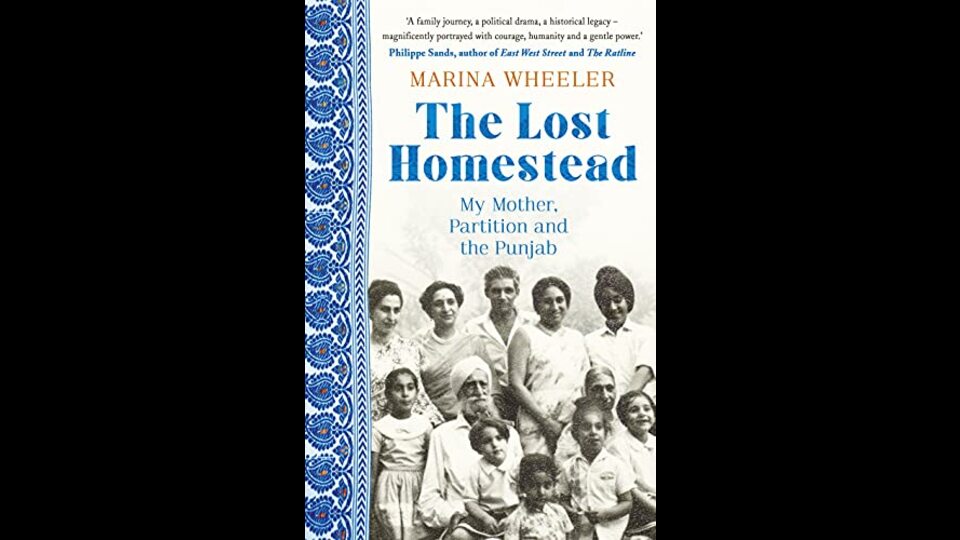
The events are seen primarily through the eyes of the author’s mother Dip, whose father is a landowner, doctor, and a vital part of the local administration in Punjab. The narration of Dip’s life is both personal and nuanced and through her family history, Wheeler fills a much-needed gap in our collective memory of the years when the landed Indian gentry slowly took over the administrative reins of the nation. She records their loyalty to the Raj, and their service in the army. She writes about the cosmopolitan melting pot that was Lahore and the lives of the wealthy and powerful in the “good old days of the Raj”, and presents an intimate view of the birth of two nations and the first tottering steps they take.
The Lost Homestead dispels the notion that there is a binary; that Indian society was made up of British sympathizers and nationalists. There was an entire spectrum. Dip’s Papaji believed in serving the community and not the Raj but he felt the British were benign. His children had opposing views. This was a common state. Within families, different generations chose opposing sides. These are the contradictions that we have always lived with as a people. Politics permeated the homes of every household.
When it comes to the Partition, the narrative often largely focuses on Hindus and Muslims, but Wheeler’s book is a worthy addition to the Sikh viewpoint. The loss in Punjab is unthinkable. Mountbatten himself mentions that the partition of Punjab means the inevitable division of the Sikh community. As two nations were born, Punjab became the umbilical cord that they severed. The Lost Homestead is a moving and accurate record of this surgery.
Percy Bharucha is a freelance writer and illustrator with two biweekly comics, The Adult Manual and Cats Over Coffee. Instagram: @percybharucha


