
 E-Paper



Jose Dalisay Jr: “Most Americans don’t even know we were their colony”
At the Frankfurt Book Fair 2025, the Filipino author spoke about how literature from the Philippines is now finding its footing on the global stage

 Prefer HTon Google


What makes Filipino literature unique in the global literary landscape?
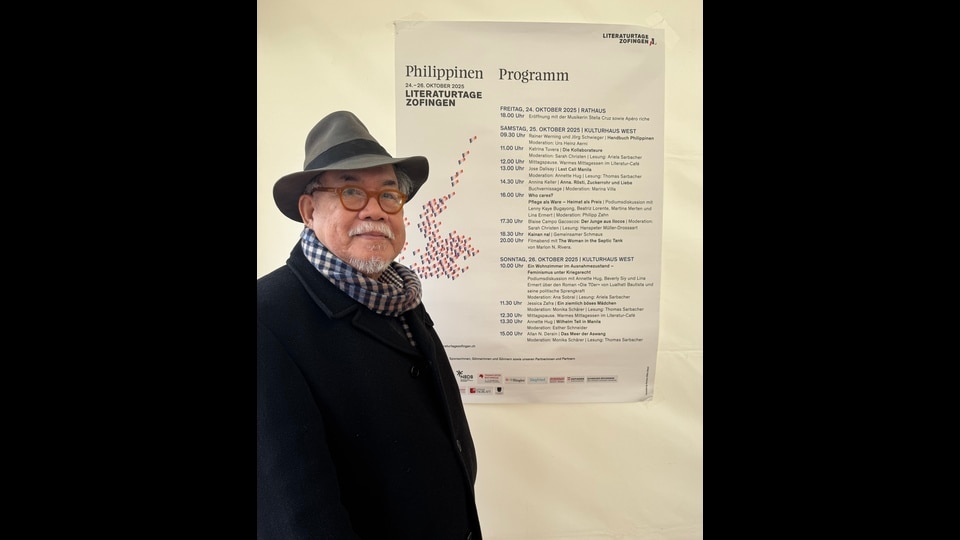
Our people’s story is one of enormous suffering and sacrifice, but also of survival; occasionally we achieve sublimity. Because of our diaspora, we are now all over the world, and are both changing and being changed by that world.
How do you see the current state of Philippine literature in English? What are the economic factors that drive it?
It’s alive and well, even robust, from the writing end. New authors and works are constantly emerging, especially in genres like speculative fiction, young adult, and graphic novels. Our exposure at the Frankfurt Bookmesse (FBM) and the contacts we make here can only encourage more literary production in English. I can’t even say that this is being driven by economic factors, as the returns so far have been minimal, so it isn’t that. It’s our natural expressiveness finding a means of bursting forth, of announcing ourselves on the global stage, looking for receptive audiences. We have to learn the international market, sure (I’m not one of those aesthetes or Bolsheviks for whom the word “market” is anathema) — but first we also have to address and grow our domestic readership, who after all should be our primary audience.
What do you think international readers most misunderstand about Philippine literature?
They don’t know where to put us, because we write in an English that’s neither American nor British, but the unique product of our colonial history and our adaptation to modern times. I’ve always seen us as the bastards whom no one quite knows how to deal with when we turn up at the family dinner. Most Americans don’t even know we were their colony, we’re out of the Commonwealth loop, and even in Asia, we’re not Bahasa speakers despite our Malay connections.
Filipino writers have gained more international recognition recently. What’s driving this change?
A lot of new products and bright, fresh talent in areas like speculative and graphic fiction, the romance novel, and even horror. It’s young people who know how to explore and navigate the terrain on their own without needing the guidance or approval of universities, party doctrinaires, and literary elders or academies. It’s quite exciting.
Your stories capture working-class Filipino lives. Was this a natural subject?
I write about the Filipino middle class and the poor because these are the people I grew up with, and what I grew up as. I think they have the most interesting stories to tell, people constantly vulnerable and on the brink.
You write primarily in English while capturing distinctly Filipino experiences. How do you navigate this linguistic choice, and has it ever felt limiting?
I write my prose in English because it was the language I was schooled in and am better at, but I also write my drama — plays and screenplays — in Filipino because that way I can reach more people in the language they know. Writing in English in the Philippines automatically excludes most Filipinos from your readership, and thus unhappily becomes a political choice to be read by the elite. But I also think that there’s an upside to writing in a language that will never entirely capture, but only always approximate, the reality in front of you, in that artmaking becomes possible in the approximation, in the space or distance in between.
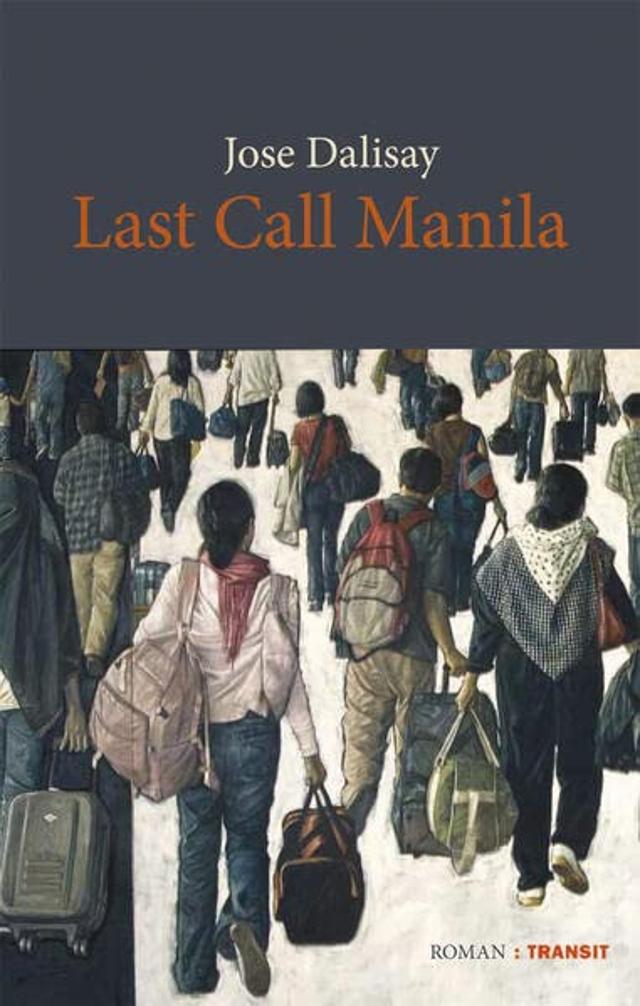
Your recent novel Last Call Manila was translated into German – what does the stage at the Frankfurt Book Fair 2025 mean to you?
I was pleasantly surprised by the warm critical and popular reception my books reportedly received in Germany, and I’m glad to be breaking ground for other Filipino authors to be discovered. That’s how I see myself and my writing in relation to the FBM: as a senior figure opening doors for others telling more fantastic stories in new ways.
You’ve excelled across multiple genres – fiction, essays, screenwriting, journalism. How do you navigate between these different forms, and does each satisfy different creative needs?
I’ve always seen myself as a professional writer who sustains himself and his family through writing, the only real skill he knows. I take pride and satisfaction in being able to do that, even if it means working on book commissions and such. The fiction doesn’t pay, but it’s my refuge, where I can write for myself and my ideal reader, and remind myself what I’m capable of. I take one genre as a break from the other, and am always working on several books at a time.
What are you working on next?
My third novel is set in Manila just before the first bomb of World War 2 drops. A moonlit bay, city lights, saxophones, carnival queens, and smoke rising in the countryside.
Arunima Mazumdar is an independent writer. She is @sermoninstone on Twitter and @sermonsinstone on Instagram.


