You have worked with women with learning disabilities. How did your experiences as a volunteer help you develop the central character of your novel?
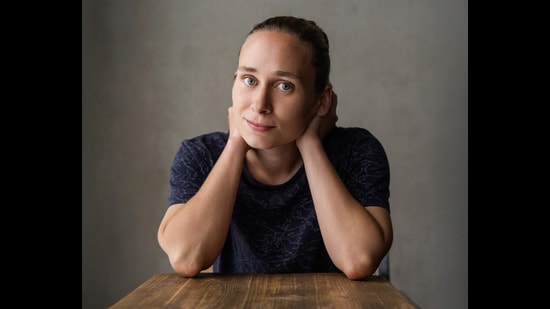
Gloria is not based on any person, but my voluntary work gave me more of an understanding of what life can be like for an adult woman with learning disabilities (LD). Before volunteering with adults, I spent a long time working with kids with Special Educational Needs and Disabilities (SEND). Getting to know many different individuals
You have worked with women with learning disabilities. How did your experiences as a volunteer help you develop the central character of your novel?
Gloria is not based on any person, but my voluntary work gave me more of an understanding of what life can be like for an adult woman with learning disabilities (LD). Before volunteering with adults, I spent a long time working with kids with Special Educational Needs and Disabilities (SEND). Getting to know many different individuals with LD, over the course of many years of my life, gave me the experience to be able to create an original character with LD.
Gloria Don’t Speak provokes readers to think of the unexpected as they follow the story.
I’m not sure about this. I think the title points to the colloquial and unusual language used in narrating from Gloria’s perspective, but I don’t think it necessarily invites people to think of the unexpected.
From the way the story progresses, the reader infers that if a person doesn’t speak for herself — either because she doesn’t want to or is unable to – others will decide for her and those decisions might be influenced by their own biases.
Yes, I think there are often moments where people project a lot of stuff onto Gloria, or make assumptions about what she wants, what she’s thinking and feeling, or use her as a sounding board. Often people can make decisions for her with the best intentions, but this can, at times, be at odds with what she internally desires or understands.
Because of Gloria’s sense of camaraderie with Jack, he becomes her inevitable frame of reference. For example, she sizes up Mr Usman Miah’s widow as being too thin compared to Jack. Does Gloria need to calibrate everything she notices after the one defining incident in her life in relation to Jack and his absence?
I think Jack and the time they had together were incredibly significant for Gloria, and almost a coming-of-age experience for her. She found a certain freedom and liberty in associating with Jack, and in his demeanour towards her. So, he’s on her mind a lot as a point of comparison to other moments and people. But in 2017, he’s particularly at the forefront of her mind because she’s heard he’s out of prison — there may be plenty of days between 2001 and 2017 where he is not so significant in her mental landscape.
The way Jack treats Gloria, as if he is affording her a great deal of respect while doing just the opposite, signalled to me his innate need to inflict violence on someone like her. But in Mr Miah, he found a rival.
Yes, I think for Jack, Mr Miah’s implication that he was mistreating Gloria or that she was unsafe with him was a huge affront to his own sense of himself as a decent person.
How did the book take shape? What were the challenges in narrating a story with significant stasis?
Originally, I wrote the story going back and forth between timelines, moving from 2017 to 1999. I then had good advice from my editor to change this and restructure the novel so that it played out mostly chronologically. So, I pulled it apart and put it back together again, with some deleted scenes and some additional ones.
When it comes to care work, the exhaustion and resignation of Gloria’s mother Jo is obvious. It is difficult for a working professional like her to hold things together.
Yes, I think parenthood can be challenging anyway, and when a child has additional needs, that can be an extra challenge. The book opens as Gloria reaches adulthood, and throughout we see Jo navigate difficult questions around Gloria’s independence and long-term care.
There is a particular rhythm to how Gloria processes things in her head. How did you construct her voice?
I thought about why people might use echolalia. For Gloria, she doesn’t say it out loud, but she does repeat words and phrases in her head, and I felt she would do this largely for two reasons — because she enjoys the auditory patterns they make and also to self-soothe. She also borrows phrases she has heard people say to verbalise things to herself. I thought about the accents, grammar and slang she would hear around her growing up and how that would inform her voice.
In terms of vocabulary, I made a rule for myself that if Gloria has the concept, then I can use the word. I also found moments when I could play with language a bit, for example, make one phrase sound like something else, to point to aspects of language that Gloria would find interesting.
The shift towards the end can leave people stunned. How did you come up with that ending?
It was difficult to find the perfect ending. I wrote several versions. I tried to really think about what Gloria needed and desired throughout the book, but also what was plausible, and to come up with something satisfying.
Saurabh Sharma (they) is a nonbinary, queer writer, essayist, and culture critic. On X: @writerly_life; Instagram: @writerlylife.
One Subscription.
Get 360° coverage—from daily headlines
to 100 year archives.
Archives
HT App & Website