
 E-Paper



Review: DD Kosambi; One Life, Many Worlds by Ram Ramaswamy
A biography that demonstrates the extraordinary range of the polymath’s mind and the enduring significance of his contribution

 Prefer HTon Google


There are two DD Kosambis in modern Indian history. Dharmanand Damodar Kosambi, the Buddhist scholar who taught himself Pali and Sanskrit and became the first Indian to hold an academic position at Harvard. And his more famous — and almost unclassifiable — son, Damodar Dharmanand Kosambi: the mathematician, historian, numismatist, Sanskritist and Marxist thinker whose scholarship traversed disciplines with a casual ease.
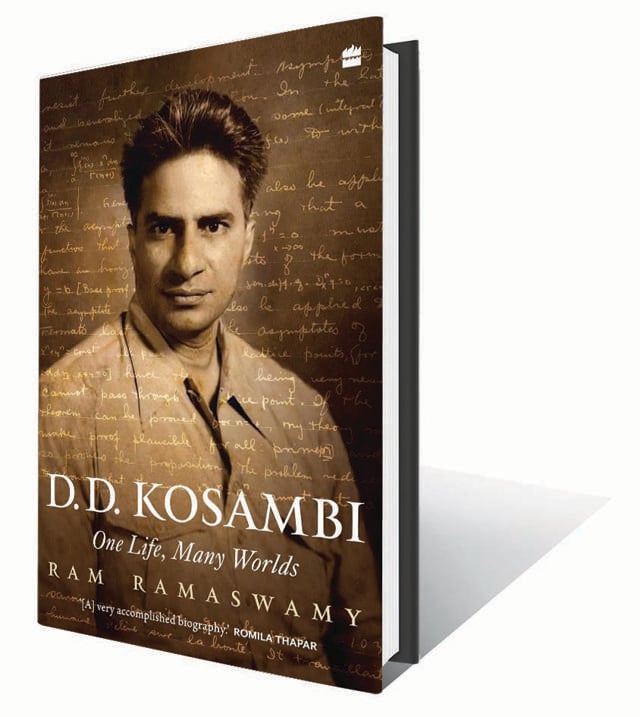
In his biography of the son, DD Kosambi: One Life, Many Worlds, the distinguished scholar and physicist Ram Ramaswamy begins with the father’s life and travels, tracing the inheritance that shaped the younger Kosambi.
The father took his son with him to America, a land that exposed the young boy to the global production of knowledge. They shared an intellectual curiosity for diverse disciplines, but their lives ended in two different circumstances. Dharmanand chose a religious rite of voluntary fast unto death, an act that the historian Ramachandra Guha, in his essay on the father, describes with profound poignancy. Ramaswamy, however, offers a less reverential interpretation, calling it “the final act of autocracy on Dharmanand’s part… to thrust widowhood on Balabai.”
The difference between the two readings is revealing. A fast that appears to be the culmination of a spiritual life, which was applauded by none other than Mahatma Gandhi, could also be understood as injustice to those left behind. Ramaswamy’s interpretation unsettles the familiar image of a seeker. The son’s decline arrived with its own melancholy, an episode that Ramaswamy rightly calls Kosambi’s “Waterloo”.
A life may be seen through the imprints it leaves on the world and the scars it carries on its soul. For much of its 259 pages, excluding notes, Ramaswamy documents the former with thoroughness. Kosambi’s intellectual contributions are gathered from archives across the world. However, the wounds and disappointments that complicate the portrait of a great scholar don’t get sufficient attention.
In his review of Ramaswamy’s biography, the Tamil historian AR Venkatachalapathy notes “a few” shortcomings: it lacks anecdotes, and barely addresses the relationship between the father and the son.
These omissions are more consequential than they might initially appear. A biographical portrait requires more than an account of intellectual accomplishments, a record of publications, and intercontinental encounters. It must explore the relationships through which a person inhabits the world, and examine the costs that an extraordinary life may impose on its close ones.
The book devotes considerable space to Dharmanand, but stops short of decoding the bond between the two towering men. Nor is it just the father; Kosambi’s other relationships seem similarly dehydrated. The first substantial account of his wife, Nalini, and their troubled marriage appears after over a hundred pages. The relationship that established the kind of householder he was is rushed through in a few paragraphs.
Ramaswamy often draws on Kosambi’s own lens to reveal his inner world, including the diary he had kept since his teenage years. In January 1927, Kosambi declared his ambition in unequivocal terms: “The proper study of mankind being man, and I, the one best available for my study, this book should be of use in my life.” The young man, not yet 20, had already come to regard himself as the most promising subject available for enquiry.
The volume of letters and diaries Ramaswamy quotes enriches the book. Asked in his application to Harvard’s engineering school why he wished to study there, Kosambi explained: “Inasmuch as an Oxford education would be unprofitable from a racial and political point of view… I choose the Harvard Engineering School in preference to the MIT because the former offers better instruction due to a smaller attendance per instructor.”
The answer reflects a brashness that was to become his signature.
The biography describes Kosambi’s academic life in minute detail. He began his career at Banaras Hindu University where he taught mathematics and German. Between 1933 and 1945, he published more than 30 papers in mathematics in leading international journals, including two in German. His mathematical achievements alone would have secured him an honourable stature. But the young man wasn’t easily satiated.
By the late 1930s, he had begun studying coins. His investigations of silver coinage from Taxila, Khandesh, Paila and Amravati helped establish scientific numismatics as a field of enquiry in India.
Ramaswamy’s own command over these technical disciplines comes handy to explain Kosambi’s complex work in lucid prose.
Kosambi’s historical investigations also led him to Sanskrit texts and poetry. He believed that India’s past could be understood only by bringing disparate sources into conversation.
Ramaswamy’s account establishes that Kosambi was not merely accumulating expertise in various fields. He wanted to discover the unsuspected relationships among various disciplines.
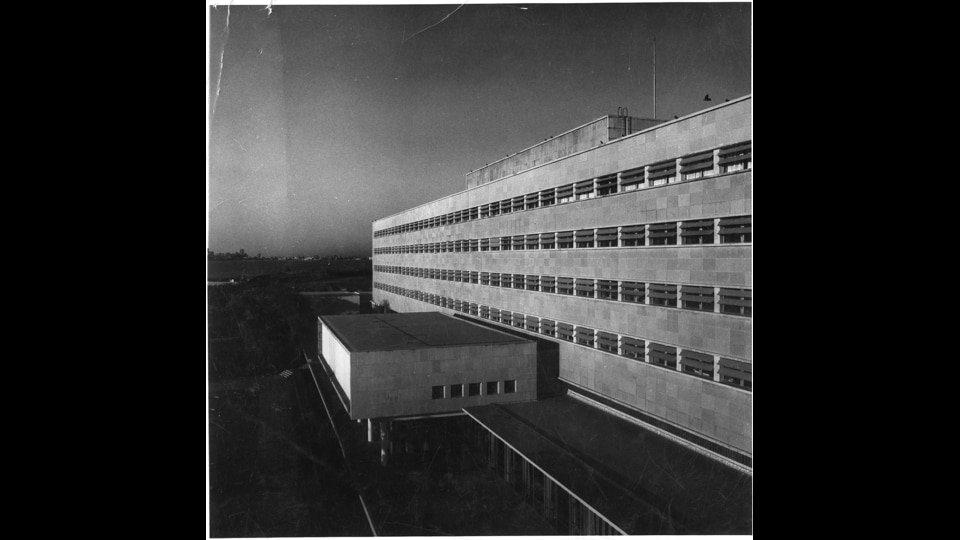
His magnum opus, An Introduction to the Study of Indian History, brought together these learnings. The work assumes all the more significance given that a book on history was written when the author had been holding a scientific position at the Tata Institute of Fundamental Research.
However, the man behind these accomplishments begins to emerge only in the later chapters when a formidable intellect gets undermined by the inability to accept failure. It’s precisely here the narrative gains a sudden urgency and the portrait comes alive.
In his final decade, Kosambi became convinced that he had found the proof of the Rieman hypothesis, a legendary problem of mathematics.
He had not. His insistence on the claim damaged his standing as a mathematician and contributed to his unceremonious exit from TIFR.
He compounded the damage by adopting a pseudonym, S Ducray, under which he published several insufficiently argued papers on mathematics. Ducray, Ramaswamy makes a startling discovery, was a sophisticated pronunciation of the Marathi word dukker or pig.
The spectacle was troubling: an extraordinary scholar resorting to subterfuge at the moment when an acknowledgement of the error was most needed.
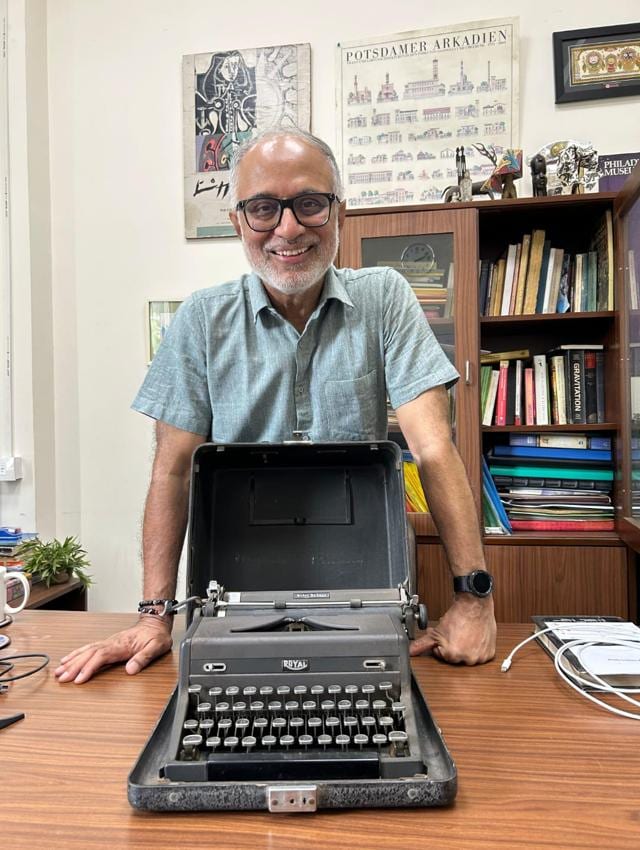
The intellectual audacity that had enabled Kosambi to cross disciplinary boundaries now seemed to have made him oblivious to the limits of his own judgment.
When the young Kosambi dismissed Sarvepalli Radhakrishnan and Surendranath Dasgupta as “near-philosophers, profoundly superficial” in his diary, he had offered a glimpse of a temperament that would acquire graver import later.
Ramaswamy’s biography demonstrates the extraordinary range of his mind and the enduring significance of his contribution. Its limitation lies in the uneven portrayal o/f the public and private Kosambi. Ramaswamy explores Kosambi’s journey through ‘Many Worlds’ of academic disciplines; these worlds could also signify the numerous inner selves, often in conflict with each other. The scholar is present from the beginning; the man emerges fully only when his life begins to unravel.
But that’s not about this biography alone; it merits a deeper discussion about the genre itself.
Ashutosh Bhardwaj is a writer and journalist.


