In his latest book, Redesign the World: A Global Call to Action, author Sam Pitroda proposes nothing more or less than a new world order. Pitroda’s vision is to enhance democracy with inclusivity, and human rights with human needs. He calls for capitalism with a new economy, transformation of consumption to sustainability and conservation, and non-violence in lieu of military prowess.
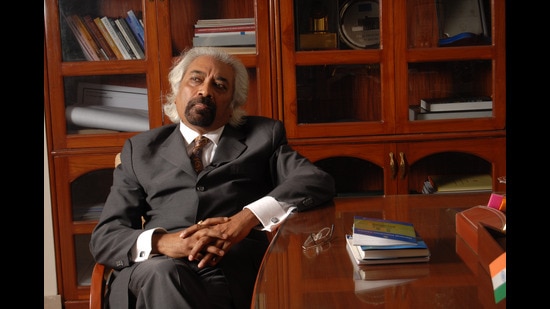
His vision relates to Gandhi’s paradigm of compassion, simplicity, decentralization, and self-sufficiency. However, it adapts itself to a global Internet economy and culture and is outward looking. It leverages the benefits of digital technology to eliminate global structures, and to adopt a strategic focus on the condition of two things now in jeopardy: people and the planet. The book has elegant insights and avoids presenting a myriad charts, graphs and formulas. Pitroda offers his diagnostics of the human condition and that of the Earth straight to the human heart.
The world was last designed when Pitroda was born. The thesis of the book is that the current command and control world order, of which the United States has been the standard-bearer since the end of World War II, gave birth to the UN, IMF, WTO, WHO, and World Bank, which have outlived their usefulness and are not addressing the needs of people and the planet. Measurements such as GDP, the balance of payments, and foreign exchange reserves are simply accounting mechanisms bearing no relation to the true wealth of nations, which includes minerals, land, culture, and work force quality.
{{/usCountry}}The world was last designed when Pitroda was born. The thesis of the book is that the current command and control world order, of which the United States has been the standard-bearer since the end of World War II, gave birth to the UN, IMF, WTO, WHO, and World Bank, which have outlived their usefulness and are not addressing the needs of people and the planet. Measurements such as GDP, the balance of payments, and foreign exchange reserves are simply accounting mechanisms bearing no relation to the true wealth of nations, which includes minerals, land, culture, and work force quality.
{{/usCountry}}Strategic drivers that have increased expectations and disparities are identified as decolonization, the rise of China, the fall of the Berlin Wall, the ascent of technology, increasing inequality, race and status blind COVID-19, and 9/11, which caused the United States to focus resources and attention on internal security, and on protracted wars in Afghanistan and Iraq.
Pitroda notes that today there are fundamentally two economic systems: American (open) and Chinese (closed). Both are based on command and control architecture to lead the world. However, he believes that the world needs a third system based on networking of nations to enhance communication, collaboration, and cooperation to deliver peace and prosperity.
The author believes that while the current rules-based order for trade, investment and the behaviour of nations has contributed to affluence and stability, it has also led to vast disparities of wealth, a digital divide, and degradation of the Earth. Pitroda states that the top 1% makes more than 50% of the people on Earth, with three billion people living in poverty. Further, over one half of all plant life and a fourth of all mammals are threatened with extinction over the next few decades. And over one-third of the world’s population lives under oppressive political systems. Not only that, the world’s sourcing, manufacturing and distribution systems exist fundamentally to benefit and solve problems for the rich, who really do not have existential problems. And in spite of a surplus world economy, and a surfeit of goods and services, there is disrespect and strife almost everywhere – and arguing over material wealth.
This book is a manifesto that lays out various actions that address the condition of people and the planet, using hyperconnectivity as an instrument to achieve a new world order. Pitroda calls hyperconnectivity “the most disruptive innovation of the century,” its components being speed, bandwidth, AI, Big Data, Cloud computing, machine learning, the Internet of Things (IoT), and robotics. Time is instant and distance is irrelevant.
Pitroda maintains that our ability to connect with so many throughout the world via technology is a source of empowerment for people, who can effect change by eliminating the command-and-control structures under which they live, replacing them with flat, participatory democratic structures with the help of the Internet and open source architecture. Social media are seen as a catalyst, with the ability to mobilize people and markets.
The author maintains that technology can strengthen democracy by connecting people, offsetting the perceived club of government and big business. Hyperconnectivity can help small and medium-size enterprises connect globally for growth, and it can bring into the mainstream marginalized populations. Pitroda recommends that countries adopt a ministry or cabinet post for inclusivity, basic needs, a new economy, sustainability and non-violence. He argues for the establishment of a UN level institution to focus on these challenges.
Pitroda also believes that digital technology has the potential to discipline media, well known for their polemics and political bias. While the social media majors need scrutiny to assure that they promote free speech and the free flow of ideas, the author has faith that reformed social media can advance his manifesto.
Finally, the author believes in the need for a global constitution, a global patent protocol, as well as a global federal reserve system, noting that there are over 180 currencies in the world. He proposes basket of currencies consisting of the majors: the US dollar, pound sterling, Euro, Chinese yuan, Indian rupee, South African rand, Russian ruble and Japanese yen.
To realize Pitroda’s vision, the Global Fortune 1000 will face the challenge of competing to earning acceptable returns for shareholders while addressing the needs of the bottom of the pyramid, arguably a strategy incurring more risk as well as a higher return on equity.
Pitroda notes that to achieve this vision may require decades. But besides time, there are other challenges. First, is the need for a global conversation on addressing the needs of people and the planet. Getting the attention of world leaders is not so easy, as many are not respected and are interested only in the status quo. Second, is the need to have change agents in various countries or regions. Third, there is the requirement of moral leadership. Finally, there is the concept of sharing of interests in a multilateral culture.
We have already seen how difficult it is to establish a global minimum tax rate, and for Great Britain and the European Union to reach agreement on Brexit. Further, establishing a global federal reserve implies that there is world consensus on the rate of inflation and the balance between of social policy and fiscal conservatism. Moreover, a global currency would not reward efficient countries and penalize inefficient ones, as we have now with floating exchange rates.
While some universities will not relinquish control of their brand through distance learning, the Internet does offer alternative learning without spending up to $200,000 on an MBA, for example.
What is required to implement this vision is leadership, which is lacking in the world today. The persona of a Gandhi, Martin Luther King, Churchill or FDR would be required. The stark reality is that few, if any countries, have politicians who are trusted and viewed as the keepers of morality. Such a leader would appeal, as Pitroda has done, to the hearts of the world’s people to embrace a new ethic of protection of people and the planet.
Pitroda acknowledges that there are many unanswered questions in the execution of this provocative model. A single focused initiative to test proof of concept would be a good place to start. One example would be something all nations should agree on, for example, cleaning up our cities or the oceans. While the idea of preserving the environment has been around for about 20 years, China, the United States, European Union, India, and Russia are still the leading polluters. The Internet of Things (IoT) offers control systems to measure and control the release of toxins.
Archimedes of Syracuse, who lived in ancient Greece in the third century BCE believed he could move the world with a lever – if he only had a place to stand. A similar platform is needed to achieve Pitroda’s vision: that platform is moral authority.
Frank Schell is a business strategy consultant and former senior vice president of the First National Bank of Chicago. He was a Lecturer on South Asia affairs at the Harris School of Public Policy, University of Chicago and is a contributor of opinion pieces to various journals.