
 E-Paper



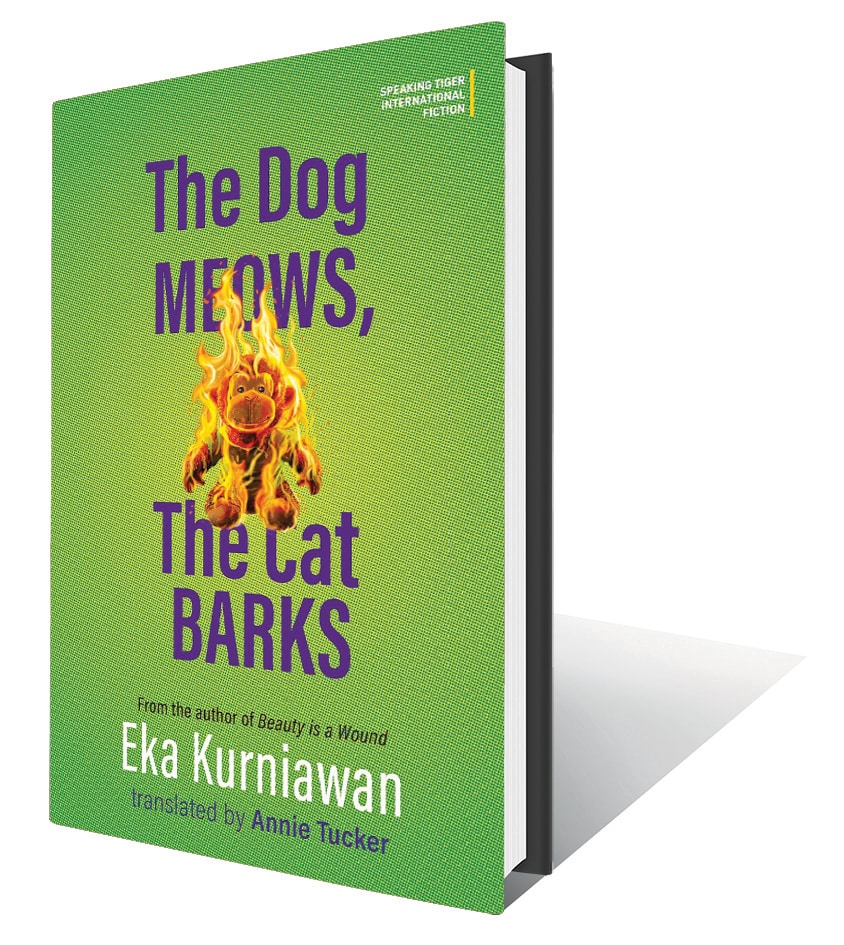
Review: The Dog MEOWS and The Cat BARKS by Eka Kurniawan
Set in a rural town in Indonesia, this tautly written novel, that begins with a boy’s gleeful acts of rebellion, is a sobering meditation on power, cruelty, and the quiet violence of boyhood

 Prefer HTon Google


A page into The Dog Meows and The Cat Barks by Eka Kurniawan, I was laughing hysterically. Something about a boy rebelling against rigid moral and religious codes feels both refreshing and wickedly funny. Sato’s rebellion doesn’t just make readers root for him; it makes them complicit in his gleeful mission to corrupt boys who believe they must constantly guard themselves against the devil.

At first glance, all seems well with the protagonist growing up in a small Indonesian town. That sense of normalcy ends when he is circumcised. The loss of his foreskin is accompanied by a loss of freedom and a metaphorical loss of his individuality. Post-circumcision, Sato’s father becomes unbearably strict. He embarrasses the boy before his friends and forces him to stay at the mosque for hours.
And then, the father dies. Kurniawan frames the boy’s subsequent rebellion with a deceptive simplicity. With his father gone, Sato strays effortlessly from the ordained path. He runs wild. He urinates on trucks and crates of fruit and sets fire to the town’s theatre. He swears to not only defy norms but also to make Jamal, the most pious boy in school, ‘evil’ by getting him to jerk off to pornography, chug black beer, and dabble in drugs. Through all this, though he is defying the rules that have been laid down for him, he doesn’t feel he is being exceptional in any way. He is just doing what must be done for his own sake.
Deliciously humorous at first, parts of The Dog Meows and The Cat Barks are the literary equivalent of ‘peak male content’ reels on Instagram — think men obsessing over giant structures colliding and watching, with rapt attention, bulldozers lift heavy rocks. Similarly, the boys watch cock-fights and pigeon races, and chase lizards across dried-up drains. Their masculinity isn’t always defined by the absence of femininity or a shared hatred for women.
Behind the action, though, the novel offers a commentary on how suffocating and intrusive adult figures can be when it comes to disciplining children. Jamal’s stuffed monkey being set on fire and his football being sawed into half are portrayed with the importance of non-incidents. But the reader knows that these are abusive actions that can and do have a lasting impact on the child’s psyche. It becomes clear that Jamal’s religiosity stems from an intense fear of being reprimanded by his parents, especially his father, a Muslim cleric.
The constant switching between the first-person voice and that of the omniscient narrator allows the objectivity of the latter and the emotionally-rich insight of the former to simultaneously suffuse the work. Kurniawan’s sentences also flow smoothly, bleeding into one another. Deceptively simple yet entirely gripping, they compel you to read the book in a single sitting.
READ MORE: Excerpt: The Dog MEOWS, The Cat BARKS by Eka Kurniawan
The novel’s biggest irony is that Jamal, the boy who swore by God and believed in the power of divinity, is the one whose life takes a tragic turn when he goes astray. Meanwhile, Sato, who never followed the path of righteousness, gets the freedom he always wanted. When he did not visit the mosque “No lightning bolt struck him… no earthquake knocked his house down.” Jamal, on the other hand, had, in Sato’s words, “earned so many heavenly rewards, no amount of sin could ever make even a dent.”
Sato is admirable in his defiance but his relentless bullying of Jamal, which has tragic consequences, is deeply discomforting. Sadly, this is how some male friendships work. Perhaps I enjoyed this book so much because I saw an image of myself in Sato. My father was never a domineering figure but his death, when I was 10 years old, made me rebel in a way that puzzled the women in my family. I didn’t pee on trucks or set buildings on fire or bully other kids, but I did do things that made those around me deeply uncomfortable.
Most importantly, the novel asks a difficult question: Is Sato, who is almost heroic in his refusal to live by rules, worth rooting for? Is his defiance worthy of respect if he bullies peers into following in his footsteps? In the end, his behaviour towards Jamal makes the reader think that perhaps children are even more capable of cruelty than adults.
The action begins with gleeful acts of rebellion that slowly curdle into a sobering meditation on power, cruelty, and the quiet violence of boyhood. Sato may live free but the cost of that freedom — paid by Jamal — will not be brushed aside as mere mischief. This aftertaste of unease is what elevates The Dog Meows and The Cat Barks. Eka Kurniawan doesn’t just entertain; he implicates, forcing us to question who we root for and why. And in doing so, he crafts a story that is as disarming as it is devastating — one that laughs with you, then leaves you to sit with the consequences.
Deepansh Duggal writes on art and culture. He tweets at Deepansh75.


