E-Paper



Strangers on standby: Apps that allow others to ‘see’ and ‘hear’

 Prefer HTon Google


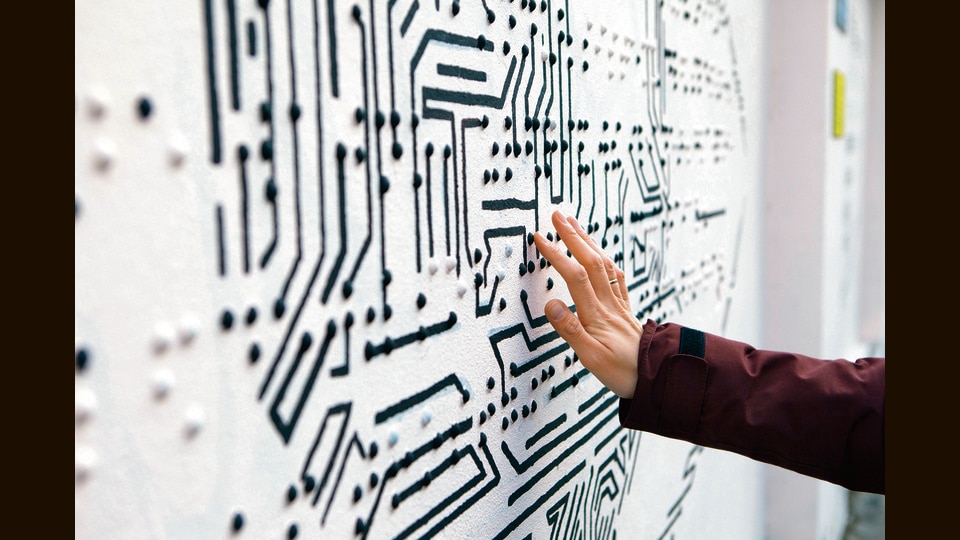
What if help was a tap away? Apps like SignAble and Be My Eyes use smartphones to link the differently abled and volunteers in real time, with dramatic results.
How does a deaf person direct a delivery app rider, or deal with a customer service call from their bank? How does a blind person choose the right shoes for the day?
Apps are stepping in to let volunteers connect with the differently abled, in real time, to address such daily hurdles. One has been set up by disability rights activist Rupmani Chhetri. It’s a world she never dreamed she would see, let alone shape.
“Growing up in Darjeeling, I thought I was the only deaf person in the world,” she says.
Unable to communicate easily in school meant she often fell behind. By Class 9, her father, a security guard, could no longer afford to keep her enrolled, and her education came to a halt.
It was only years later, after a failed marriage and a move to Delhi, that Chhetri finally learnt sign language. “It felt like I got my identity and confidence back,” says the 39-year-old. “Today, no matter the situation, I know I can express my feelings instead of suppressing them, and connect instead of feeling left out.”
As Chhetri finished school, graduated in sociology, and went on to work with non-profit organisations, though, new hurdles appeared. “Basic tasks like visiting a hospital or making a customer-service call often depended on finding a sign language interpreter, which was usually not possible,” she says.
So, inspired by such services overseas, she and entrepreneur Tarun Sarwal launched the SignAble app in Bengaluru in 2019. It offers on-demand Indian Sign Language (ISL) interpretation through video calls, drawing on a pool of about 50 full-time interpreters fluent in a total of 12 Indian languages and English.
The revenue model is simple: Each deaf user pays ₹499 a month for unlimited calling or ₹75 for 30 minutes of interpretation. Corporate plans for universities, hospitals and workplaces cost more, and are the main source of revenue.
Among their retail customers is software engineer Preejith Nair, 40, whose uses SignAble mainly during work meetings. “It helps me keep track of the nuances, quick exchanges and details that give the discussion its meaning,” he says. “I get a lot more context now than I did at meetings before.”
Some users are more sporadic, but just as glad to have the service.
When homemaker Bhawna Lawania, 29, in Kharar, Punjab, was three months pregnant last year, it was an interpreter on SignAble who helped explain her cramps and other symptoms to a doctor who didn’t speak sign language. “Having them translate every bit of the medical advice put me at ease as well. I knew I was being heard and understood,” she says.
HEAR FOR YOU
There’s more. With similar apps catering to the blind, whole new avenues are opening up.
In April, visually challenged runner Clarke Reynolds ran the Brighton Marathon in the UK using smart glasses that let volunteers guide him along the track in real time.
The volunteers connected with him via the Be My Eyes app, founded in 2012 by visually impaired Danish craftsman Hans Jorgen Wiberg.
This app allows anyone above the age of 17 to sign up as a user or volunteer. It then connects blind or low-vision users facing a hurdle, with volunteers in their time zone, through a live one-way video and two-way audio call. The latter can then answer questions such as “Which ones are my brown shoes” and “Am I holding the phone right over the QR code”.
Be My Eyes keeps its retail service free and generates revenue by charging companies and organisations.
Among its volunteers in Mumbai is Frank D’Souza, 45, a project manager with an insurance company. “I get a few calls a month, often for things that might seem mundane to a sighted person but can be surprisingly difficult to navigate for others,” he says.
People have called to ask about the colour of flowers they just received. One person wanted help reading the address on a wedding invitation.
“One of the longer calls was helping someone in an Airbnb in Bengaluru navigate the apartment, locate the washing machine and figure out how to run a load of laundry,” he says. “It’s very humbling to realise how much we take for granted, and the difference a little help from another person can sometimes make.”
ON THEIR TERMS
It can help to remember that the disability is often not the only barrier a person may face, says Rakesh Bhagat, 40, a quality-control analyst in Indore. “For people like me who are not very fluent in English, the communication barrier is twofold at places like banks and hospitals.”
Bhagat, who is hearing-impaired, turns to SignAble as much as 10 times a month.
Echoing his thoughts, Noida-based HR executive Vandana Goenka, 53, says the app helps protect her independence and lets her retain control of her life. “I may not want to rely on friends or relatives for every banking matter or to interpret every blood-test result. Having a stranger help out can be surprisingly freeing,” she says.
There is room for more apps, more services. “This is a massive, underserved market,” Chhetri points out. “There is room for 10 companies in this space in India alone.”
The deeper shift will come when institutions join in, she adds. “When a hospital or bank embeds such a service in their offerings, the accessibility burden flips from the deaf citizen to the institution, which is exactly where it belongs.”