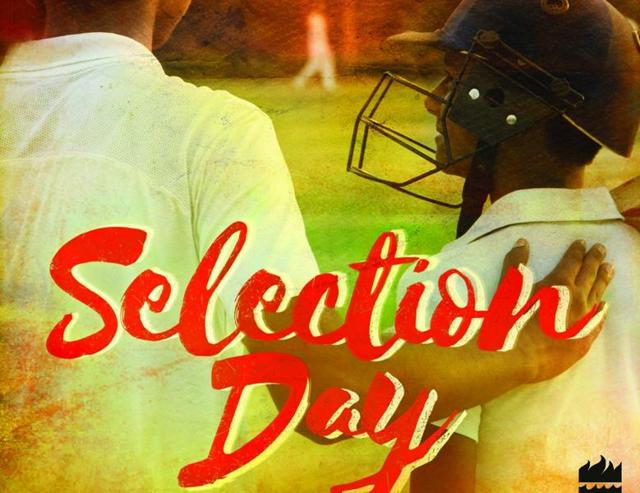
Selection Day by Aravind AdigaPublisher: HarperCollins; Price: Rs 599; Pages: 279
Cricket may mean different things to different people, but in no corner of India is this British import just a game. We are reminded of the step motherly treatment the country’s obsession with it affords to other sports every Olympics when India just about manages a medal or two.
Still, for some in India, it’s a passion: all of India’s international victories and defeats, the one-day and test series records and record breakers are stats they can rattle off even in sleep; for some it is an obsession and they will tell you the life stories and struggles of all the ‘gods’ of the cricketing pantheon with great relish. And for some, given the wealth it generates, making it big in cricket is their ticket out of poverty and obscurity.
In his third novel, Selection Day, Aravind Adiga, who won the Man Booker Prize for his debut book The White Tiger (2008), looks at urban India’s obsession with the sport through the lives of two brothers who want to get selected into Mumbai’s under-19 team.
Residents of a slum in Dahisar, Radha Krishan Kumar and Manjunath Kumar (14 and 13, at the start of the book) have been groomed by their cricket-obsessed father since childhood for the selection day. Chutney seller Mohan Kumar, a farmer from Karnataka, who moved to Mumbai to raise Tendulkars, runs his one-room dwelling much like a Soviet-era boy scout camp. Through rules, superstitions, beatings, emotional blackmail (”if you fail at cricket...the three of us will...beg for our food) and abstinence (”were you looking at girls again?”), he tries to control not just the diet and bodies of his sons, but also their minds. The fact that Radha had once clean bowled Sachin at his training academy, that he becomes (for a brief while before Manju breaks his record) the highest scorer in Mumbai school cricket and gets an audience with Shah Rukh Khan, only raises the family’s hopes that cricket is their way up in the social order.
{{/usCountry}}Residents of a slum in Dahisar, Radha Krishan Kumar and Manjunath Kumar (14 and 13, at the start of the book) have been groomed by their cricket-obsessed father since childhood for the selection day. Chutney seller Mohan Kumar, a farmer from Karnataka, who moved to Mumbai to raise Tendulkars, runs his one-room dwelling much like a Soviet-era boy scout camp. Through rules, superstitions, beatings, emotional blackmail (”if you fail at cricket...the three of us will...beg for our food) and abstinence (”were you looking at girls again?”), he tries to control not just the diet and bodies of his sons, but also their minds. The fact that Radha had once clean bowled Sachin at his training academy, that he becomes (for a brief while before Manju breaks his record) the highest scorer in Mumbai school cricket and gets an audience with Shah Rukh Khan, only raises the family’s hopes that cricket is their way up in the social order.
{{/usCountry}}Their coach, talent scout Tommy sir, too is searching for the next Tendulkar and Bradman. He finds them a Manhattan-returned Gujju sponsor, Anand Mehta. For a certain sum that he pays each month for the boys’ training, the businessman gets the negotiating rights “in the future with Adidas or Nike” when either boy joins the Indian Premier League and a “certain interest...in his marketing revenues.” In the present, he gets to treat his investments as his slaves.
Success in the sport even at school-level brings the boys media attention making them local celebrities first in the Dahisar slum and their Bandra school, and later in their Chembur housing society. But the Kumars aren’t the only ones wanting to be Tendulkars. The constant scrutiny, pressures, fear of failure, press conferences at 15, a mad father, a punishing routine and a boorish sponsor makes adolescence even harder for the Kumars as they begin to discover other interests. Manju rather study science and become a forensic scientist (he is most at peace when watching birds and turtles, and thinking about scientific paradoxes) and Radha, much to the chagrin of his father, chase girls.
The friction between the two brothers as Manju emerges the better cricketer adds to the drama as does the younger brother’s conflict with his sexuality. Adiga’s critique of the commercialization of the sport is further sharpened by the fact that Mohan’s obsessiveness and Mehta’s greed seems justified by the way the world around them reacts to the talent and achievements of the boys. No one seems to be in it for the love of the sport. At one point in the book, Mehta describes the game as a “state-sponsored lobotomy.”
The rich precocious Muslim boy, Javed Ansari, who writes poetry and is Radha’s rival in cricket till he decides that life has more exciting things to offer, then becomes the foil to all the madness around. He is the most self aware of all characters in the book. When Manju asks him about his father’s livelihood, he says, “I’m his business. He wants to make me captain of India.” He is also the only friend Manju makes, who keeps reminding him that he has a choice and asks him, “Do you even like cricket?”
Javed’s father is no better than that of the Kumars, and both seem right out of the many stories of struggle that feed contemporary narratives of those who made it. But the book makes you question our fixation with the game, and probably mull over the comment that led to British journalist Piers Morgan be trolled on Twitter recently: “Country with 1.2 billion people wildly celebrates 2 losing medals. How embarrassing is that?”
From HT Brunch, August 25, 2016
Follow us on twitter.com/HTBrunch
Connect with us on facebook.com/hindustantimesbrunch