
 E-Paper



How Nvidia's board can remove Jensen Huang, and what his exit could mean for AI chip race
Nvidia board is weighing Huang's future after reports of an affair with a woman suspected of spying for China. What the bylaws allow, and who gains if he goes.

 Prefer HTon Google


Nvidia’s board is weighing whether to remove Jensen Huang after reports of his affair with a woman suspected of spying for China, a move that would give the dominant maker of artificial intelligence (AI) chips its first new chief executive since he co-founded it in 1993.
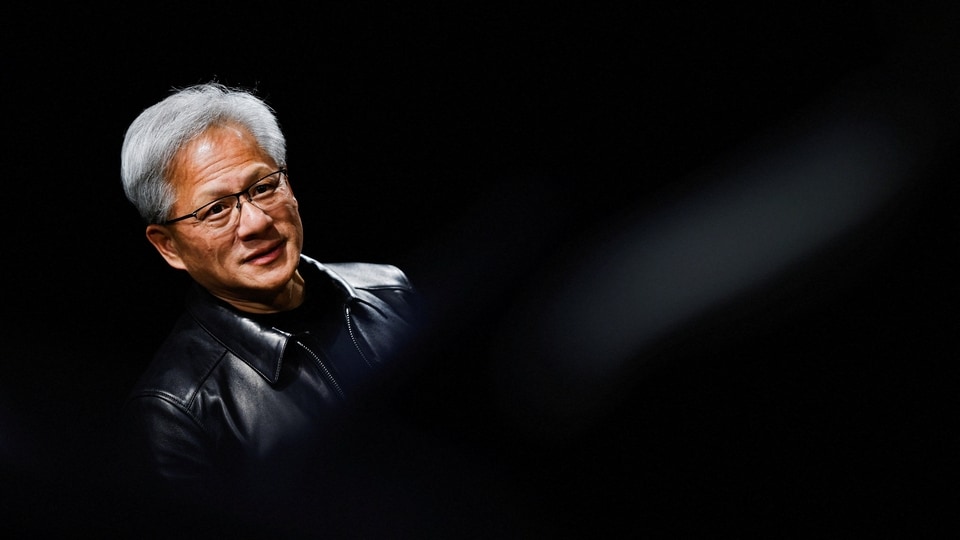
Six of its 11 directors can make that decision, with or without cause. A successor would take over a company that supplies an estimated 90% of the chips used in big AI projects, according to The New York Times. And investors have already begun betting on which of Nvidia's rivals could stand to gain.
The NYT reported last month that US intelligence agencies had found Huang had developed a close relationship with a Chinese citizen whom US officials concluded was gathering intelligence for Beijing. She became a top executive at a Singapore-based data-centre company that is one of Nvidia's biggest customers in Southeast Asia, the newspaper reported. China has denied the espionage claims.
Nvidia’s board opened an independent investigation on November 8 and said it “has confidence in Jensen and his leadership team”. Huang told employees the same day that he had been unfaithful to his wife, and took “full responsibility”, Reuters reported.
The board’s position appeared to shift this week, as the Times reported that Huang had also had a relationship with a senior Nvidia executive who reported to him. Reuters could not verify that report, and neither Nvidia nor the executive immediately responded to requests for comment.
Nvidia’s shares fell more than 8% in after-hours trading that day.
How the board can remove him
Nvidia’s bylaws allow its directors to remove any officer “at any time, either with or without cause”, by a vote of a majority of the directors in office. On an 11-member board, that means six votes. The directors can also act without meeting, provided all of them sign a written consent, and any two of them can call a special meeting at 24 hours’ notice.
Huang holds two titles, president and chief executive, and the bylaws make the president the chief executive unless the board appoints someone else to the role. A vote to remove him would need to cover both posts.
Nvidia’s code of conduct lists “personal relationships” among the situations that may create a conflict of interest, and states: “We promptly investigate reports of misconduct.” Many companies have policies against managers having relationships with people who report to them, the Times noted.
Losing the top job would not cost Huang his seat on the board. Under the bylaws, only shareholders can remove a director, with a majority of the voting power needed where there is cause and two-thirds where there is none. Huang owns 3.56% of Nvidia’s stock, the largest individual holding, which is far short of what he would need to block either vote. He would likely stay on as a director and as the company's biggest individual shareholder unless he resigned or shareholders voted him out.
Also read: Jensen Huang dreamed up Nvidia in a Denny's booth; now he could be ousted as CEO
The directors who will decide
Ten of the 11 directors are classed as independent, which means they are not company executives. The most senior of them is the lead director, Stephen Neal, 77, chairman emeritus of the law firm Cooley, who heads the committee that handles board nominations and governance. A committee of independent directors is overseeing the investigation into Huang, and on November 10, it hired Joon H Kim, a former acting US attorney for the Southern District of New York, and his law firm Wachtell, Lipton, Rosen & Katz to run it.
Several directors have worked alongside Huang for decades. Tench Coxe, a former managing director at the venture capital firm Sutter Hill Ventures, and Harvey Jones, managing partner of Square Wave Ventures, have been on the board since 1993, the year Nvidia was founded. Brooke Seawell, a venture partner at New Enterprise Associates who chairs the audit committee, joined in 1997. The newest director, Suzanne Nora Johnson, a former vice-chairman of Goldman Sachs, joined in July.
Who could replace him
Huang has no obvious successor. He has dozens of direct reports, and members of his family have also risen through the company’s ranks. The board, according to Bloomberg, has been working with an outside firm to identify potential replacements.
Colette Kress, Nvidia’s chief financial officer for more than a decade, would be the natural choice as interim chief executive, Armina Rosenberg, portfolio manager and co-founder of Minotaur Capital, which holds Nvidia shares, told Reuters. She said the bigger question was who would lead Nvidia’s technology roadmap over the longer term.
On Polymarket, a website where users bet on the outcome of events, the odds on November 11 favoured Ian Buck, who runs the business serving Nvidia’s data-centre customers. An AFP report said Buck was a key mind behind the software that drives demand for Nvidia’s chips.
Analysts have also named two of Huang’s children as potential successors. His daughter, Madison Huang, is a senior director of product marketing at Nvidia, and his son, Spencer Huang, is a director of product management in its robotics division.
Names from outside the company have also come up. AFP listed Lisa Su, the long-time chief executive of rival chipmaker AMD and Huang’s first cousin once removed, along with Rene Haas, who heads the British chip designer Arm. Some Silicon Valley insiders have mentioned Tim Cook, who stepped down as Apple’s chief executive in August after 15 years, according to AFP.
Also read: Chinese woman accused of spying on Nvidia's Jensen Huang entered Taiwan 8 times between 2024-25
What this could mean for Nvidia
Nvidia’s shares are down about a third from their early-October peak, a loss of more than $1.5 trillion in market value. If Wednesday's after-hours losses hold, about $600 billion of that will have gone since the board announced its investigation, according to Reuters.
Investors will hear from the company on November 17, when it reports quarterly results; analysts expect a profit of well over $200 billion this year.
Investors and analysts said that demand for Nvidia’s chips was unlikely to drop in the near term. They said the risk lay with the companies Nvidia has backed, largely customers building data centres that will use its chips. “They are financing their customers. In these types of booms or bubbles, sometimes all it takes is a slowdown to shift it into the bust phase,” Nick Ferres, chief investment officer at Vantage Point Asset Management in Singapore, told Reuters.
A successor would likely be “quite conservative” in running the company, Bloomberg reported. “There is no doubt that Nvidia won't be as aggressive as they have been in the past two to three years when it comes to setting goals and overachieving them,” Mandeep Singh, global head of technology research at Bloomberg Intelligence, said.
Who stands to gain
Investors moved quickly towards companies that could win business from Nvidia. AMD, its closest rival in AI chips, rose 4% in after-hours trading on Wednesday, and Broadcom, which has a growing role in custom AI chips and networking equipment, rose 3%.
Big technology companies that design their own chips offer another route. Alphabet, Google’s parent, makes tensor processing units (TPUs), chips custom-built for AI, while Nvidia's graphics processing units (GPUs) are multi-purpose chips first made for gaming. “This is where competitors like AMD, like Google Tensor Processing Units and Amazon will probably have a chance to improve their market share when it comes to that accelerator market that Nvidia dominates,” Singh said.
The trade spread to Asia on Thursday. In Taiwan, shares of Alchip Technologies and Global Unichip, which design custom chips for other companies, jumped more than 8%. Memory-chip makers depend on Nvidia to very different degrees. About 27% of SK Hynix's revenue comes from Nvidia, against 0.3% of Samsung Electronics’, according to Bloomberg's supply-chain data.
Jung In Yun, chief executive of Fibonacci Asset Management Global, told Bloomberg that new management at Nvidia could reassess its suppliers, giving Samsung a chance to win more orders for high-bandwidth memory, the stacked chips that feed data to AI processors.
Anna Wu, investment strategist and founder of Floodlines Research, cautioned that TPUs cannot replace GPUs across the board and that moving AI work away from Nvidia would be slow and costly, Bloomberg reported.
Washington and Beijing
Huang was among the most prominent US technology executives arguing for engagement with China and lobbying for looser controls on chip exports.
“A Huang exit could make it harder for Nvidia to keep pulling ahead in chips and AI systems. It would also weaken the industry’s most influential opponent of tighter US controls on China,” Michael Deng, a geoeconomics technology analyst at Bloomberg Economics, wrote.
The scandal has given lawmakers who want tighter curbs fresh support days before US President Donald Trump travels to Shenzhen for the Asia-Pacific Economic Cooperation summit, which Chinese President Xi Jinping is hosting.
The US-China trade truce runs until January 10, and its renewal depends largely on Washington holding back new restrictions on technology sales to China. The US Congress is advancing the Chip Security Act, which would require companies to track advanced processors physically through the supply chain. Tighter rules would help Chinese chipmakers such as Cambricon Technologies and Hygon Information Technology, which are trying to replace Nvidia in their home market, Bloomberg reported.


