
 E-Paper



Business ownership in India: Not all in the family
Emergence of governance issues and the active role played by shareholder groups are leading to the change.

 Prefer HTon Google


Mumbai
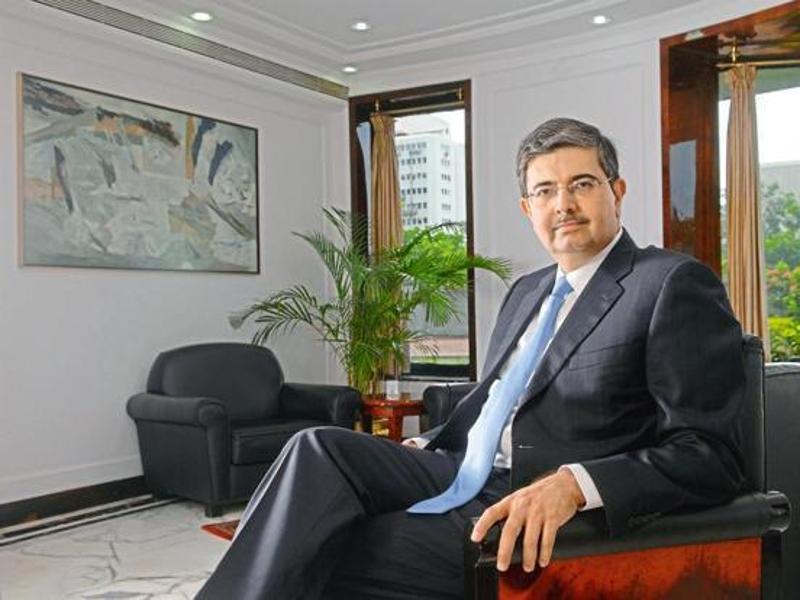
During a recent interaction with HT, Uday Kotak, chairman of the Kotak Mahindra group, and one of the country’s veteran bankers, told HT that business ownership in India is undergoing a radical change.
One of the closest observers of corporate trends, Kotak said he is beginning to see a slow but certain reduction in shareholding of promoters in Indian companies in favour of institutions, large investors and private equity firms, something more common in the US. A debt restructuring currently being implemented across companies and the need to raise more capital are driving the trend.
“We are going through a transformation as a country and as people. I see a disproportionate role played by the promoter category in the building of the new India. Instead, we’ll see more institutionalisation and the promoter class will be smaller than what they were in the past. I think lalas (read promoters) no longer have the ability to support infrastructure capital investment and companies will start depending on institutional money.”
What he meant was that a restructuring of bank loans, which companies have been unable to pay back due to poor business conditions, is forcing promoters to cede shareholding to institutions.
OWNERSHIP ISSUES
Emergence of governance issues and the active role played by shareholder groups are leading to the change. Stricter corporate legislations and mandatory disclosure norms have also started altering the way families used to run their businesses.
According to a research by the Centre of Family Managed Businesses at Mumbai’s SP Jain Institute of Management and Research, around 90% of Indian businesses are family-owned (15 of the top 20 companies by market value). The trend is widespread —From the Tatas, the Birlas, the Mahindras and the Ambanis to the comparatively small ones — Wipro (Azim Premji) and Bharat Forge (the Kalyani family).
“It’s a manifestation of poor governance and strategy on the part of companies that wanted to grow very fast by leveraging beyond reasonable levels,” says Kavil Ramachandran, professor and executive director, Thomas Schmidheiny Centre for Family Enterprise at the Indian School of Business, Hyderabad.
DEBT RESTRUCTURING
The Reserve Bank of India (RBI) is the one which is indirectly driving the trend. Alarmed by the abnormally large quantum of bad loans denting banks’ profitability, the central bank, under the stewardship of former governor Raghuram Rajan, sought to clean up banks’ books. Strategic debt restructuring or SDR was introduced in June 2015, where a bank could convert loans it had given to a company, into equity. A recent RBI analysis showed that the debt of ‘vulnerable’ companies — those unable to generate enough cash to meet debt payments — had ballooned to ₹691,400 crore.
But SDR did not take off the way the RBI wanted it to, and the central bank came up with another revamp scheme, S4A. The underlining problem was, however, clear — inefficient management.
Electrosteel Steels, Jaiprakash Associates, Alok Industries, Gammon India, Bhushan Steel and Visa Steel are some of the companies where lenders are exploring the option of changing ownership. The Umang Kejriwal family-owned Electrosteels Steel, the first company to be referred under the SDR scheme, will now be controlled by a SBI-led consortium. The company has a debt exposure of ₹11,000 crore, and lenders have decided to rope in Steel Authority of India to run it.
Jaiprakash Associates is another example. The Delhi-based group built up debts of ₹ 30,000 crore. It ultimately overshot the company’s ability to service loans and turned it into a non-performing asset. Eventually, shareholders of Jaiprakash in September agreed to convert debt into equity, giving banks ownership of more than 51% of the company.
A PROFESSIONAL APPROACH
However, corporate leaders do not consider it as an all-pervasive change.
“Some companies, especially in steel, infrastructure and textiles sectors, have seen a fall in shareholding and a corresponding rise in institutional shareholding, but Indian firms will not evolve like those in the US,” says Harsh Goenka, chairman of RPG Enterprises. “In the US, pension funds and investors hold more than 90% in a company. Indian promoters are extremely relevant as they bring the vision, risk-taking ability and ownership of the organisational culture to grow the company. Banks and institutions will not be able to effect such a change.”
He, however, adds: “We are seeing many cases where promoters are allowing professional CEOs to run companies. Earlier there was the karta system where a family elder took decisions. With too many members having different agendas, the composite structure is diluting.”
Goenka has a point. Wipro and Marico are the two big examples of professional CEOs running companies.
The changing family structure is also evident in the way the eldest is no longer being asked to take over the business. From Kishore Biyani to Sunil Mittal, Indian families are looking at the right member with appropriate skill sets.
So it’s a good time to move to a professional governance model, according to Kotak.
“We saw a whiff of that in the early 2000s with the (Narayan) Murthy-(Azim) Premji model. However, post 2004, we saw the lala model come back time into infrastructure projects, which resulted in 2G, Coalgate irregularities. I hope we don’t slip back. We must move to a more transparent business model,” he says.


