AI will take over 40% of the tasks that humans do today — but not humans, according to OpenAI co-founder Sam Altman, even as his creation ChatGPT upends coding to content jobs globally.
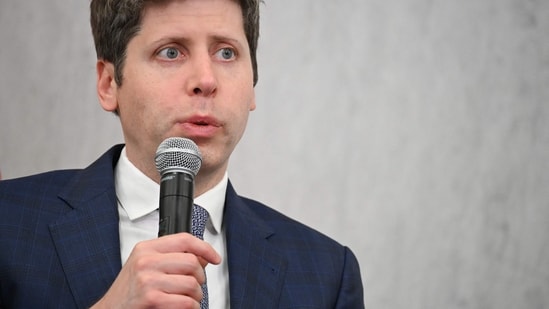
“I think 30 to 40% of the tasks that people do in today’s economy could be done by AI in the not very distant future,” Altman said told the Axel Springer Global Reporters Network during his recent visit to Berlin.
“That does not mean we lose 40% of jobs. It means people’s jobs change. And there will also be many new jobs created.”
AI & Superintelligence
According to the OpenAI CEO, AI models will surpass human capabilities in many areas, including scientific research, by 2030.
“It would be surprising if we don’t have extraordinarily capable models that can do things humans cannot,” he said, adding that his company’s latest system, GPT-5, already feels “smarter than me in many ways”.
Still, he underlined that uniquely human qualities — empathy, creativity, and the ability to understand what others truly want — will remain irreplaceable. “Machines will never be the centre of the story,” Altman said. “Human concerns, goals and values have to stay at the core.”
The OpenAI co-founder also raised broader concerns about democracy and freedom of expression, saying both are under threat globally. He argued that the safe deployment of AI depends on strong alignment with human values, warning of unintended consequences if society loses control of these systems.
OpenAI Future Plans
{{/usCountry}}The OpenAI co-founder also raised broader concerns about democracy and freedom of expression, saying both are under threat globally. He argued that the safe deployment of AI depends on strong alignment with human values, warning of unintended consequences if society loses control of these systems.
OpenAI Future Plans
{{/usCountry}}Altman also hinted at OpenAI’s future ambitions beyond software.
The company is exploring a family of hardware devices that could redefine how people interact with computers, moving beyond traditional screens and keyboards.
While acknowledging mistakes are inevitable, Altman maintained that OpenAI’s governance structure, with its non-profit roots, is designed to prioritise safety and long-term benefits over short-term gains.
“AI will reshape the world,” he said. “The challenge is to ensure it does so in a way that strengthens human freedom and possibility, not undermines it.”