Google is making changes, again, to how it approaches the need for a more private browsing experience for web users. At the same time, it is developing tools that’ll help advertisers show relevant advertisements based on web browsing activity while not revealing details of specific websites a user may have visited.
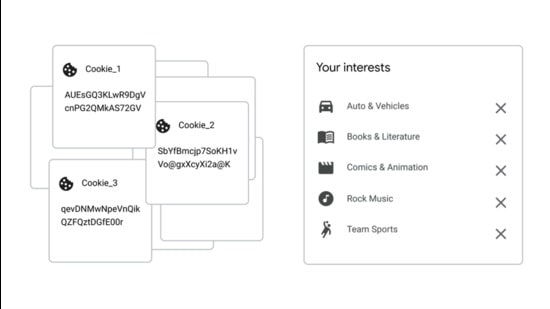
The Topics API, what Google calls a proposal, comes as a replacement for the FLoC (or the Federated Learning of Cohorts technology), which was propped up last year.
The need for a new method for online advertising, while it being more private and less intrusive in terms of sharing your web browsing history, is urgent because Google wants to disable third-party tracking cookies in the Chrome web browser by 2023. Topics API, which is an evolution within the Privacy Sandbox initiative, proposes to club interests for targeted advertising in genre-esque buckets.
There will be 350 such topics available at the start, including travel, sports, auto and vehicles, music and more. Expect many more to be added consequently.
Topics API is about larger buckets
These will be interests based on your browsing history in the Google Chrome web browser. More specifically, within that week. The websites that you visit will determine these topics. These topics aren’t assigned to you or the device on which you are accessing websites using the Chrome web browser.
{{/usCountry}}These will be interests based on your browsing history in the Google Chrome web browser. More specifically, within that week. The websites that you visit will determine these topics. These topics aren’t assigned to you or the device on which you are accessing websites using the Chrome web browser.
{{/usCountry}}How will the topic buckets be created? Valid question. This will be drawn using Google’s own data and also data from the Interactive Advertising Bureau.
Also Read: Explained: US 5G issue and its implication for India’s carriers
“Because Topics is powered by the browser, it provides you with a more recognisable way to see and control how your data is shared, compared to tracking mechanisms like third-party cookies. And, by providing websites with your topics of interest, online businesses have an option that doesn’t involve covert tracking techniques, like browser fingerprinting, in order to continue serving relevant ads,” says Vinay Goel, product director, privacy sandbox, Chrome, in an official post.
The next step is that when you visit a website that requests for your most visited topics, one topic from the past three weeks will be shared with the website. Mind you, these will be larger topic buckets and not specific websites or web pages.
Cookies do the opposite – they track you across websites and share those details. What this means is that if you’ve been visiting websites that have been assigned the topic “Books & Literature”, you may see advertisements of an online book store in your part of the world. It may be a coincidence if it’s the same one you regularly visit and buy from.
How is this different from the much-criticised FLoC?
FLoC’s approach was slightly different in its attempts to keep your web browsing history private. FLoC, pronounced as Flock, had proposed to categorise users in large groups (hence cohorts in the name) – that’s at least 1,000 people per group, based on their web browsing history and content tastes. For advertisers, they would be able to serve an ad to that group.
The FLoC technology faced criticism. There were concerns that the cohort method could still be used for tracking, by narrowing down users or smaller groups over a period of time as their cohort IDs changed on a weekly basis.
“People’s interests aren’t constant and neither are their FLoC IDs. Currently, FLoC IDs seem to be recomputed every week or so. This means that if a tracker is able to use other information to link up user visits over time, they can use the combination of FLoC IDs in week one, week two, etc. to distinguish individual users,” Eric Rescorla, CTO at Mozilla Firefox, had said last year.
“If a tracker starts with your FLoC cohort, it only has to distinguish your browser from a few thousand others (rather than a few hundred million),” the Electronic Frontier Foundation had raised this issue after FLoC was announced in early 2021. “Fingerprinting is notoriously difficult to stop. Browsers like Safari and Tor have engaged in years-long wars of attrition against trackers, sacrificing large swaths of their own feature sets in order to reduce fingerprinting attack surfaces,” they had added.
The issue of revenue for publishers, something Google has been under fire for in many countries including India, had also been raised. The Competition and Markets Authority of the UK Government had pointed out that Google “could undermine the ability of publishers to generate revenue and undermine competition in digital advertising, entrenching Google’s market power.”
Can you delete topics or turn it off altogether?
“Topics enables browsers to give you meaningful transparency and control over this data, and in Chrome, we’re building user controls that let you see the topics, remove any you don’t like or disable the feature completely,” adds Goel.
Google insists that this entire process happens on the device you are using the Chrome browser on – be it a phone, a laptop, a PC or a tablet. This data doesn’t require being sent to any other servers, including Google’s own, for processing.
Topics API roll-out: Long way to go
The Topics API is still in the early stages of development. It is expected that developer trials will start sometime in the next few weeks, which should allow websites to test this feature. There can, and likely, will be changes to how this works depending on stakeholder feedback about what works and what doesn’t, once the testing starts on websites and test versions of the Chrome web browsers.
It may be a while though before we see it as part of the Google Chrome browsers that we use on PCs and smartphones. Whether this feature has everyone’s approval and is ready to meet the 2023 deadline to remove third-party browser cookies from Chrome is anyone’s guess.