
 E-Paper



Reduction in TCS rates: A welcome course correction
For the past few years, taxpayers have been struggling with very high TCS rates on foreign remittances above ₹10 lakh under the Liberalised Remittance Scheme.

 Prefer HTon Google


The finance minister in the Union Budget 2026 has provided significant relief to millions of Indian families who remit money overseas to fund their child’s education, provide medical treatment for their loved ones or dream of a trip overseas by announcing a sharp reduction in Tax Collected at Source (TCS).

For the past couple of years, taxpayers have been struggling with very high TCS rates on foreign remittances above INR 10 lakh under the Liberalised Remittance Scheme (LRS). While these provisions were introduced to keep a tab on money going overseas and prevent tax evasion, they also ended up creating financial stress due to the following reasons -
Cash flow impact
Perhaps the biggest issue was the way TCS affected cash flow. TCS is on spending and not on income. The amount spent out of an income subjected to tax was again subjected to tax by way of TCS, while spending it.
Parents sending funds for their child studying abroad had to shell out an additional sum to meet the TCS obligation. Under the earlier system, on a remittance of INR 10 lakh, they had to shell out INR 2 lakh or more immediately as TCS. This wasn’t tax they owed — it was simply money held by the government temporarily until they filed their tax return and claimed a refund. This upfront payment created unnecessary financial pressure.
Medical payments became costlier
Medical treatment abroad is often urgent and stressful. Yet the earlier system treated such remittances like foreign travel expenses and taxed them at 5%. Families dealing with illness found themselves paying extra taxes at the worst possible time.
Foreign tour packages were heavily penalised
Travel agencies reported that customers regularly cancelled foreign trips when they realised that high TCS rates significantly increased the trip cost. A ₹12 lakh family vacation could end up attracting 20% TCS, meaning an additional ₹2.4 lakh upfront payment —an unexpected hit to the budget.
Businesses and service providers faced confusion
Travel companies and banks struggled to explain fluctuating TCS rules to customers. With multiple slabs and exceptions, compliance became complicated for everyone involved.
The new budget finally eases this inconvenience to a large extent.
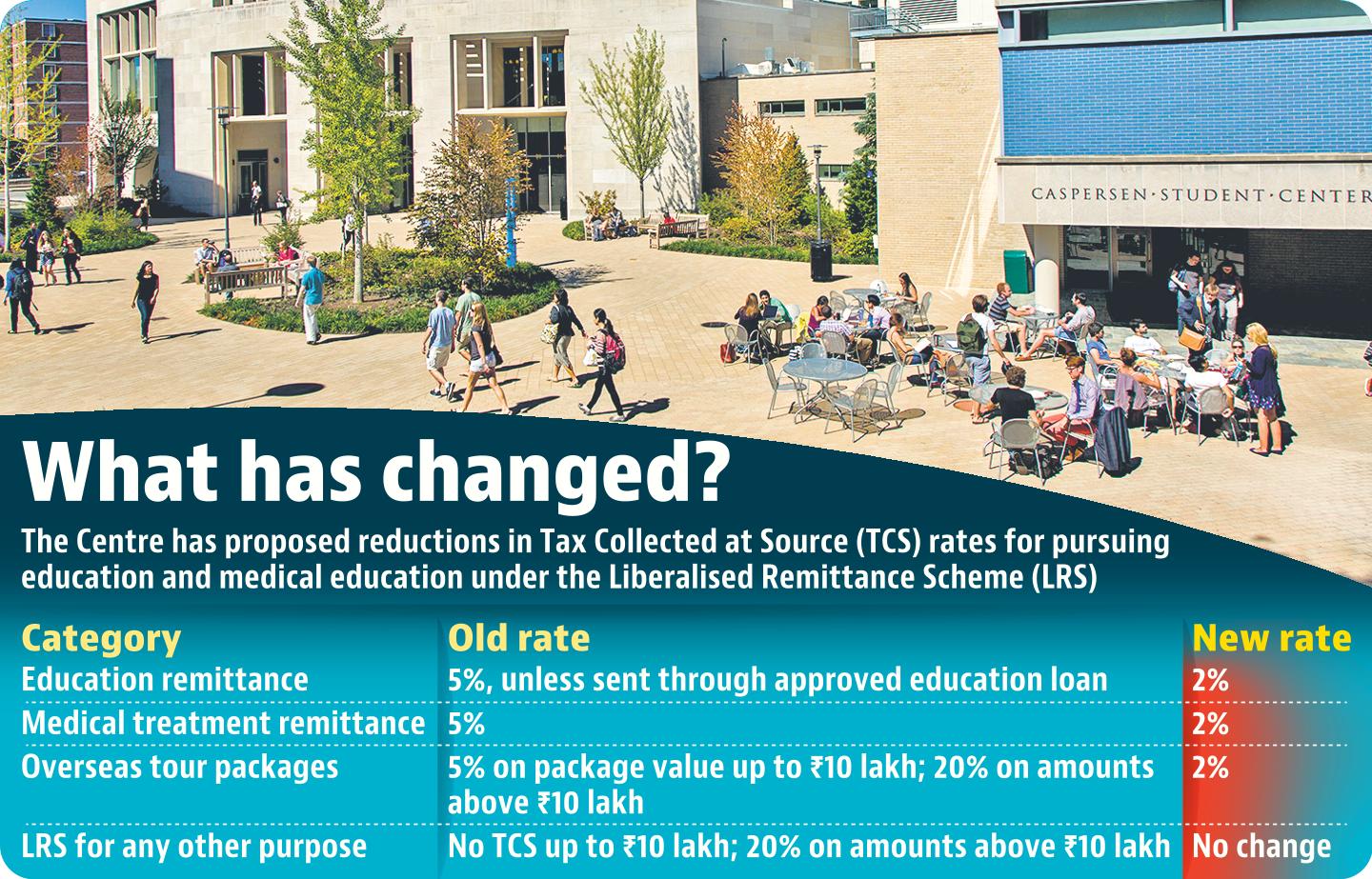
Budget 2026 has brought in much simpler and lower rates:
•Education remittances: 2%
•Medical remittances: 2%
•Foreign tour packages: Flat 2% for everyone, with no thresholds
This proposed reduction in TCS rate will eliminate the earlier shock effect experienced by families who discovered that overseas spending required large upfront tax deposits.
With these changes, overseas education becomes more affordable, medical remittances more humane, and foreign travel more accessible. When combined with ongoing digitisation and compliance reforms, the TCS overhaul underscores a renewed commitment to simplifying taxation while supporting India’s growing global footprint.
(Aarti Raote is Partner, Deloitte India. The views expressed are personal.)


