There has been a drop of about 26% in the number of migratory birds at region’s largest wetland — Harike also known as Hari-ke-Pattan — this year as compared to the previous year.
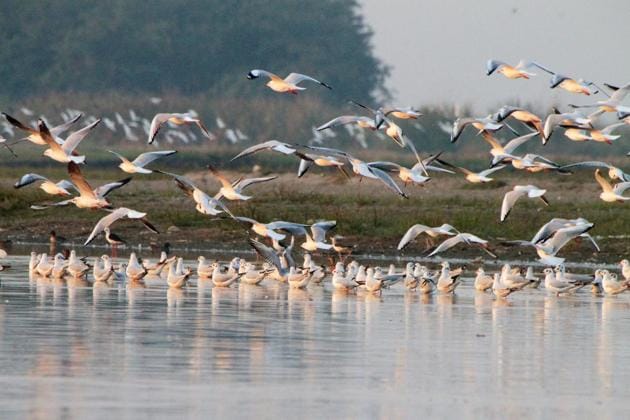
According to a birds census conducted by World Wildlife Fund (WWF) with the help of Chandigarh, Amritsar, Faridkot, Jalandhar and Ludhiana bird clubs, and Jagriti Samiti Nangal, 91,025 winged guests were recorded this year against 1.23 lakh in 2019.
Every year, lakhs of winged guests from Siberia, Russia, Kazakhstan and other low temperature regions start arriving at the bird sanctuary from mid-October up to December as lakes get frozen in their native regions. They stay here till March.
Late arrival of winter is said to be the main reason behind the drop this year. The officials, however, maintain that the count satisfactory. Peregrine falcon, osprey, greater spotted eagle, common shelduck, black-tailed godwit, common pochard, northern lapwing, oriental dater, ferruginous duck, painted stork, Eurasian curlew, woolly-necked stork are among the 94 species spotted during the census.
“This year, the drop in number of winged guests has been witnessed all over the country. It depends upon the season. We believe, the late arrival of winter is one of the reasons,” said Gitanjali Kanwar, coordinator, aquatic biodiversity, WWF India.
{{/usCountry}}“This year, the drop in number of winged guests has been witnessed all over the country. It depends upon the season. We believe, the late arrival of winter is one of the reasons,” said Gitanjali Kanwar, coordinator, aquatic biodiversity, WWF India.
{{/usCountry}}She said the three highest species of birds spotted at the wetland were: Eurasian coot (48,185), graylag geese (17,913) and bar-headed geese (6,339).
Divisional forest officer (wildlife), Kalpana (she goes by first name only), said there was an increase in the winged guests in 2019 and the count of birds this year is satisfactory compared with number of birds in the previous years, which was 94,771 in 2018; 93,385 in 2017, and 1.05 lakh in 2016.
The DFO said the department’s officials had been patrolling the wetlands round the clock to protect the birds.
The wetland and the lake were formed by constructing the headworks at the confluence of Beas and Sutlej rivers, in 1953. Since then, the 86 square km wetland has become home to rare varieties of birds.