
 E-Paper



Amit Shah unveils four apps for new criminal laws
At the Chandigarh Secretariat, Amit Shah was given a live demonstration of the various pillars of the Interoperable Criminal Justice System functioning under the new criminal laws and their integration

 Prefer HTon Google


Chandigarh During his visit to Chandigarh, where he unveiled the 24x7 water supply project in Manimajra, Union home minister Amit Shah on Sunday also launched four newly developed national apps — e-Sakshya, Nyay Setu, Nyay Shruti and e-Summons — aimed at streamlining the criminal justice system, acting as catalysts for efficiency and transparency.
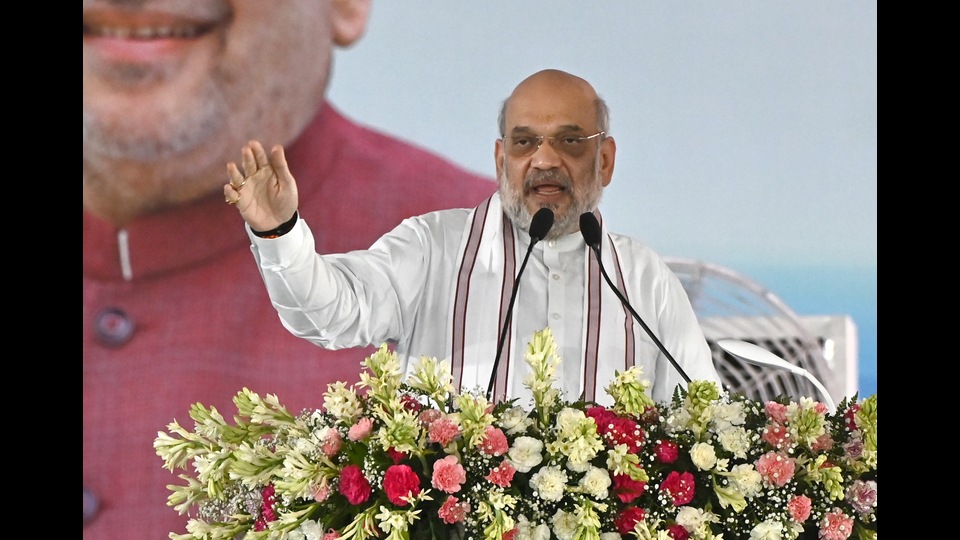
At the Chandigarh Secretariat, the minister was given a live demonstration of the various pillars of the Interoperable Criminal Justice System (ICJS) functioning under the new criminal laws and their integration.
Addressing the gathering, Shah said the three new criminal laws, which came into effect last month, will prove to be the “biggest” reform witnessed by India in the 21st century.
With e-Sakshya, investigating officers can record videos and take photographs of crime scenes as needed. The application also allows officers to gather information from witnesses and record their statements. Once the recording is complete, all information is securely transmitted to an evidence locker and linked to the chargesheet, which is then made available to the court electronically. These recordings and photographs can also be downloaded for use by prosecutors and defence lawyers.
The second tool, Nyay Shruti, facilitates court hearings through electronic medium. This automated system is connected with the police, prisons, prosecution, forensics, and designated access points. Whenever the court issues a summons or warrant, an alert is sent to the domain application, and a video conferencing link for judicial hearings is provided to all relevant individuals and officers. On the designated date and time, the officer or individual can join the video conference to present their statement before the court, with arrangements made for adding witnesses as needed. Attendance can be recorded, and sessions can be recorded and webcast as required.
The third application, eSummons, handles the electronic compliance of legal orders. Through this facility, legal orders such as summons and warrants issued by the court are electronically transmitted to the police. These orders are then distributed to the relevant officers via their mobile devices. The officers deliver the orders to the specified addresses and obtain the recipient’s signature upon delivery.
Shah said that new laws, based on modern technology and purely indigenous, represented one of the biggest reforms in India over the next decade. He emphasised that these laws were justice-oriented rather than punishment-oriented and will position India as the world’s most technologically advanced justice system.
He further announced that Chandigarh will be the first administrative unit in the country to achieve 100% implementation of all three new criminal laws within the next two months.


