Ahead of the paddy harvesting season, the Bathinda district authorities have chalked out a plan to manage the almost entire paddy biomass stock of 8.5 lakh tonnes to be produced this year.
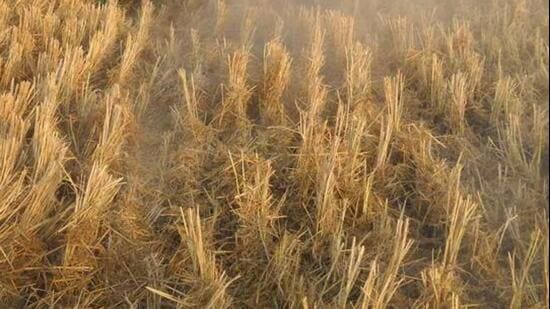
Deputy commissioner Rajesh Dhiman said on Wednesday that 10 pellet-making units functional in the district have a capacity to convert more than 4.5 lakh tonnes into pellets to be used in coal-based thermal plants.
He said the administration is hopeful of bringing paddy stubble burning incidents to an all-time low compared to last year, when 359 farm fires were recorded in the district.
“Up to the kharif harvest season of 2024, the average number of farm fire cases was more than 5,000. Biomass management efforts proved fruitful, as these cases dropped to 359 fires in 2025. To prevent stubble burning this year, the administration is working to ensure 46% of the biomass is produced through in-situ management and 54% through ex-situ management,” he added.
Providing stubble to the pellet units is a part of ex-situ management and various industries have been taken on board for handling of the biomass as unconventional fuel.
{{/usCountry}}Providing stubble to the pellet units is a part of ex-situ management and various industries have been taken on board for handling of the biomass as unconventional fuel.
{{/usCountry}}He said that more than 4.5 lakh tonnes of stubble will be used as pellets in the boilers of industrial units and the remaining will be stored in various dump yards located in various parts of the district.
The authorities are expecting the arrival of 14.74 lakh tonnes of paddy this year in the district and all arrangements are in place for smooth procurement starting from tomorrow.
Officials said that the paddy harvesting period in Bathinda and adjoining areas starts after October 10.
The DC said that following the efforts of farmers and traders, Bathinda has been managing its paddy stubble by utilising the same for producing pellets and in industrial boilers.
During a meeting with the brick kiln operators, the DC urged them to contribute towards a better environment by using almost 30% of these pellets as fuel along with coal in kilns as per the direction of the Commission for Air Quality Management (CAQMS) and to ensure execution of requisite agreements in the matter.
This shall ensure that there is no dearth of fuel for the brick kilns and that the brick kilns should source pellet supply from nearby units.