
 E-Paper



JICA forestry project reviving endangered medicinal plants
Under the initiative, rural communities are being encouraged to take up medicinal plant farming with support from village forest development committees and self-help groups formed under the project


With a bid to revive endangered medicinal plants and promote their scientific cultivation, the Japan International Cooperation Agency (JICA) forestry project in Himachal Pradesh, said an official spokesperson.
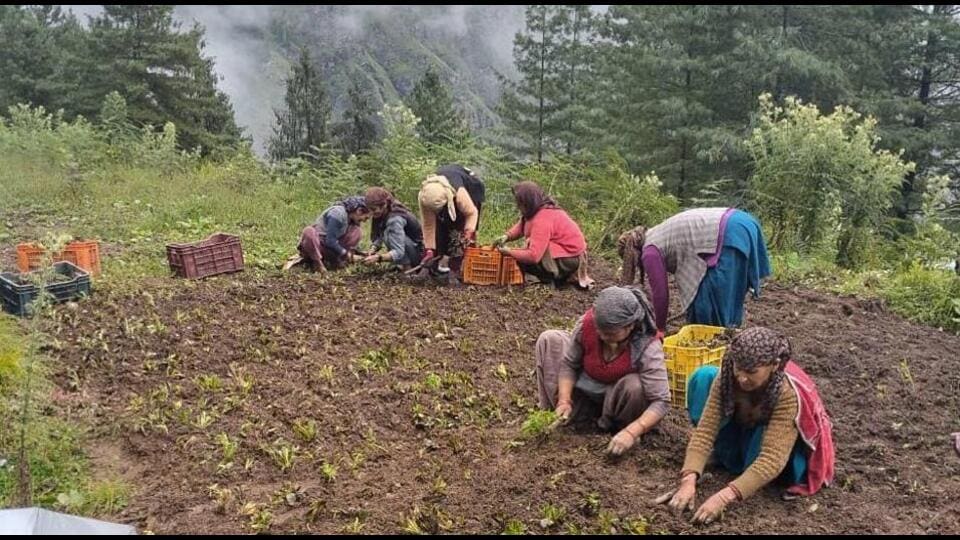
Special focus has been given on “Picrorhiza kurroa”, locally known as Kadu or Kutki, a medicinal plant on verge of extinction owing to unscientific extraction by local traders. The plant’s roots are used for medicinal preparation.
Under the initiative, rural communities are being encouraged to take up medicinal plant farming with support from village forest development committees and self-help groups formed under the project. The spokesperson informed that up to the financial year 2025–26, around 1.62 million Kadu saplings have been planted across various forest divisions in the state, marking a significant conservation and livelihood milestone.
Owing to its limited distribution in the western Himalayas, small populations, and high market value, Kutki has been included among the 37 top-priority plant species identified for conservation and cultivation. Its farming can provide an alternative source of income as well as generate self-employment opportunities. At present, Kadu is fetching a price of ₹2,000 to ₹5,000 per kilogram in local markets.
Locals highly value Kadu as it is used for treating stomach ailments and high fever. It is also used in the treatment of scorpion stings, blood pressure, intestinal pain, eye disorders, bile-related diseases, and sore throat. It is reported that medical practitioners in Nepal and Tibetan medicine use its rhizome to treat cough, cold and fever.
An official associated with the project said that cultivation of this medicinal plant is completely chemical-free and does not harm water sources. Around 1,00,000 saplings in Taranda and Nigani areas of Kinnaur Forest Division, 2,20,000 in Baga Sarahan and Sarga, and 3,00,000 in Sharsha under Ani Forest Division have been planted along with 1,75,000 saplings in Mati Kochar of Kullu Forest Division; 4,00,000 in Dodra–Kwar; 3,00,000 in Khashdhar under Rohru forest division; 1,70,000 in Bamta; 3,60,000 in Sarahan under Chopal Forest Division and 90,000 saplings in Sainj area of Banjar Forest Division.
Cultivation of Chirayata, another medicinal plant rich in therapeutic properties, is also being promoted under the project. Currently, Chirayata is selling at ₹300 to ₹500 per kilogram.
The JICA forestry project is carrying out work to promote medicinal plant cultivation in tribal district Kinnaur and forest divisions of Ani, Rohru, Chopal, and Kullu. “The JICA forestry project is playing an important role in promoting the cultivation of the endangered medicinal plant Kadu in the state. From the financial year 2024 to 2026, 1.62 million Kadu saplings have been planted across six forest divisions. Positive results will be seen in the coming years,” Dr SK Kapta, director, Jadi-Buti Cell, JICA forestry project, said.
“The demand for natural products is increasing. This plant had got extinct from Himachal. This is a rare plant and it was earlier found at high altitudes where the tree line used to end. So through JICA we have been provided nurseries and now we have started the plantation. This promises high return considering the demand which not just help in revival of the species but also financial independence of the cultivators,” shared Ajay Negi of village forest development committees, Nigani.


