Nearly 4,000 metric tonnes of garbage lifted from Ludhiana’s roads after the sanitation workers’ strike has piled fresh pressure on the city’s already overburdened solid waste management plant at Jamalpur, which is equipped to process barely a fraction of the waste generated every day.
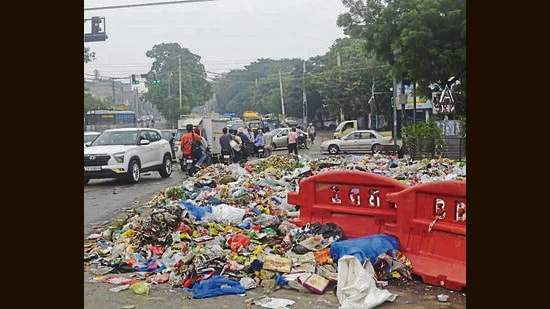
According to the municipal corporation, sanitation workers cleared around 4,000 metric tonnes of accumulated waste after the strike ended on August 1.
Municipal corporation’ superintendent engineer Sham Lal Gupta said the civic body’s sanitation teams worked extensively to restore cleanliness across the city. “Our sanitation team has done a terrific job in clearing the city again,” he said.
However, the clearance operation has exposed the city’s chronic waste-processing bottleneck.
Ludhiana generates nearly 1,100 metric tonnes of municipal solid waste every day, while the Jamalpur processing plant has a daily processing capacity of only about 300 metric tonnes. The wide gap means a substantial portion of the waste remains unprocessed and continues to accumulate at the site. The additional garbage collected after the strike is expected to further add to the existing mounds.
According to civic body officials, the plant’s processing capacity has been further affected by the ongoing monsoon, with rains slowing waste handling and processing operations.
{{/usCountry}}According to civic body officials, the plant’s processing capacity has been further affected by the ongoing monsoon, with rains slowing waste handling and processing operations.
{{/usCountry}}Officials, however, said efforts were underway to bridge the gap.
According to officials, the contractor operating the plant has committed to enhancing its processing capacity and has procured new machinery to scale up operations.
“We want the contractor to reduce the gap between the quantity of waste reaching the plant and the amount processed every day,” a municipal corporation official said on condition of anonymity.
Meanwhile, the legacy waste remediation plant at Jamalpur has also become operational. The facility has been tasked with scientifically processing around 19.62 lakh metric tonnes of legacy waste accumulated over the years within an 18-month timeframe.