
 E-Paper



Ludhiana: PPCB report flags 54 dyeing units in Buddha Nullah’s catchment
Punjab Pollution Control Board report finds water in Buddha Nallah unfit for irrigation due to high COD and BOD levels from dyeing units. NGT directives issued for action.


After the directives from the National Green Tribunal (NGT), the Punjab Pollution Control Board (PPCB) submitted a report of the samples collected from Buddha Nallah at various locations across the District on Monday. The report stated that the analysed samples were found to have Chemical Oxygen Demand (COD) and Biochemical Oxygen Demand (BOD) levels, The report adds that the water of Buddha Nullah is unfit for irrigation.
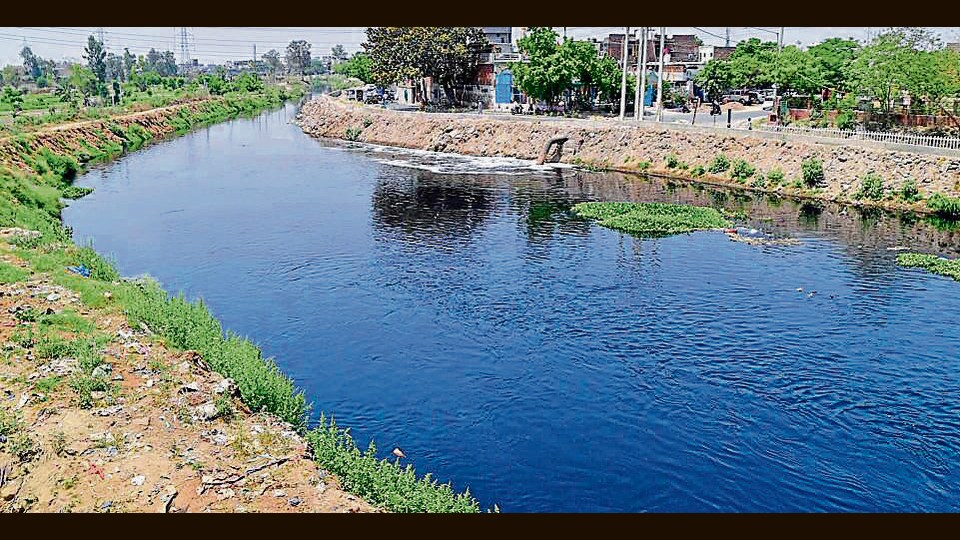
According to the report, about 54 dyeing units are not connected to the common effluent treatment plants (CETP) due to geographical reasons and scale of the industries. Out of these 54 dyeing units, 12 are large scale, 16 are small category scattered at different places and 26 units are situated at Industrial Area A, Ludhiana.
The samples were analysed for quality in accordance with the parameters stipulated for sewage and industrial effluent treatment.
The report submitted by PPCB executive engineer Gurmeet Singh added that there were 300 dyeing units operating in the district, out of which about 265 fall in the catchment area of Buddha Nallah, which originates in Koom Kalan village and runs parallel to Sutlej river on its south till it joins the river at Walipur Kalan village, the report added.
PPCB executive engineer Gurmeet Singh said, “I do not want to comment on the report as it is an internal report and the matter is sub judice.”
For the treatment of wastewater of the dyeing industries, three CETPs, with a total capacity of 105 million litres per day (MLD) have been installed in Ludhiana.
The report further adds that there are 108 dyeing units connected to CETP of capacity 50 MLD, 67 dyeing units connected to CETP of capacity 40 MLD and 36 dyeing units are connected with CETP that has a capacity of 15 MLD.
Despite substantial investments in the rejuvenation of Buddha Nullah, environmental activists have raised concerns over the findings of the report and stated that the NGT should conduct sampling from the independent body and with the presence of locals, without any prior warning to the industrialists.
The NGT has directed the PPCB and the Ludhiana municipal corporation to file status reports on action taken against all the non- compliant units; status of units which are stated to be closed, as to whether they have been closed temporarily or permanently; compliance status of all the dyeing industries which are not connected to the three CETPs; the compliance status of all dyeing units with respect to withdrawal and utilisation of groundwater and compliance with conditions, if any, imposed at the time of grant of permission by the Punjab State Ground Water Authority; and the wastewater generated by each of the dyeing industries connected with all the three CETPs.
The analysis of the samples found that the concentration of different parameters of water flowing in Buddha Nallah were more than the prescribed standards.
Public action committee member Kuldeep Singh Khaira said, “The state government should form a special investigation team (SIT) in this project as PPCB is not doing their duty. They come up with baseless reports which do not match with the current status. They always do inspection and checking at dyeing units after prior information and they should call an independent agency for sampling, such as premier research institutes.”
Environmentalist dissatisfied
City-based environmentalist JS Gill said, “The report indicated high concentration levels of COD, BOD and coliform in the samples. The colour of the water is pitch black and showcases the chemical mixed, but the reports of the PPCB show concentration of COD and BOD, which do not involve the dyeing units waste. I demand that NGT and Punjab chief minister collect samples from different locations at different times in the presence of the public, who suffer because of the pollution.”
Gill alleged that crores have been spent on Buddha Nullah rejuvenation but the situation remains the same, which showcases the poor efficiency of the officials and department concerned. He further alleged that dyeing and other units are still dropping their chemical wastes into the Buddha Nullah.


