Environmental compensation amounting to ₹1.78 crore remains to be recovered from 22 stone-crusher units in Mahendragarh, with the National Green Tribunal directing the Haryana State Pollution Control Board (HSPCB) to submit a fresh status report on the recovery within four weeks.
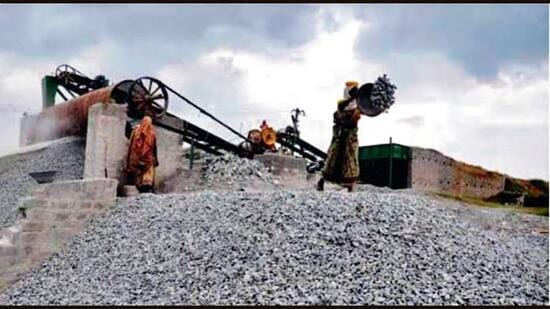
The tribunal was informed that environmental compensation totalling ₹5.39 crore had been imposed on 88 stone-crusher units for past violations. Of these, 67 units had deposited ₹3.61 crore, while ₹1.78 crore remained pending from 22 units when the HSPCB filed its action-taken report on May 15, 2026. The cases of the defaulting units had been sent to the revenue department for recovery through attachment of properties.
However, the recovery position has changed since the filing of the report. HSPCB counsel Rahul Khurana told the NGT that one more crusher unit had subsequently deposited the compensation and partial recovery had been made from another unit. The bench consequently allowed the pollution control board four weeks to place an updated recovery status on record.
The NGT has also reiterated that the recovered environmental compensation is not merely to be deposited but is to be utilised for restoration and remedial measures to mitigate air pollution in Mahendragarh. HSPCB has been entrusted with overseeing the utilisation and implementation of the funds in consultation with the district administration.
{{/usCountry}}The NGT has also reiterated that the recovered environmental compensation is not merely to be deposited but is to be utilised for restoration and remedial measures to mitigate air pollution in Mahendragarh. HSPCB has been entrusted with overseeing the utilisation and implementation of the funds in consultation with the district administration.
{{/usCountry}}The compensation recovery follows the tribunal’s July 3, 2025 order on pollution caused by stone crushers in the district. The NGT had noted that none of the crusher units had objected to the final environmental compensation calculated by a joint committee in its April 25, 2025 report and accordingly directed HSPCB to recover the amount from units that had not deposited it. The board was permitted to take coercive measures for expeditious recovery, preferably within three months.
The tribunal had simultaneously ordered a comprehensive assessment of the district’s carrying capacity for stone-crushing activity, amid concerns over pollution and the need to keep operations within environmentally sustainable limits. The district magistrate was directed to submit the carrying-capacity report and supporting documents to the Central Pollution Control Board (CPCB), which was to have it cross-checked by an expert body and determine the correct capacity of the district within three months.
However, the bench observed that more than a year after that direction the CPCB is yet to file its carrying-capacity report and the registry has now been directed to issue notice to the CPCB member secretary, and the matter has been listed for November 17, this year.
The July 2025 order had also constituted a joint committee comprising the CPCB, HSPCB and Mahendragarh district magistrate to examine whether each stone crusher complied with siting criteria and consent-to-operate conditions. The district magistrate was made the nodal agency while HSPCB was directed to initiate remedial and punitive action against defaulting units.
The NGT had fixed October 3, 2025 as the deadline for the HSPCB’s recovery report and the CPCB’s carrying-capacity report. With the pollution control board having submitted its action-taken report on recovery, the CPCB’s carrying-capacity report remains pending, indicating the delay in an assessment crucial to regulating the concentration and operation of stone crushers in Mahendragarh.