
 E-Paper



Now, Chandigarh admn pushes deadline to clear Dadumajra landfill to December
UT administration extends deadline to clear Dadumajra landfill legacy waste to Dec 31. NGT directs additional waste processing facilities to address gap. New MP highlights issue.


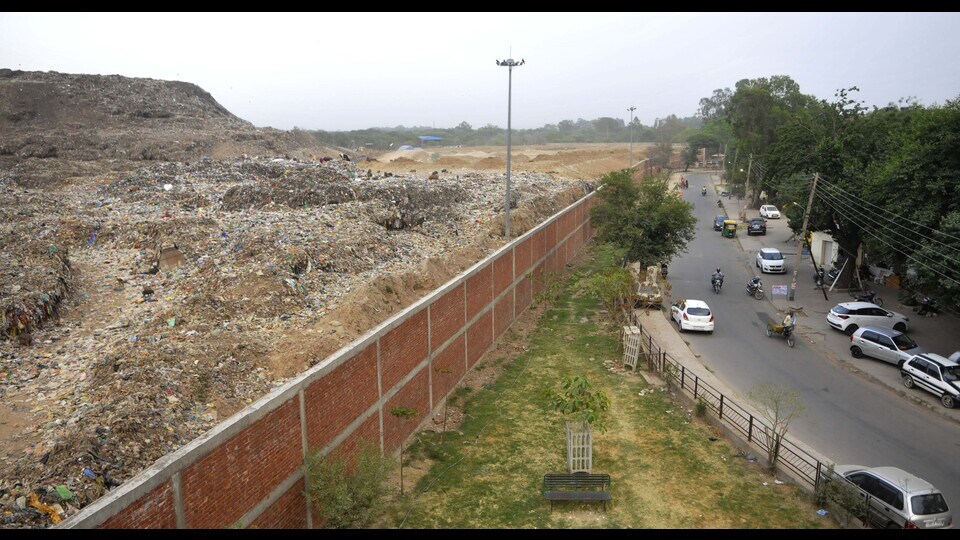
After already failing to meet multiple deadlines, the UT administration has now pushed the deadline to clear the entire legacy waste at the Dadumajra landfill to December 31.
Since the advent of 2024, it has already missed the February and then April deadlines.
In a recent affidavit submitted to the National Green Tribunal (NGT) regarding the bioremediation of legacy waste at Dadumajra, the UT department of environment reported that the bioremediation of the old dumpsite of 20 acres commenced on October 22, 2020. The department successfully processed the entire legacy waste of 5 lakh metric tonnes (LMT), reclaiming 20 acres.
Furthermore, the bioremediation of the current landfill of 8.28 acres began on August 26, 2022. Out of the 8 LMT, 7.67 LMT waste has been processed and the remaining work was projected to be completed by December 31, 2024, it submitted.
The NGT had earlier directed the department to address the gap in waste processing by establishing additional facilities capable of processing 468 Tonnes Per Day (TPD) of bio-degradable, non-biodegradable and other waste, in addition to the legacy waste of 5.5 LMT.
Speaking about the previous April 2024 deadline, a senior officer of the municipal corporation said the front portion of the 8.28 acres land had been nearly cleared, with the remaining portion expected to be cleared within the next 10 days.
The recent affidavit submitted before the NGT aimed to clear the entire landfill, which was anticipated to be achieved by December 31, the officer added.
Newly elected member of Parliament Manish Tewari had made the dumping ground an issue during his Lok Sabha election campaign, blaming the BJP for not tackling it in 10 years of rule. While Chandigarh secured the 11th cleanest city tag in the Swachh Survekshan 2023, up from the 12th position in 2022, the issue of the dumping ground persists.
In the status report submitted to the green tribunal, the department noted that in May, nearly 430 TDP of the total 500 TDP solid waste generated in the city was processed. There was a gap of nearly 70 TDP (mixed waste) between generation and processing. The department plans to install new machines within the next six months to segregate and process mixed waste, aiming to achieve 100% processing of municipal solid waste.
The department reported that 100% of waste is collected door-to-door from households in four categories: dry, wet, sanitary, and domestic hazardous waste. Dry, sanitary and domestic hazardous waste collected at Material Recovery Facilities is sent for processing.
Approximately 300 TPD of wet waste, including horticulture waste, is generated in the city. To address this, an additional facility capable of processing 300 TPD of wet waste has been operationalised since February 29, 2024, increasing the composting capacity to 420 TPD.
Horticulture waste is being effectively processed, with a plant established to manufacture bio-briquettes from pruning waste. In parks and green belts, horticulture waste is processed in situ using 104 aerobic compost pits.
To meet long-term solid waste processing needs, an Integrated Solid Waste Management (ISWM) facility is being established, with two bids currently under evaluation. Sanitary waste is collected from Material Recovery Facilities for processing at authorised biomedical waste treatment facilities.


