
 E-Paper



Punjab moves to fast track drug trials with 35 special NDPS courts
Ramping up the ongoing fight against the deep-rooted drug menace, the Punjab cabinet on Saturday approved the establishment of 35 exclusive special NDPS (Narcotic Drugs and Psychotropic Substances) courts across the state to fast-track trials and clear a backlog of 52,577 cases

 Prefer HTon Google


Ramping up the ongoing fight against the deep-rooted drug menace, the Punjab cabinet on Saturday approved the establishment of 35 exclusive special NDPS (Narcotic Drugs and Psychotropic Substances) courts across the state to fast-track trials and clear a backlog of 52,577 cases.
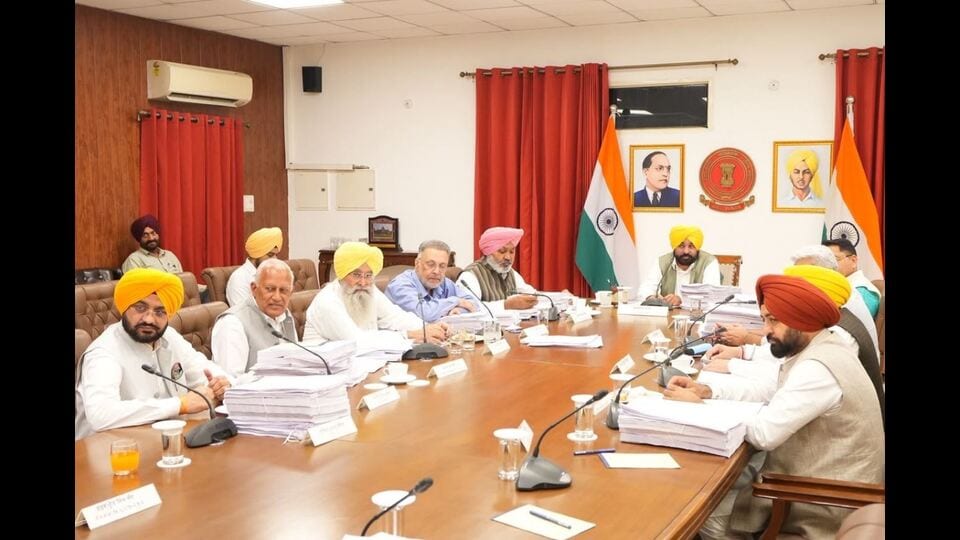
A decision to this effect was taken during a meeting of the Council of Ministers chaired by chief minister Bhagwant Mann.
An official statement from the Chief Minister’s Office said Punjab is facing a serious challenge of drug trafficking and abuse, with approximately 20,000 NDPS cases registered and around 27,000 arrests made annually in the state.
“Of these, approximately 12,000 cases are tried by sessions courts, while only around 5,700 cases are disposed of annually, resulting in 52,577 pending cases as on August 31, 2026. Consequently, the average disposal time for such cases is approximately eight years,” it said.
The Registrar General of the Punjab and Haryana high court had assessed the requirement for additional exclusive special NDPS courts to clear the backlog over the next five to seven years. Accordingly, the Cabinet has approved the establishment of 35 such courts in the first phase.
Along with this, 385 posts have been approved, comprising 35 additional district and sessions judges, 315 supporting staff members and 35 assistant district attorneys. An estimated expenditure of approximately ₹75 crore, including infrastructure costs, has also been sanctioned.
The existing designated courts will continue functioning until the new exclusive special NDPS courts become fully operational.
These dedicated courts will facilitate speedy disposal of NDPS cases, reduce pendency and delays, and ensure better utilisation of government witnesses. The initiative is expected to strengthen the judicial mechanism against drug-related offences and further the Punjab government’s efforts to break the backbone of the drug menace in the state, the statement added.
Service rules approves for separate 2,452-post BBMB cadre
In another major decision, aimed at increasing Punjab’s representation in the Bhakra Beas Management Board (BBMB) and creating new employment opportunities for the youth, the Punjab cabinet approved the formation of departmental service rules for the newly created separate cadre of employees to be posted in board.
“Under the provisions of the Punjab Reorganisation Act, 1966, the Bhakra Beas Management Board was constituted as a legal entity to regulate projects relating to the Bhakra and Beas dams in Punjab. The partner states, including Punjab, Himachal Pradesh, Haryana and Rajasthan, send their officers and employees on deputation to various posts in the Board,” an official statement said.
However, despite having a fixed quota for different posts, Punjab’s share of positions in BBMB has frequently remained vacant, allowing employees from other states to be posted against these vacancies.
Punjab contributes 40% of the board’s finances, irrespective of the number of employees posted against its allocated share. This situation has necessitated the creation of a separate cadre to ensure adequate representation of Punjab’s employees in the Board.
Pertinently, during the Council of Ministers meeting held on November 15, 2025, approval was granted for creating a special cadre comprising 2,452 posts for BBMB.
The recruitment rules and other conditions of service for appointments against these posts have already been framed. With the Cabinet’s latest approval of the Departmental Service Rules, the process of direct recruitment to these posts can now be initiated.
This decision will open up substantial employment opportunities for the youth of Punjab while ensuring that the state’s rightful representation in BBMB is protected and strengthened, the statement said.
Relief to patwaris, kanugos
The cabinet also approved amendments to the service rules governing revenue patwaris and kanungos, paving the way for restoration of their district-level cadre. The cabinet gave its approval to the Punjab Revenue Patwaris (Group C) Service (Amendment) Rules, 2026 and the Punjab Revenue Kanungos (Group C) Service (Amendment) Rules, 2026.
Under the amended rules, the district collector will be the appointing authority for patwaris and kanungos at the district level, while their seniority lists will also be maintained by the respective district collectors. The amendments bring the framework in line with the earlier Punjab Revenue Patwaris (Group C) Service Rules, 2023 and Punjab Kanungos (Class III) Service Rules, 1994.
New Grain Market at Lehragaga
The cabinet cleared the transfer of 217 kanals and 14 marlas of government-owned land situated at Khandebad village in Sangrur’s Lehragaga tehsil from the department of revenue, rehabilitation and disaster management to the Punjab Mandi Board for establishing a new grain market.
The land will be transferred at the collector rate of ₹15 lakh per acre, involving a total consideration of ₹4.08 crore.
The proposed grain market is expected to provide better marketing infrastructure and substantial convenience to farmers and the common people of the region.
Three labour code rules get greenlight
Three important sets of rules aimed at strengthening the implementation of labour welfare and social security provisions in Punjab also received the cabinet go-ahead.
These include the Code on Wages (Punjab) Rules, 2026, framed under the Code on Wages, 2019; the Punjab Occupational Safety, Health and Working Conditions Rules, 2026, framed under the Occupational Safety, Health and Working Conditions Code, 2020; and the Punjab Social Security Rules, 2026, framed under the Code on Social Security, 2020.
The approvals will provide the requisite state-level regulatory framework for implementing these labour codes in Punjab.


