
 E-Paper



Roundabout | River of Letters: Punjabi poets footloose in Bodoland
Punjabi writers return enthused from the celebratory festival of 100 scheduled and unscheduled languages of India at the Kokrajhar Literary Festival of the Bodoland Territorial Region

 Prefer HTon Google


Sufi poet Sultan Bahu had famously said ‘Dil dariya samundron doonge, Kaun dilan dian jaane’ (The heart’s river is deeper than the ocean, Who can grasp what lies embedded there). However, rivers too carry their own stories as they flow down from the mountains to the plains to finally immerse in the deep waters.
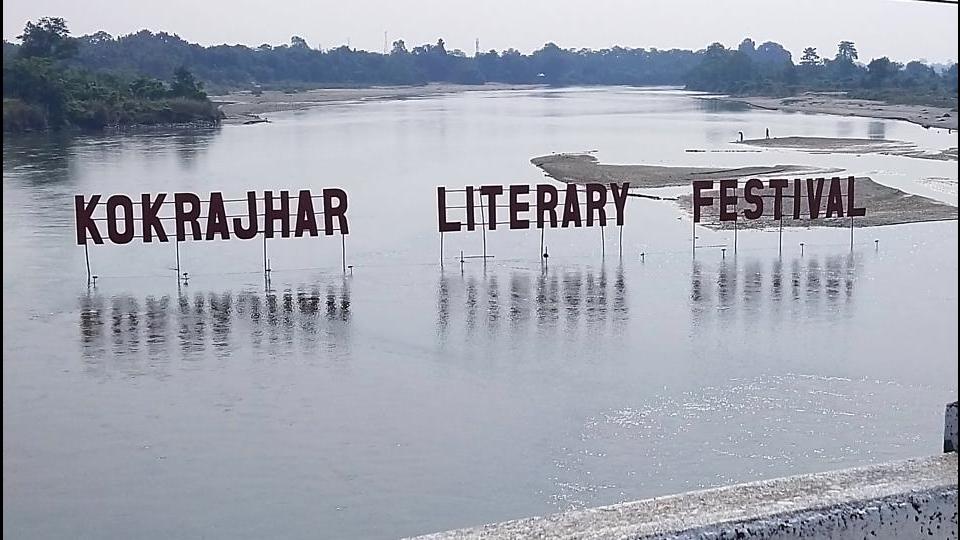
The Gaurang River, which originates from Bhutan, passes by Kokrajhar Town and goes onto meet the Brahmaputra, has been witness to long years of suffering of the Bodos who live on its shores. These people of Sino-Tibetan origin, whose history goes back to 2500 BC, have been referred to as outsiders in myth and history as Malecha , Asura or Danava. Theirs’ was a long struggle against political and cultural aggression, until the Bodoland Territorial Regional Accord, was finally signed in January 2020.
The Kokrajhar Literary Festival 2021, which was held from November 14 to 16 was dedicated to the poetry of peace and love. It celebrated around 100 languages of India with special emphasis on tribal speech, which still has no recognition.
Journey from Punjab to Kokrajhar
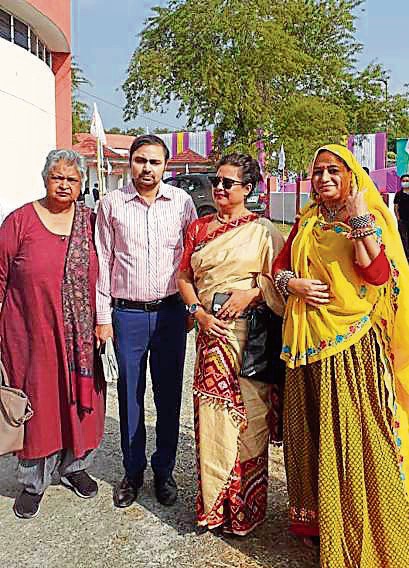
For Punjabi poets, Paul Kaur and Jagdeep Sidhu, who went to this literary festival with a difference, it was a rare experience, which they shared with delight. Ambala’s own senior poet Paul, says “It came as a surprise in many ways. First of all, it was interesting that a political triumph was celebrated with poetry. One was not prepared to come face to face with tribal poets from languages that one had not even heard of. The spirit of the festival was amazing in its simplicity and sincerity.”
Jagdeep, an ebullient younger poet of Mohali, says: “While the festival was organised by the Bodoland government, it was completely free of officialdom or the pomp and show that we are so used to in the North. The head of the now autonomous region, Pramod Boro, opened the festival in humility and camaraderie without the political pageantry that is found at most places.”
The delight of diversity
The mood of this literary celebration was set by the invitation letter itself, which was penned to writers of so many languages, which have no official recognition along with some two dozen languages which have the constitutional recognition in India. It is a little known fact that over 600 languages are spoken in the country. Paul says, “It was indeed a journey of great learning for us as we came across poets who recited poems in languages we did not even know by name such as Nyishi, Sherdukpen, Tiwa, Magahi, Kodava, Jayantia, Toto and many others.”
She adds that it was the diversity of cultures, languages and ethnicity that was so heartening as opposed to one-language, one-religion and one-way of living that we have been witness to in recent times.
Academician Surath Nazrary, convener of the festival, spelled out that by celebrating the poetry of peace and love the Bodoland Territorial Council was sending a message of new Bodoland to the rest of the world. Boro, the son of a farmer who studied in his village school and went onto study economics in a Guwahati college, is now at the helm of affairs in the autonomous region in Assam. The slogan which Boro gave out at the festival spelled out the effort to heal a strife-torn people and land “It is time to change the weapon. Instead of taking AK-47 in hands, we should take up the arms of economic transformation.” Jagdeep says: “It was indeed a revelation to come face to face with the renowned professor Ganesh Devy who has been striving to save tribal languages from dying. He gave up his job to initiate work with Denotified and Nomadic Tribes and Adivasis and later conducted the largest-ever survey of languages in history with 3000 volunteers which was later published in 50 multilingual volumes”.
Land made for you and me
The two Punjabi poets, who return charmed with the endeavour of language and literature from Kokrajhar, feel that the festival brought home the pride of the language a person is born to. Paul says, “Although translations of poems in English were a necessity to communicate across the vast array of languages that were represented at the festival yet in all the readings the poets first read out their poems in the original adding to the rich linguistic tapestry woven on the banks of the Gaurang”.
She adds even the television crews chose that poems be recorded in the original and not in translation: “They said they would stream the original to do justice to the rhythms of poetry in diverse languages.”
Truly it is this diversity of languages, cultures and religions in which lies the deliverance of the Indian sub-continent and what comes to the mind is an inclusive rearmament song sung in the school days of the 70s: “From Indian Ocean to the Kashmir Highland, From Brahmaputra to the Bombay Island, This land was made for you and me!”
Caption: Kokrajhar Literary Festival: Punjabi poets Paul Kaur and Jagdeep Sidhu with Assamese poet Tulika Chetia Yein and Rajasthani tribal poet Hira Meena (L to R) and Gaurang River adorned by letters. Photos sourced


