My earliest memory of my father isn’t tied to a festival, a family vacation, or a grand celebration. It is of standing beside a street cart glowing under a warm yellow bulb, my tiny hands struggling to balance a steel plate full of golgappas. Before I could even pronounce the word properly, my father had introduced me to its magic. From that moment on, golgappas became our ritual—a quiet tradition stitched softly into the fabric of our everyday lives.
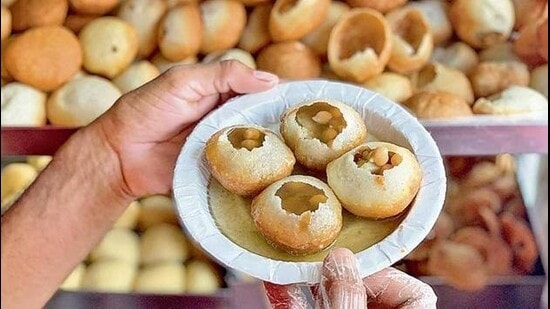
Every few evenings, he would take me on walks that invariably ended at our familiar local stall. I can still recall the rich aroma of bruised mint, the sharp crackle of crisp puris, and the vendor’s hands moving with lightning speed. My father never hurried those moments. He stood patiently, taking in the bustle around us with calm eyes, as if the entire world slowed its pace near that little cart.
As a child, I assumed we went simply because they tasted good. Decades later, I realised my father was handing me life lessons the world rarely teaches directly.
The first lesson was patience. No matter how eager I was, we waited our turn. There was always a crowd—children bouncing on their toes, aunties negotiating the spice level, weary office workers unwinding after a long shift. My father would just smile and say, “Good things are worth waiting for.” Back then, I only nodded impatiently, desperate for that first shell to hit my plate. Today, I get it. Life rarely serves happiness instantly; the sweetest joys require waiting with a little grace.
The second was to ask for what makes you happy, without hesitation. My father never missed asking the vendor for “thoda aur paani”—a little extra spicy water—at the end. I used to shrink back in childhood shyness, but he never hesitated. He showed me that there’s no shame in asking for a little extra kindness, a touch more joy, or a second chance at something that makes you smile. Life tends to favour those who gently speak up for themselves.
{{/usCountry}}The second was to ask for what makes you happy, without hesitation. My father never missed asking the vendor for “thoda aur paani”—a little extra spicy water—at the end. I used to shrink back in childhood shyness, but he never hesitated. He showed me that there’s no shame in asking for a little extra kindness, a touch more joy, or a second chance at something that makes you smile. Life tends to favour those who gently speak up for themselves.
{{/usCountry}}The biggest lesson, though, was satisfaction. It still strikes me how something so modest could make us feel so wealthy. Standing beside my father, sharing a laugh between eye-watering bites, I learned that real happiness seldom hides inside luxury. More often, it lives quietly in ordinary evenings, roadside conversations, and familiar flavours shared with people you love.
Over the years, I remained his loyal golgappa companion. But eventually, he stopped eating them. He never explained why—perhaps age caught up, health took priority, or the craving simply faded. The reasons stay with him. Yet even now, whenever I stand at a stall, I reflexively look to my side, half-expecting to hear his voice asking the vendor for extra spicy water.
My father may have given up golgappas, but the wisdom he tucked inside those hollow, crispy shells remains—patient, simple, and deeply fulfilling, just like those evenings we shared.
bagga.aastha23@gmail.com; The writer is a Hoshiarpur-based freelance contributor