Taking a cue from carrot growers in the adjoining Sriganganagar district in Rajasthan, progressive horticulturists in the Abohar area are earning well from rabi crop diversification.
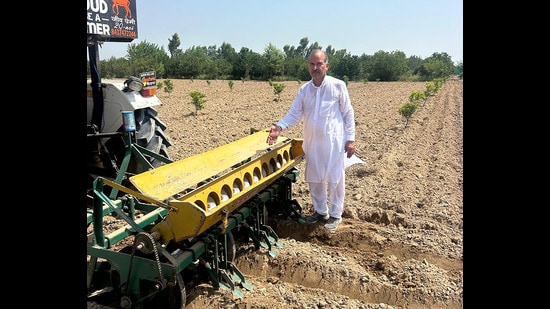
According to estimations, nearly 2,500 acres of land in Haripura, Dharampura, Ghallu and about 8 other villages have adopted cultivation of the deep red-coloured carrot of various open-pollinated varieties and hybrids.
Farmers say they are reaping benefits from a gradual horticultural diversification.
Arvind Setia, who grows carrots at Tootwali village, said that farmers in the area switched to the winter vegetable in less than a decade.
“About 10-12 years ago, several villages in Sriganganagar district shifted to carrot cultivation. The Rajasthan government further boosted the diversification effort and recently constructed a first-of-its-kind carrot mandi at Sadhuwali village. This organised push further motivated farmers in the adjoining Punjab villages too and we are making use of the crop marketing platform,” said Setia, a state awardee farmer.
He said the Punjab government should also devise similar mandis to boost horticultural crops in clusters for farmers’ benefit.
Farmers start sowing carrots from the first week of September and the 100-day crop is harvested from November.
Another farmer, Ravi Singhmar, a trained civil engineer, said that carrot farming requires less labour and water.
{{/usCountry}}Another farmer, Ravi Singhmar, a trained civil engineer, said that carrot farming requires less labour and water.
{{/usCountry}}“I am sowing carrots on 20 acres and overall, it is a highly remunerative crop. An acre of land has an estimated cost input of nearly ₹25,000 from sowing to harvesting. A farmer can harvest 1.5 to 2 quintals from an acre. Last year, the average wholesale rate was ₹10 per kg and a carrot grower may earn more than from the traditional rabi crop of wheat,” said Singhmar.
“The carrot seeds are sown on the elevated ridges, allowing irrigation water to flow through the furrows in between and reach the crop’s root zone. The excess water is drained off into the furrows, preventing crop flooding and promoting soil aeration, unlike with regular flat-bed planting,” he said.
Pradeep Dawra, a progressive fruit and vegetable grower from Gidderanwali, said that carrot sowing is done mechanically, with seeds sown on raised beds. Farming this vegetable also has growth potential for marginal farmers due to a reliable marketing platform, though in the adjoining state.
Another carrot grower, Prithvi Ram, who is sowing the crop on 15 acres of land taken on lease, said that the crop hardly faces any pest attacks.
“It has significant potential for promotion as a pesticide-free crop, as I have not used chemicals in the last almost 10 years. The state government should frame some policy to assist farmers when the wholesale rates crash due to higher production and other factors,” he said.