
 E-Paper



Untreated sewage from Chandigarh still entering N-Choe
Despite directions of the subcommittee formed on the NGT’s directions, untreated sewage from Chandigarh is still being discharged into the N-choe at various points in the UT as well as Mohali

 Prefer HTon Google


Despite directions of the subcommittee formed on the National Green Tribunal (NGT) directions, untreated sewage from Chandigarh is still being discharged into the N-choe at various points in the UT as well as Mohali.
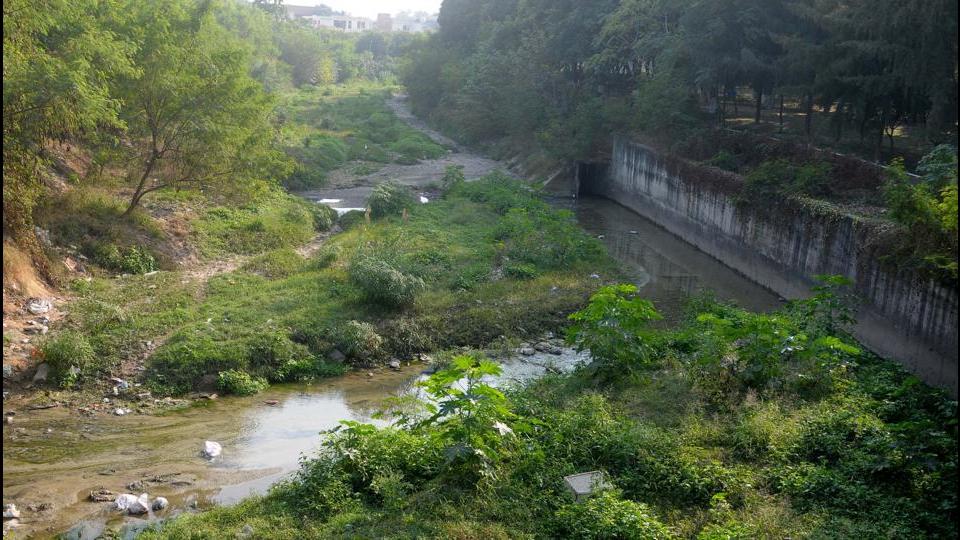
N-Choe is a seasonal stream that originates in the north of Chandigarh and runs across the city before meeting the Jagatpura drain at Manauli village in Mohali. The water finally drains into the Ghaggar river.
The subcommittee was formed in June this year and comprises officials from the Central Pollution Control Board, Punjab Pollution Control Board (PPCB) and Chandigarh Pollution Control Committee.
A committee member, who did not wish to be named, said that there are still several points in both Mohali and Chandigarh where untreated sewage is being discharged from Chandigarh into the natural water bodies. “Even farmers use the same water for agricultural purposes downstream along the Ghaggar,” said the member.
‘Sewage not treated properly’
The official said that even at the sewage treatment plant (STP ) at Diggian village in Chandigarh is not treating the wastewater properly and it is released in the choe as such. Even, untreated sewage from Faidan village in Chandigarh is being discharged into the Jagatpura drain in Mohali, he said.
Untreated sewage refers to wastewater that contains harmful waterborne pathogens and bacteria and which has not yet gone through a sewage treatment plant. It poses a high risk to human and animal health.
It was on May 6 this year when lawyer and activist Sunaina filed a petition before the NGT, stating that contaminated water from Chandigarh enters drains in Mohali and eventually the Ghaggar river, and is used by nearby farmers for cultivation, thus polluting the entire food chain and jeopardising the health of people and aquatic life.
The plea wanted the Chandigarh administration and Punjab to install necessary sewage treatment plants, following which, the NGT bench presided over by its chairperson and former Supreme Court judge AK Goel directed Chandigarh to ensure that sewage from the city flowing into the Ghaggar is treated and sought a report.
It also directed the Punjab chief secretary and UT adviser, in coordination with other officials concerned, to take appropriate remedial measures and ensure zero discharge of untreated water. In 2019, too, directions were issued to ensure the release of 100% treated water into rivers and drains by March 31, 2020. However, the NGT observed that there was hardly any significant improvement.
‘We have closed inlets in all major areas’
Anindita Mitra, commissioner, Chandigarh MC, said: “We have closed the inlets of sewage in all major areas. We have also served notices on individual house owners in villages from where sewage was being discharged into stormwater drains, so that they change their internal sewage systems.”
Mitra said that In Faidan colony, where laying new sewerage network is not possible, phytoremediation has been suggested as a solution to the administration. “The UT engineering department will also install screen at choes to stop dumping of garbage into these water bodies,” she said.


