
 E-Paper



Core zone, visitor cap in Asola Bhatti Wildlife Sanctuary’s 10-year plan
The plan proposes designating core and conservation zones within the sanctuary, while also defining a capacity for visitors to maintain ecological balance.

 Prefer HTon Google


A 10-year management plan for the Asola Bhatti Wildlife Sanctuary, prepared by the Wildlife Institute of India (WII), has documented 23 mammals inside the sanctuary, including leopards and the striped hyena.
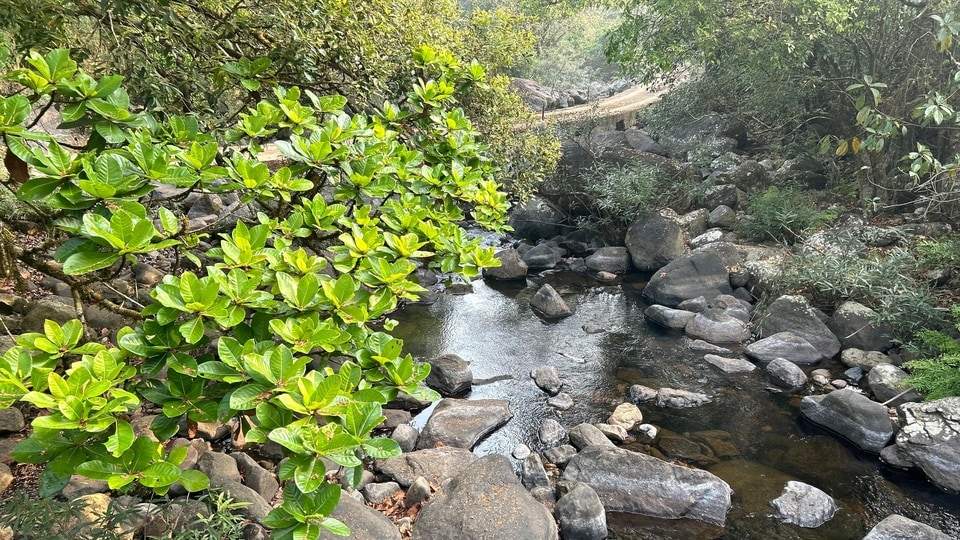
The plan, approved by the Delhi forest department in March, is currently in effect and will remain valid till 2034-35. It proposes designating core and conservation zones within the sanctuary, while also defining a carrying capacity for visitors to maintain ecological balance over the next decade.
For the study, the WII installed 23 camera traps across the 32sqkm sanctuary. The cameras recorded 23 mammal species, with rhesus macaques found to be the most abundant, followed by stray cattle and jackals. Other species recorded included golden jackal, wild boar, Indian hare, Indian crested porcupine, ruddy mongoose and sambar deer, among others. HT has seen a copy of the plan.
Also Read: Delhi notifies over 75% of central ridge as reserved forest, boosts legal protection
“Among these, rhesus macaque, nilgai, and golden jackal were the most frequently captured species, showing wide habitat tolerance. Rare detections included leopard, striped hyena, common palm civet, and sambar deer, indicating their low densities and restricted distribution,” the plan stated.
It added that predators such as leopards and hyenas were mostly recorded in these less-disturbed patches, while herbivores such as nilgai and chital were widespread across open scrub and plantation zones.
The plan further underlines the need to define a visitor carrying capacity, stating that the ecologically sensitive sanctuary requires clear delineation of zones. At the heart of the sanctuary will be a “core zone” spread across around 9sqkm.
“Our study documented active leopard and jackal movement in some stretches, with minimal signs of human disturbance, making these suitable to designate as the core zone of the sanctuary and adjoining reserve,” the plan said.
Also Read: Albino nilgai sighted in JNU wilderness
Surrounding it will be a “conservation zone” spanning 24sqkm, which will act as a buffer to the core zone and support continuity of ecological processes. “This zone will act as a crucial area for habitat restoration, species protection, and long-term ecological monitoring,” the plan said. This will be followed by a “tourism zone” for visitors.
“The tourism zone, overlapping the core and conservation zones, will serve as the primary gateway to the sanctuary, integrating conservation, learning, and recreation. This zone will cover about 7.6sqkm, extending from the main entrance to Neeli Jheel,” the plan said.
An “interpretation-cum-education zone” of 5sqkm will overlap the tourism zone and include areas designed for visitor engagement, learning and nature-based recreation. It will extend from the sanctuary’s main gate and include the butterfly garden, Aravalli Forest Park, souvenir shop, ticket counters, nurseries, cycle track, nature education centre and jungle trails.
The plan also proposes an “extended buffer zone”, comprising areas outside the sanctuary that contain forest patches which remain poorly studied and managed.
Other recommendations include gradually phasing out artificial feeding of monkeys and carrying out humane sterilisation to control their population.


Stay updated with all top Cities including, Bengaluru, Delhi, Mumbai and more across India. Stay informed on the latest happenings in World News along with Delhi Election 2025 and Delhi Election Result 2025 Live, New Delhi Election Result Live, Kalkaji Election Result Live at Hindustan Times.


